
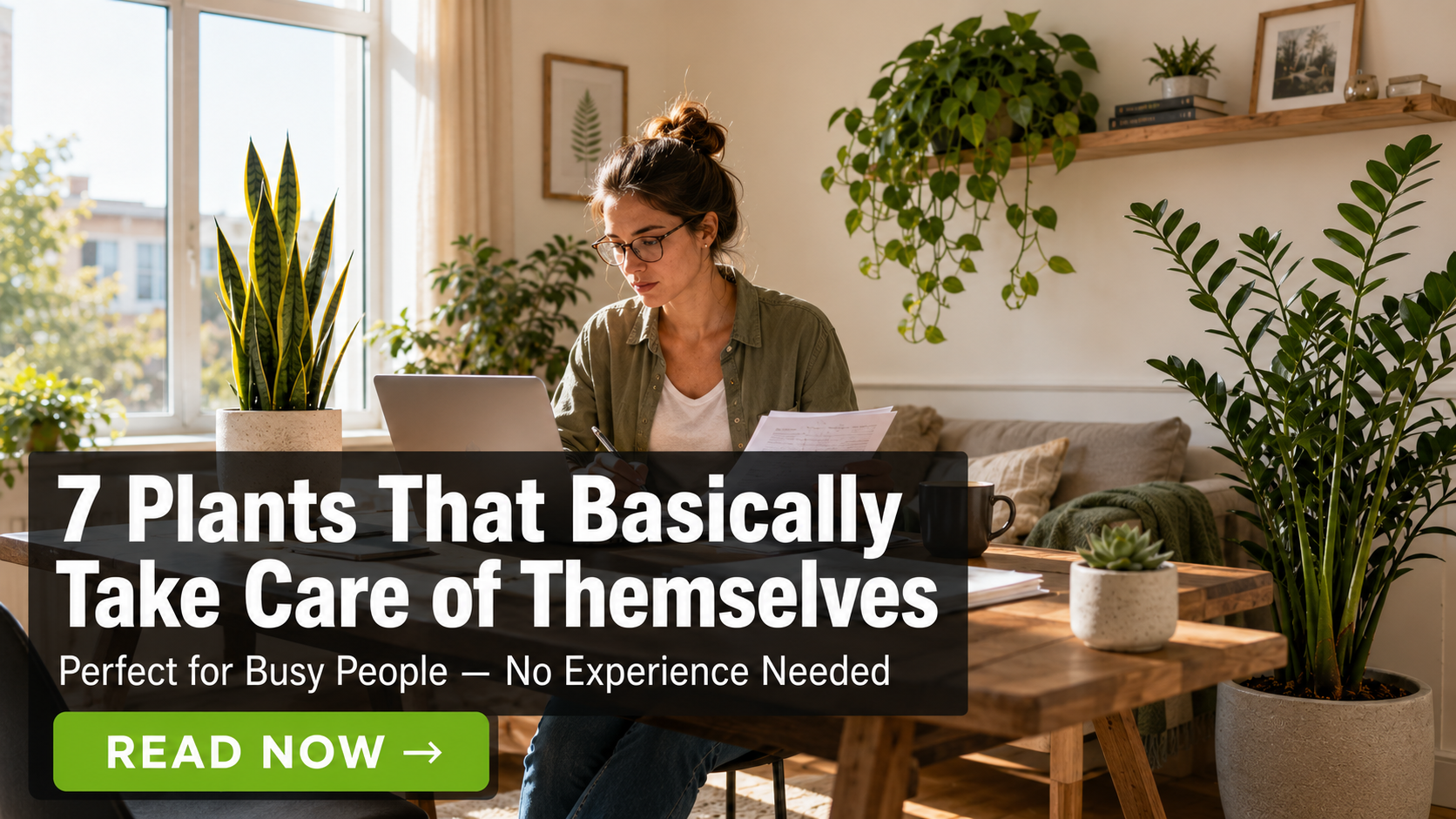
You love the idea of having plants at home. A greener living room, fresh herbs in the kitchen, that calm and welcoming atmosphere that only real greenery can create. But every time you try, the same thing happens — you forget to water for a week, you go on a trip, life gets in the way, and you come home to something wilted and sad sitting on your windowsill.
Here is the thing nobody tells beginners: most people do not fail at keeping plants because they lack a green thumb. They fail because they chose the wrong plants for their lifestyle. The right plant for a busy person is not the one that looks most beautiful at the garden center — it is the one that genuinely thrives on a little neglect, stores its own water, tolerates imperfect light, and looks just as good after two weeks of being completely ignored as it did the day you brought it home. Those plants exist, they are beautiful, and this list will introduce you to the seven best of them.
1. ZZ Plant — The One That Survives Everything
If there were a competition for the most indestructible houseplant on the planet, the ZZ plant would win by a significant margin. Its deep, glossy green leaflets grow on gracefully arching stems that look architectural and intentional in any interior — the kind of plant that makes a room look designed rather than randomly decorated. And it achieves this striking appearance while tolerating the kind of neglect that would kill virtually anything else.
The secret is underground. The ZZ plant grows from large, potato-like rhizomes that store enough water to sustain the plant for three to four weeks — sometimes longer — between waterings. You can go on a two-week vacation without asking anyone to check on it. You can forget it exists for an entire month. You can place it in a dim corner that receives almost no natural light. It will be fine. Water it every three to four weeks in summer, once a month in winter, place it anywhere from a bright windowsill to a shaded hallway, and fertilize it twice a year. That is genuinely everything it needs.
2. Snake Plant — The Indestructible Classic
The snake plant has earned its reputation as the most forgiving houseplant available through decades of surviving in offices, apartments, and homes where it received minimal attention and still managed to look better than most people’s carefully maintained plants. Its upright, sword-shaped leaves in deep green with pale yellow edges add strong architectural presence to any room, and it asks almost nothing in return.
Snake plants tolerate low light that would cause most other plants to etiolate and collapse. They survive extended periods without watering because their thick, succulent leaves store water internally. They handle dry apartment air, temperature fluctuations, and occasional complete neglect with composure. Water once every two to three weeks in summer and once a month in winter. Place it anywhere in your home that has any natural light at all. Beyond that, simply leave it alone — the snake plant genuinely performs better when you resist the urge to fuss over it.
Why these two plants are the ultimate starting point
If you have ever killed a plant before and are nervous about trying again, start with either the ZZ plant or the snake plant — or ideally both. They are the two species where the learning curve is so gentle that virtually any level of inconsistency is survivable. They teach you the basics of plant observation without punishing you harshly for mistakes, and they build the confidence that makes caring for a broader collection feel exciting rather than stressful.
3. Pothos — The Fast Grower That Forgives Everything
Pothos is the plant that makes beginners feel like natural-born gardeners, because it grows so visibly and so enthusiastically that even the most neglectful care schedule produces results that look intentional. Its heart-shaped leaves on long trailing stems cascade beautifully from shelves, hanging planters, and cabinet tops, filling vertical space with lush greenery from a single small pot. It grows quickly enough that you can watch it progress week by week — a motivating quality that keeps people engaged with plant care when slower-growing varieties might cause them to lose interest.
What makes pothos genuinely perfect for busy people is its combination of fast growth and extraordinary tolerance for imperfect conditions. It adapts to almost any light level — from bright indirect light near a window to quite dim interior positions where few other plants would survive. It communicates its watering needs clearly by drooping slightly when thirsty and recovering completely within hours of thorough watering. And it propagates effortlessly — a stem cutting placed in a glass of water produces visible roots within two weeks, giving you free new plants to fill more of your home without spending anything.
4. Aloe Vera — The One You Water Once a Month
Aloe vera is the plant that most honestly and reliably delivers on the promise of low maintenance. Water it once a month in summer and every six weeks in winter. Give it the sunniest spot you have available. Do essentially nothing else. It will sit there, looking sculptural and architectural and genuinely beautiful, for years — occasionally producing offshoots that become new plants, never demanding more of you than the occasional drink of water.
Beyond its remarkable ease of care, aloe vera offers a practical benefit that no other common houseplant provides: its gel-filled leaves contain a natural soothing compound that is genuinely effective on minor burns, sunburn, and skin irritation. A mature aloe plant on a kitchen windowsill is both a decorative feature and a living first-aid kit that costs nothing to maintain and never expires. Place it in a terracotta pot with cactus potting mix, position it in your brightest window, and water far less frequently than your instincts tell you to. Overwatering is the one way you can reliably harm this plant — and it is entirely avoidable with a simple soil-check before every watering session.
5. Spider Plant — The One That Practically Grows Itself
The spider plant is one of those rare plants that actively creates more of itself without any intervention from you. Mature plants produce long, arching stems from which small plantlets — called spiderettes — cascade downward, each one a fully formed baby plant that can be separated and potted independently once it has developed its own small root system. A single spider plant purchased today can become five or six plants within a year, filling your home with greenery at absolutely zero additional cost.
Care requirements are minimal and genuinely forgiving. Spider plants tolerate a wide range of light conditions, prefer their soil to stay slightly moist but recover readily from drying out completely, and are almost never troubled by the pests and diseases that affect more sensitive species. They are also completely non-toxic to cats, dogs, and children — a significant practical advantage for anyone who shares their home with curious pets or young children who tend to investigate plants with their hands and mouths. Water when the top inch of soil feels dry, place in bright to moderate indirect light, and watch it thrive with very little effort on your part.
6. Chinese Evergreen — The One That Thrives in Dim Apartments
The Chinese evergreen — Aglaonema — is the answer for anyone who wants genuinely striking, decorative plants but lives in an apartment with limited natural light. Its beautifully patterned leaves, available in combinations of deep green and silver, green and white, and in some cultivars green with pink and red markings, are among the most visually impressive of any commonly available houseplant. And it achieves this dramatic appearance while tolerating the kind of dim, indirect light that most sun-loving plants would find completely inadequate.
Beyond its light tolerance, the Chinese evergreen is slow-growing and long-lived, staying attractively compact for years before needing repotting or any significant management. It tolerates the dry air of heated apartments, requires watering only when the top two inches of soil have dried out, and needs fertilizing only twice during the growing season. For a busy person who wants a plant that looks expensive and carefully chosen but asks for almost nothing in return, few species deliver on that promise as reliably as the Chinese evergreen.
7. Succulents — The Whole Family of Easy Wins
Succulents deserve a place on this list not as a single species but as an entire category of plants that share the qualities that make them perfect for busy, forgetful, or frequently traveling plant owners. Their water-storing leaves and stems allow them to survive the missed waterings, irregular schedules, and extended absences that defeat more conventional houseplants. They come in an extraordinary range of forms, sizes, and colors — from the elegant rosettes of Echeveria to the stacked columns of Crassula to the trailing strings of Senecio rowleyanus — providing visual variety from a category that requires minimal care across all its members.
The care requirements for succulents reduce to three simple rules that, once internalized, make them essentially self-managing. First, give them as much light as possible — a south or west-facing windowsill is ideal, and a grow light works well for apartments without strong natural light. Second, water thoroughly but infrequently, allowing the soil to dry out completely between sessions — typically every two to four weeks in summer and once a month or less in winter. Third, use fast-draining soil and a pot with drainage holes — standard potting mix retains too much moisture for succulents and is the primary reason they fail in otherwise appropriate conditions. Get these three things right and succulents are genuinely among the easiest living things to maintain.
The Simple Setup That Makes All These Plants Thrive With Minimal Effort
Every plant on this list is forgiving by nature, but giving each one a correct initial setup eliminates the small points of friction that turn low-maintenance plants into occasionally frustrating ones. Three setup decisions made correctly at the time of purchase create conditions that these plants can sustain themselves in for months between significant interventions. First, always use a pot with drainage holes — without drainage, even the most drought-tolerant plants eventually succumb to the waterlogging that a sealed container creates. Second, use a potting mix appropriate to the plant type — cactus mix for aloe and succulents, standard potting mix amended with perlite for everything else. Third, place each plant in a position that genuinely provides the light it needs rather than the position that looks most decoratively convenient.
Beyond these initial decisions, the one habit that makes the biggest difference for busy plant owners is the weekly five-minute check — a brief, unhurried look at each plant to assess its soil moisture, notice any changes in leaf color or posture, and catch the early signs of any developing problem. This five-minute investment, made consistently once a week, prevents the vast majority of plant problems from escalating to the point where they require significant intervention. The plants on this list are designed to make that weekly check feel reassuring rather than stressful — because most weeks, every one of them will be perfectly fine and ask absolutely nothing of you.
- ZZ Plant — water every 3–4 weeks, any light level, virtually indestructible
- Snake Plant — water every 2–3 weeks, tolerates low light and dry air
- Pothos — water when top inch dries, adapts to almost any light condition
- Aloe Vera — water once a month, needs bright light, practical medicinal uses
- Spider Plant — slightly moist soil, indirect light, non-toxic to pets and children
- Chinese Evergreen — water every 10–14 days, thrives in low light apartments
- Succulents — water every 2–4 weeks, maximum available light, fast-draining soil
Common Mistakes to Avoid Even With Easy Plants
- Overwatering because the plant looks too dry — Every plant on this list is more tolerant of underwatering than overwatering. When in doubt, wait another three days before watering and check the soil first. More plants die from too much water than from too little.
- Placing plants in decoratively perfect but light-deficient positions — A beautiful dark corner is not a good home for most plants, even forgiving ones. Always confirm that a position receives adequate light for the specific plant before making it permanent.
- Using pots without drainage holes — No matter how drought-tolerant a plant is, a pot without drainage will eventually trap enough water at the root level to cause rot. Every pot needs drainage holes without exception.
- Buying too many plants at once — Even easy plants need some attention during their establishment period. Start with two or three from this list and expand gradually as you develop confidence and routine.
- Giving up after one bad experience — If a plant from this list has struggled or died in your care, the cause is almost always one of three things: overwatering, a pot without drainage, or placement in genuinely insufficient light. Fix those three variables and try again — these plants are genuinely difficult to fail with when the basics are right.
Frequently Asked Questions
Q: Which plant from this list is the absolute best first plant for someone who has never kept a plant alive?
A: The ZZ plant and the snake plant share the top recommendation for absolute beginners. The ZZ plant is the better choice if you travel frequently or have a genuinely unpredictable schedule — its underground water storage makes it the most forgiving plant available for irregular care. The snake plant is the better choice if you want something more visually dramatic that grows a little more actively and communicates its needs slightly more clearly. Both are available at most garden centers and supermarkets for a modest price, and both will give you the successful experience you need to build confidence for a broader plant collection.
Q: Can I keep all seven of these plants in the same room?
A: Yes, absolutely. All seven plants on this list are compatible as co-inhabitants of the same space. Group the light-lovers — aloe vera and succulents — near your brightest window. Place the shade-tolerant plants — ZZ plant, snake plant, and Chinese evergreen — in positions with lower light where other plants might struggle. The pothos and spider plant are flexible enough to thrive in either position. Grouping plants together also raises local humidity through their collective transpiration, which benefits all of them and reduces individual water loss.
Q: How do I know if I am watering correctly if I am new to plants?
A: The most reliable method is the finger test — press a finger one to two inches into the soil before every watering session. If it feels moist at that depth, wait another two or three days. If it feels dry, water thoroughly until water flows freely from the drainage holes at the base of the pot. This single habit prevents overwatering more reliably than any schedule, app, or moisture meter, because it responds to what the soil is actually doing rather than to what a calendar says should be happening. For the plants on this list, this check will tell you to water less often than your instincts suggest — and that is exactly right.