
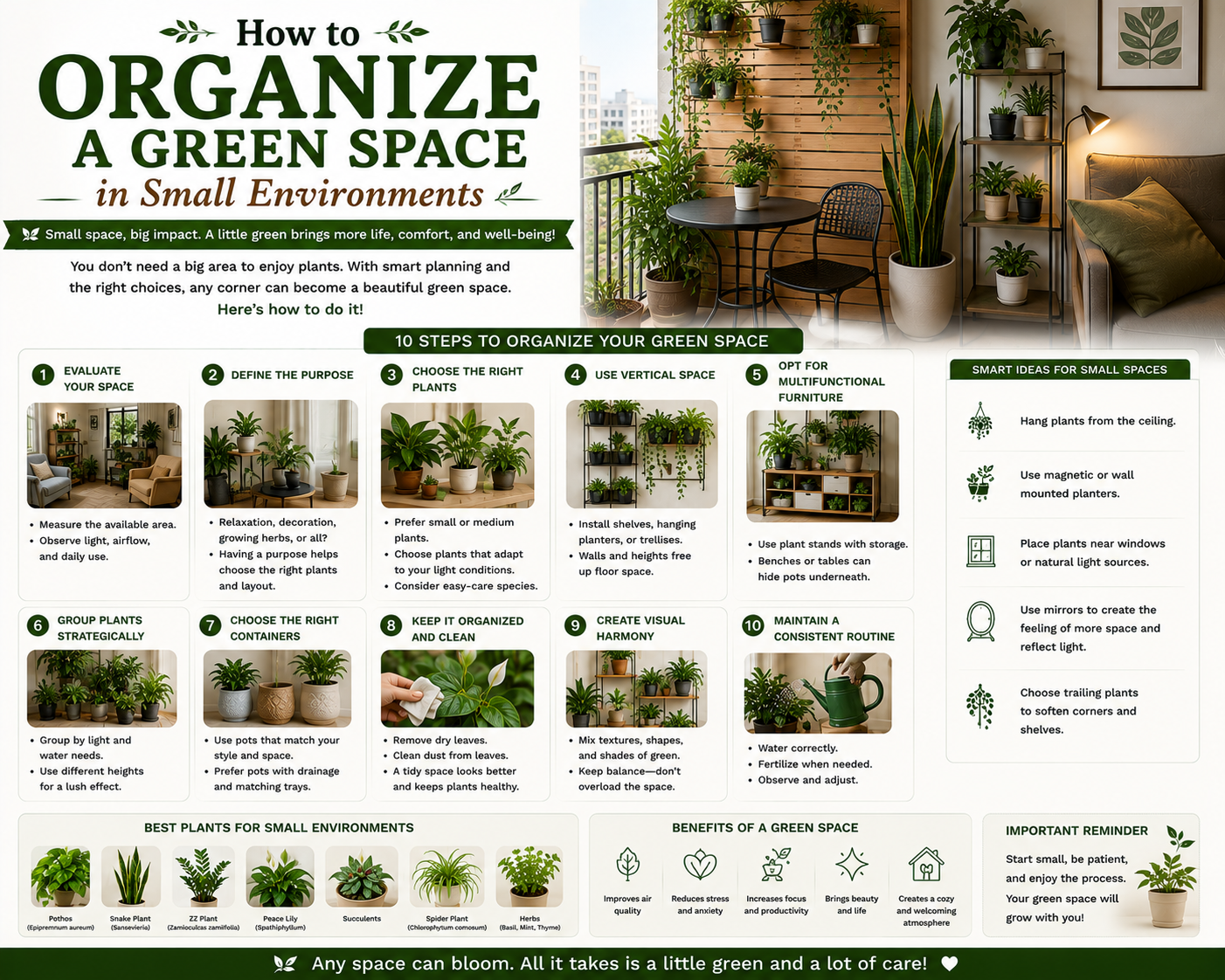
Creating a green space in a small environment — a studio apartment, a compact balcony, a narrow hallway, or a tiny backyard — is an exercise in creative problem-solving that rewards thoughtful planning with results that are often more beautiful and personal than what larger, less constrained spaces produce. Small spaces force decisions, and good decisions, made deliberately, consistently produce better outcomes than abundance that allows every impulse to be accommodated without careful consideration. The fundamental principle of green space organization in small environments is maximizing plant presence while minimizing spatial footprint — and there are more ways to achieve this than most people initially imagine.
Auditing Your Available Space
Before adding any plant to a small space, spend time genuinely assessing the three-dimensional volume available to you rather than just the floor area. Most people instinctively think of horizontal surface space when planning a green corner — the windowsill, the shelf, the corner of the floor — but the vertical space between those surfaces and the ceiling is equally available and almost always underutilized. Wall space above furniture, the tops of doorframes, the undersides of shelving, the ceiling itself in the case of hanging plants — all of these are legitimate plant-growing locations that do not consume the floor space that is at such a premium in small environments.
Note the light quality in different areas of your small space throughout the day. In a compact environment, the difference between a spot directly in front of a window and a spot one meter further back can represent a very significant reduction in available light — enough to determine which plants can survive where. Map these light zones in your mind or on paper before choosing plants, and commit to placing each plant in the zone that genuinely suits its light requirements rather than the zone where it happens to look best from a purely decorative standpoint.
Identifying the highest-priority zones
In any small space, some locations are more visually prominent than others — the first thing you see when you enter a room, the view from your primary seating position, the line of sight from the kitchen sink or the desk where you work. Identifying these high-priority visual zones and focusing your most beautiful, most carefully chosen plants there creates maximum impact with minimum plant volume. A single spectacular plant in the right high-priority location does more for the atmosphere of a small space than a dozen plants scattered without consideration of where the eye naturally falls.
Vertical Solutions for Small Spaces
Vertical organization is the most transformative strategy available for small green spaces. A bare wall that currently contributes nothing to the atmosphere of a room can become a living, breathing feature that defines the entire character of the space, using no floor area at all. The options for vertical plant display range from simple floating shelves arranged at staggered heights, through wall-mounted pocket planters and modular living wall panels, to a single dramatic trailing plant hung from a ceiling hook above an empty corner — all of which add significant plant presence to a space without reducing its navigable floor area by a single centimeter.
The visual impact of vertical planting in a small space is amplified by the way it draws the eye upward, creating the impression of height and airiness that compact environments often lack. A wall partially covered with trailing pothos, climbing philodendron, or a collection of ferns in wall-mounted planters makes the room feel taller, more expansive, and more alive simultaneously. Position the most dramatic vertical plant arrangement on the wall most visible from the room’s primary seating or working position for maximum daily visual benefit.
Choosing Plants That Maximize Impact in Minimum Space
Not all plants are equally suited to small environments. The ideal plant for a compact green space has a strong visual presence relative to its physical footprint — it makes a significant impact without taking up significant room. This means plants with bold, distinctive leaf forms are preferable to those with fine, delicate foliage that requires mass to read well visually. Plants with naturally compact or contained growth habits are preferable to those that spread widely or grow rapidly into large specimens. And plants with long seasonal interest — attractive throughout the year rather than dramatically but briefly beautiful — deliver more consistent value in a small space that you live with every day.
The ZZ plant exemplifies all of these qualities: its glossy, architectural leaves make a strong visual statement from a compact pot, it grows slowly and stays well-contained, it looks equally beautiful in every season, and it requires so little care that it never demands significant time or attention. The snake plant, the rubber plant pruned to maintain a manageable size, and the fiddle-leaf fig in a compact columnar form are similarly strong choices. For trailing presence without floor impact, pothos, string of pearls, and heartleaf philodendron all deliver impressive visual volume from small hanging containers positioned at varying heights around the space.
- Use wall-mounted shelves at staggered heights to create vertical plant displays without consuming floor space
- Choose plants with strong visual impact relative to their physical size — bold leaf forms over delicate ones
- Hang trailing plants from ceiling hooks or wall-mounted brackets to fill empty vertical space
- Group plants in a single well-organized display rather than scattering them in isolation across the space
- Use mirrored surfaces near plant displays to double the visual impact without additional plants
- Prioritize slow-growing, compact varieties that will not rapidly outgrow a small space and require relocation
Storage and Organization of Plant Care Materials
In a small space, the equipment associated with plant care — watering cans, fertilizers, pruning tools, spare pots, potting mix — can create as much visual clutter as it resolves if not organized thoughtfully. Designating a specific, contained storage location for all plant care materials and committing to returning everything to that location after each use maintains the clean, organized appearance that makes a small green space feel intentional rather than chaotic. A small wicker basket, a dedicated shelf section, or a compact cabinet can accommodate all the essentials of basic plant care while keeping them out of sight when not in use.
Choose a small, attractive watering can that earns its right to be on display rather than hidden away — a beautiful terracotta, copper, or enamel watering can positioned near your plant display becomes a decorative element in its own right and removes the temptation to leave a functional but unattractive plastic can in a prominent location. The same principle applies to the pots you choose for your plants: in a small space where every element is visible and contributes to the overall aesthetic, investing in a cohesive, beautiful set of containers pays dividends in the finished appearance that a random collection of mismatched nursery pots simply cannot.
Common Mistakes to Avoid
- Scattering plants throughout a small space rather than grouping them — Isolated individual plants in a small space create visual fragmentation. A composed group of plants reads as a single, intentional design element that is far more impactful.
- Choosing plants that rapidly outgrow the space — A fast-growing large plant in a small space becomes a management problem within months. Choose slow-growing or compact varieties, or plan from the beginning for regular pruning to maintain size.
- Ignoring the ceiling as plant display space — Hanging plants from ceiling hooks is one of the most effective ways to add plant volume to a small space without consuming any surface or floor area. This option is underused in most small environments.
- Using too many different pot styles and materials — In a small space, visual cohesion is amplified in importance. A unified pot palette creates calm and order; a random mix of container styles creates visual noise.
- Not considering maintenance accessibility when positioning plants — A plant positioned in a visually perfect but physically inaccessible location will be poorly maintained because accessing it is inconvenient. Ensure every plant can be reached for regular watering, inspection, and care without significant difficulty.
Frequently Asked Questions
Q: How many plants is too many for a small space?
A: There is no absolute number — the right quantity depends on the specific space, the size of the plants chosen, and the overall aesthetic you are pursuing. The practical test is whether your plant collection makes the space feel more alive and welcoming or more crowded and cluttered. If you find yourself negotiating around plants or feeling that the room has lost its sense of openness and calm, you have likely crossed the threshold. Start conservatively, assess the impact of each addition, and stop adding before the space feels full rather than after.
Q: What is the most space-efficient type of plant display for a small apartment?
A: A single wall-mounted shelving unit with three to four floating shelves at staggered heights accommodates a significant number of plants of varying sizes without consuming any floor space. Position trailing plants on the upper shelves, medium plants on the middle shelves, and compact specimens on the lower shelves. This tiered, vertical arrangement creates the impression of an abundant plant collection while leaving the floor entirely clear and maintaining the sense of navigable, open space that small apartments depend on.
Q: Can I create a green space in a room with no windows?
A: Yes, but it requires a grow light to provide the artificial light plants need to survive without natural sunlight. A quality LED grow light running for twelve to sixteen hours per day on a timer can sustain a thriving plant display in any room regardless of window access. Choose the most shade-tolerant plants available — ZZ plants, snake plants, pothos, and cast iron plants — to maximize the performance achievable under artificial light, and position the grow light close enough to the plants to deliver effective light intensity at the leaf level.