
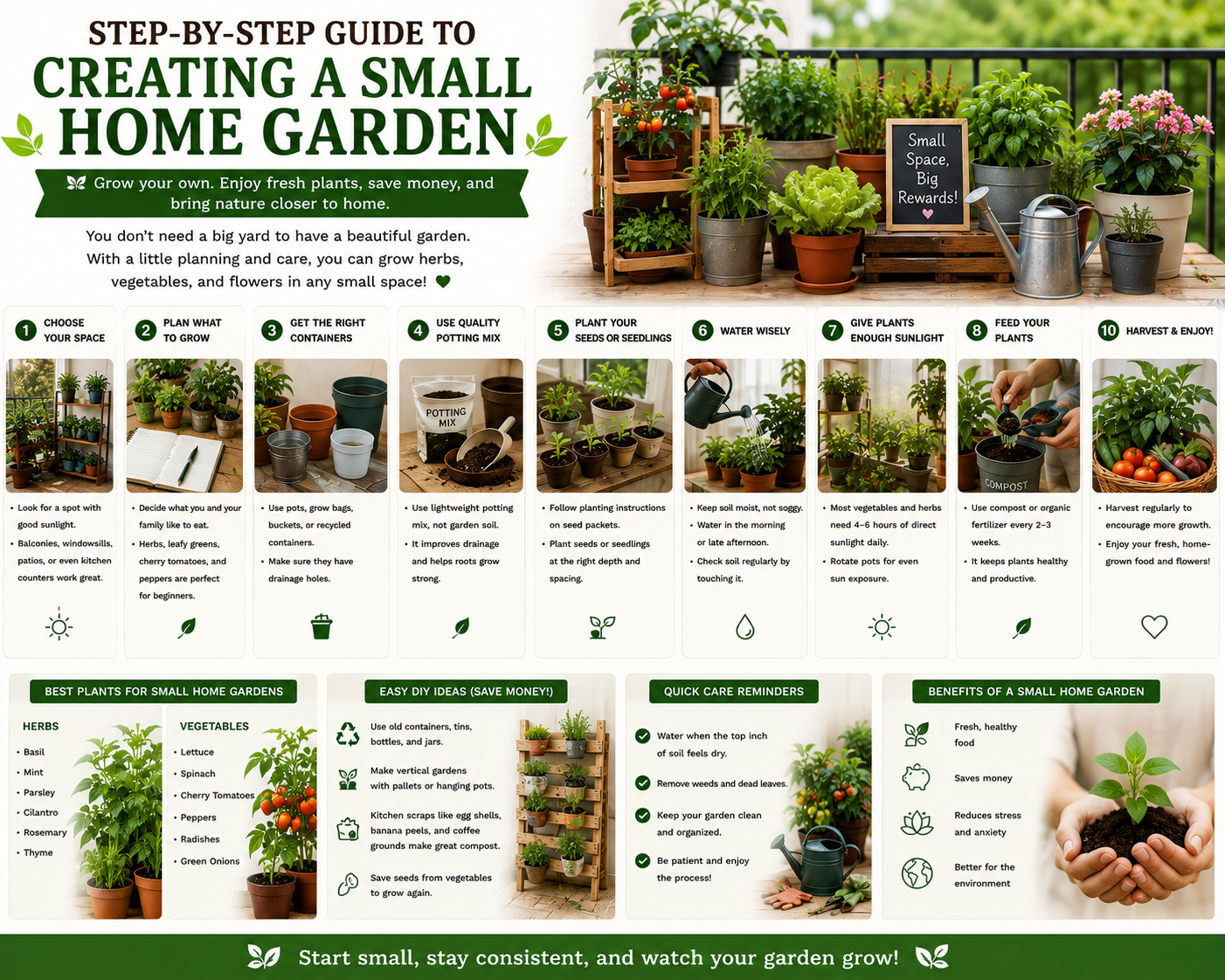
Creating a small home garden from scratch is one of the most rewarding projects you can undertake, regardless of your experience level or the size of the space you have available. A small garden, thoughtfully designed and consistently maintained, provides fresh food, beautiful flowers, living greenery, and a place of genuine personal sanctuary that has profound effects on both daily quality of life and long-term wellbeing. This step-by-step guide takes you from the blank-slate beginning to a thriving, productive small garden through a logical sequence of decisions and actions that build on each other to produce results that compound beautifully over time.
Step One: Define Your Vision and Goals
Every successful garden project begins with clarity about what you actually want from the space. Before measuring, planning, or purchasing anything, sit with the space — literally or mentally — and ask yourself what you most want your small garden to give you. Do you want fresh vegetables and herbs for the kitchen? A beautiful, colorful display that lifts your spirits every day? A private retreat space for relaxation? A wildlife-friendly habitat? A low-maintenance space that requires minimal ongoing attention? A productive combination of several of these purposes?
Your answers to these questions shape every decision that follows. A productive kitchen garden requires maximum sun, good soil, regular watering, and structured planting beds. A low-maintenance ornamental garden prioritizes hardy perennials, good soil preparation, and a mulching regime that suppresses weeds with minimal ongoing intervention. A relaxing retreat needs comfortable seating, screening for privacy, fragrant plants, and thoughtful lighting for evening use. Write down your top three priorities in order of importance, and let these three anchors guide every subsequent decision in the project.
Assessing your time and resource commitment honestly
One of the most important planning exercises for a first garden is an honest assessment of how much time and money you can realistically invest, both in the initial creation and in ongoing maintenance. A garden that is perfectly designed for someone who wants to spend two hours every weekend gardening looks very different from one designed for someone who can spare twenty minutes a week. There is no wrong answer, but designing a garden that requires more time than you can give produces a declining, disappointing space rather than a thriving one. Be honest about your constraints and design accordingly — a small, simple garden maintained beautifully beats an ambitious garden maintained reluctantly in every meaningful way.
Step Two: Assess the Space and Its Conditions
With your vision defined, spend one to two weeks carefully observing the space you plan to garden in. Note the light conditions in different areas throughout the day — which spots receive full sun for more than six hours, which are in partial shade for part of the day, and which remain shaded throughout. Test the soil if you plan to grow directly in the ground — a simple home soil test kit reveals the pH and basic nutrient levels that determine what will grow well and what amendments are needed before planting. Observe where water pools after rain, which indicates drainage problems that need addressing, and note any existing features — trees, walls, slopes, existing plants — that will be assets or constraints in your design.
For container-based small gardens on patios, balconies, or paved spaces, assess the available surface area, weight-bearing capacity for containers and soil, exposure to wind and sun, and proximity to a water source for irrigation. These physical parameters define the realistic scope of what you can create and determine the appropriate scale and complexity of the garden you plan.
Step Three: Plan Before You Plant
A simple sketch plan of your available space, even a rough pencil drawing on graph paper, prevents the expensive and time-consuming mistakes that result from planting without a coherent layout. Mark the orientation of the space — which direction is north — and note the positions of any permanent features you will work around. Plan where paths will go if needed, where any seating or structure will be positioned, and roughly which areas will be used for which types of planting. Allocating sunny spots to the most sun-hungry plants — vegetables, Mediterranean herbs, most flowering annuals — and shadier spots to shade-tolerant selections — hostas, ferns, begonias — before putting anything in the ground prevents the most common and costly placement mistakes.
For a small garden, resist the temptation to plant every available space simultaneously. A phased approach — establishing the most important elements in the first season and adding secondary plantings in subsequent seasons as you learn what works in your specific conditions — is more practical, more affordable, and produces better long-term results than trying to complete an entire garden vision in one ambitious burst of activity.
Step Four: Prepare the Soil
Soil preparation is the most physically demanding and most important step in creating any new garden. The quality of your soil preparation determines the performance of everything you plant for years to come, making it the highest-return investment of effort in the entire project. Clear the area of all existing weeds, removing roots as completely as possible — surface removal alone leaves root systems that rapidly regenerate. Dig the cleared soil to at least thirty centimeters depth to break up any compaction and improve aeration and drainage throughout the root zone.
Incorporate a generous quantity of organic matter — garden compost, well-rotted manure, or bought-in soil improver — into the loosened soil. A five to ten centimeter layer worked into the top thirty centimeters of soil transforms almost any garden soil into a productive growing medium, improving structure, drainage, moisture retention, and nutrient content simultaneously. For container or raised bed gardens, fill with a quality growing medium suited to your planned planting — a vegetable and herb mix for edible gardens, a standard potting mix amended with compost for ornamental plantings.
Step Five: Choose and Plant Your Plants
With prepared soil and a clear plan, plant selection becomes a focused activity rather than an overwhelming one. For each area of your garden plan, choose plants that match the light conditions, soil type, and maintenance level you have established. Start with a small selection of proven performers rather than a large variety of untested plants — five well-chosen species growing beautifully are more satisfying and more educational than twenty species performing variably.
When planting, dig holes appropriate to the root ball of each plant, position plants at the same depth they were growing in their nursery pots, firm the soil gently around each plant to eliminate air pockets, and water thoroughly immediately after planting. Apply a layer of organic mulch — bark chips, straw, or compost — to the soil surface around plants to suppress weeds, retain moisture, and moderate soil temperature. Label every plant at the time of planting — a simple wooden stake and waterproof marker costs very little and becomes surprisingly valuable when you want to identify a plant that performed well or poorly six months later.
Step Six: Establish a Maintenance Routine
The final step in creating a small home garden is the one that determines whether the investment of steps one through five produces lasting results or gradually declines into neglect. Establishing a simple, realistic maintenance routine — watering, weeding, feeding, deadheading, and general observation — performed consistently is the difference between a garden that continuously improves and one that slowly deteriorates.
For a small home garden, a weekly visit of thirty to sixty minutes covers most maintenance needs throughout the growing season. Water newly planted specimens consistently for their first four to six weeks while they establish root systems. Feed actively growing plants every two to four weeks during spring and summer. Weed regularly while weeds are small and easily removed rather than allowing them to establish and compete with your plants. Deadhead flowering plants to extend their blooming period. And most importantly, simply spend time in your garden — observing, noticing, and developing the intuitive understanding of what your specific plants in your specific space need that no guide can fully substitute for.
Common Mistakes to Avoid
- Beginning without a clear vision and plan — Unplanned gardens accumulate mismatched plants and underutilized spaces. A clear purpose and simple layout plan, however rough, produces more satisfying results than enthusiastic but unguided planting.
- Skipping soil preparation to reach the planting stage faster — Nothing compensates for poor soil. Plants in well-prepared soil consistently outperform those in unprepared ground regardless of all other care. Soil preparation is the most impactful investment in any new garden project.
- Planting too closely for immediate impact — Plants grow. The dense, lush look achieved by close planting becomes overcrowded congestion within a season or two. Plant at the recommended spacing and fill gaps temporarily with annual plants rather than permanently overplanting perennials and shrubs.
- Establishing no maintenance routine and hoping the garden will manage itself — Every garden, however well-designed and plant-selected, requires consistent human attention to remain healthy and attractive. Establish a realistic routine from the beginning and commit to it as a non-negotiable part of your schedule through the growing season.
- Losing momentum after the first season — The second season, when you understand your space better and can build on what worked, is often more productive and enjoyable than the first. Resist discouragement from first-season setbacks — they are universal and informative rather than terminal.
Frequently Asked Questions
Q: How long does it take to create a small home garden?
A: The initial physical work of clearing, soil preparation, and planting can typically be completed over one to three weekends for a small garden space. However, a garden truly comes into its own over its first full growing season as plants establish, mature, and begin to fill the space with the abundance that the initial planting only hints at. The most realistic expectation is that a small home garden becomes genuinely beautiful and productive in its second season, after you have learned its specific character, adjusted what did not work, and doubled down on what did.
Q: What is the minimum space required for a meaningful home garden?
A: There is no minimum — meaningful gardens have been created in spaces as small as a single square meter container garden on a balcony or a single raised bed measuring one by two meters. The productivity and beauty achievable in a very small space, managed intensively with vertical growing, succession planting, and careful variety selection, can be genuinely remarkable. A single raised bed of two square meters, well-managed, can produce a continuous supply of salad leaves, herbs, and compact vegetables throughout the growing season — a contribution to the kitchen that feels disproportionately generous relative to the space it requires.
Q: Should I start with an ornamental garden or a productive kitchen garden?
A: Start with whichever motivates you most strongly — motivation is the resource most critical to first-garden success, and it flows most reliably from genuine enthusiasm rather than practical obligation. If the prospect of harvesting your own vegetables and herbs excites you more than arranging flowers, start a kitchen garden. If beautiful flowers and greenery are what draw you to gardening, start with an ornamental planting. The horticultural skills developed in either type of garden transfer readily to the other, and many gardeners naturally evolve toward integrating both as their experience grows.