
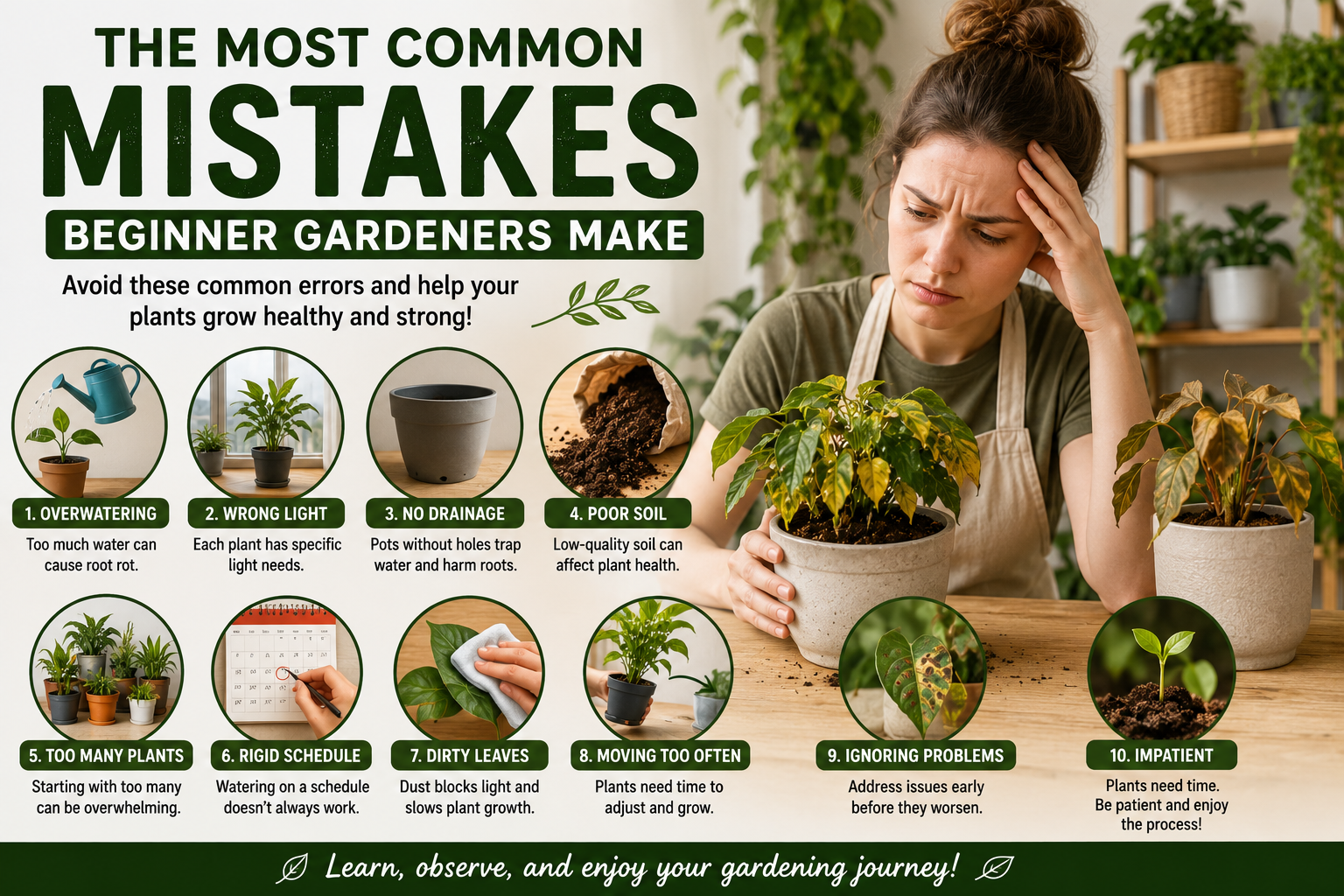
Every gardener who has ever grown a thriving, beautiful plant collection started exactly where you are now — making small, avoidable mistakes that felt catastrophic at the time and turned out to be invaluable lessons in disguise. Gardening is not a skill you acquire by reading about it; it is one you develop through direct observation, patient experimentation, and the gradual accumulation of experience that only hands-on time with living plants can provide. Understanding the most common beginner mistakes before you make them does not make you immune to the learning curve, but it does compress it significantly — helping you arrive at confident, intuitive plant care faster and with fewer casualties along the way.
Starting With Too Many Plants at Once
The excitement of a first visit to a well-stocked nursery is one of gardening’s genuine pleasures, and it is also one of its most reliable traps for beginners. Surrounded by beautiful, healthy plants in every size, color, and form imaginable, the impulse to bring home an armful is natural and understandable. The practical reality, however, is that each plant in your collection has its own specific requirements for water, light, soil, humidity, and temperature — and attempting to learn and manage all of these simultaneously, before you have developed the observational fluency to read what any of them is communicating, creates a care deficit that affects every plant in the collection.
Start with two or three plants and give each one your full, undivided attention. Learn exactly how quickly each one’s soil dries between waterings. Observe how it responds to the light in its chosen position. Notice what healthy new growth looks like and how often it appears. This focused attention with a small number of plants builds the pattern recognition that makes caring for ten or twenty plants manageable rather than overwhelming. Once you feel genuinely comfortable with your initial choices — watering correctly, reading their signals accurately, maintaining their health consistently — add one or two more and repeat the learning process. The collection that grows gradually and is consistently well-maintained will always outperform the one acquired enthusiastically and managed reactively.
Overwatering: The Most Common Plant Killer
If there is a single mistake that kills more houseplants than any other, it is overwatering — and it is almost always the result of genuine care and attentiveness rather than neglect. The instinct to water frequently, to respond to any sign of drooping or dullness with more water, and to maintain visibly moist soil at all times produces chronically saturated root zones that deprive roots of the oxygen they need to function. When roots cannot access oxygen, they begin to suffocate and eventually rot — a process that happens entirely underground, invisible above the soil surface, often for weeks before any dramatic symptoms appear.
The most reliable antidote to overwatering is a single habit change: checking the soil before every watering session rather than watering on a schedule. Press a finger one to two inches into the soil. If it feels moist, the plant does not need water — regardless of how long it has been since you last watered, regardless of how the surface looks, and regardless of what schedule you have been following. If it feels dry at that depth, water thoroughly until water flows freely from the drainage holes. This simple soil-check habit adapts automatically to seasonal changes, varying pot sizes, and the different water consumption rates of each plant in your collection, and it prevents the vast majority of overwatering incidents that claim the lives of otherwise healthy plants.
How to tell overwatering from underwatering
One of the most frustrating aspects of overwatering is that its early symptoms are almost identical to those of underwatering — both conditions cause wilting, drooping, and yellowing that can easily be misread as a call for more water, which worsens the situation dramatically when overwatering is the actual cause. The critical diagnostic difference is always in the soil: an underwatered plant has soil that is completely dry several inches down, while an overwatered plant has soil that feels cold and wet even deep in the pot. Additional overwatering indicators include a sour or musty smell from the soil, leaves that feel soft and waterlogged rather than firm, and wilting that does not improve — or actively worsens — after additional watering. Always check the soil before responding to any wilting or drooping symptom with more water.
Ignoring Light Requirements
Light is the energy source that drives every biological process in a plant, and placing a plant in inappropriate light conditions is one of the most reliably damaging mistakes a beginner can make — not because of any dramatic immediate failure, but because of the slow, gradual decline that follows weeks of insufficient or excessive light exposure. The human eye adapts so effectively to varying light levels that rooms which feel bright and welcoming to us can be genuinely dim from a plant’s perspective. A position just one meter back from a window can receive ten times less light than the windowsill itself — a difference that determines whether a sun-loving plant thrives or slowly etiolates in that spot.
Before placing any plant in your home, research its specific light requirements and honestly assess whether the position you have in mind genuinely meets them. Sun-loving plants — succulents, cacti, Mediterranean herbs, most flowering annuals — belong on your brightest south or west-facing windowsills where they receive several hours of direct or near-direct sunlight daily. Shade-tolerant plants — snake plants, ZZ plants, peace lilies, cast iron plants — can perform well further from windows where light is lower. Placing these two categories in each other’s positions produces predictable, avoidable problems: the sun-lover declining slowly in the dark corner that looked decoratively perfect, and the shade-tolerant plant developing bleached or scorched patches on the sunny windowsill that seemed like the most generous spot in the room.
Using Pots Without Drainage Holes
Decorative pots are among the most beautiful objects in the plant world, and many of the most beautiful ones have no drainage holes. This creates a genuine dilemma for plant-loving decorators who want both the aesthetic and the horticultural function — and the solution is simpler than most beginners realize. A pot without drainage holes used as a permanent planting container will eventually cause root rot in any plant growing in it, regardless of how carefully the watering is managed. Water accumulates at the base of the container after each watering session, and roots growing downward in search of moisture eventually reach this standing water and begin to decay.
The cachepot system resolves this completely: plant in a plain nursery pot with adequate drainage holes sized appropriately for the root ball, then place that functional inner pot inside the beautiful decorative container as an outer sleeve. Water the inner pot, allow it to drain thoroughly over a sink, and return it to its decorative cover with the assurance that no standing water will accumulate around the roots. This approach gives you complete freedom in your decorative choices while maintaining the drainage function that every plant’s root health depends on. Every pot intended as a permanent plant home needs drainage holes — this is the one aspect of pot selection that is genuinely non-negotiable.
Choosing Plants That Are Too Demanding Too Early
The fiddle-leaf fig, the maidenhair fern, the calathea, the bird of paradise — these are some of the most photographed and coveted houseplants in the world, and they are among the least appropriate choices for someone developing their plant care skills. Each of these species has specific, somewhat unforgiving requirements for light quality, watering frequency, humidity, temperature stability, and soil conditions, and each responds to deviations from those requirements with rapid and sometimes irreversible decline that can feel crushing to a beginner who invested real money and emotional energy in the plant.
The plants that build genuine gardening confidence are those that communicate their needs clearly and tolerate the small errors that are inevitable during the learning process. Snake plants, pothos, spider plants, ZZ plants, and aloe vera are not consolation prizes for beginners who cannot yet handle the impressive plants — they are genuinely beautiful, genuinely rewarding, and genuinely appropriate for the stage of skill development you are in. Mastering these varieties first develops the observational fluency, the watering instincts, and the environmental awareness that make caring for more demanding plants straightforward rather than stressful when you eventually choose to take them on.
- Start with these — snake plant, pothos, ZZ plant, spider plant, aloe vera, peace lily
- Graduate to these later — rubber plant, monstera, orchid, dracaena, Chinese evergreen
- Advanced plants for confident growers — fiddle-leaf fig, maidenhair fern, calathea, bird of paradise
Using Poor Quality or Inappropriate Soil
Soil is the growing medium that roots live in every hour of every day, and its quality, structure, and drainage properties directly determine how well any plant can perform regardless of how attentively it is watered and fed. Many beginners use whatever soil is most readily available — outdoor garden soil, leftover compost from a previous project, or the cheapest bag on the shelf — without considering whether it is appropriate for the specific plants they are growing. Outdoor garden soil compacts severely in containers, drains poorly, and frequently introduces weed seeds, pests, and pathogens into an indoor growing environment. A cheap all-purpose potting mix may be technically adequate for some plants while being completely wrong for others.
Using a quality potting mix suited to your plant type is one of the simplest and most impactful investments you can make in plant health. Standard all-purpose potting mix amended with twenty to thirty percent perlite suits most tropical foliage houseplants and improves the drainage that prevents overwatering. A dedicated cactus and succulent mix provides the fast-draining, mineral-rich medium that drought-tolerant plants need. Fresh, quality potting mix provides a clean start free of pathogens and with a nutritional base that supports healthy establishment from the beginning — a foundation that cheap or inappropriate soil simply cannot provide.
Neglecting Early Warning Signs
Plants communicate constantly through changes in their appearance, posture, and growth patterns, and one of the most valuable skills any gardener can develop is the habit of noticing these signals before they escalate into serious problems. A single yellow leaf on an otherwise healthy plant is likely normal aging. Three or four yellow leaves appearing simultaneously on the lower portion of the plant is a signal worth investigating. A plant that was growing steadily and has suddenly stopped is telling you something has changed in its environment or care. A plant that was upright and is now consistently drooping is asking for attention.
The difference between catching a problem at its earliest stage and discovering it weeks later is the difference between a five-minute intervention and a weeks-long recovery process. A spider mite infestation discovered when it involves a handful of insects on a single leaf is eliminated in minutes with a damp cloth. The same infestation discovered after three weeks of undetected growth may have spread to multiple plants and require repeated treatment over several weeks to fully resolve. Build the habit of a slow, attentive observational pass through your entire plant collection at every care session — looking at posture, color, new growth, and leaf surfaces — before watering or doing anything else. This five-minute habit is the single most effective plant problem prevention practice available.
The small changes worth paying attention to
Yellowing leaves that begin at the bottom of the plant and progress upward suggest overwatering or nutrient deficiency. Brown, crispy leaf tips and edges in an otherwise healthy plant point to low humidity or fluoride sensitivity from tap water. Pale, elongated new growth reaching toward a window indicates insufficient light. Leaves that develop small brown or silvery spots or webbing on their undersides signal the presence of spider mites. Leaves that curl inward consistently despite adequate watering suggest low humidity or root problems. Each of these signals, read accurately and responded to early, is a straightforward correction. Read too late or ignored entirely, each becomes a significantly more complex problem.
Moving Plants Too Frequently
When a plant begins to look less than perfect — slightly pale, a little droopy, slower growing than expected — the instinct to move it somewhere else is natural and often reasonable. But constantly relocating plants in search of a better position creates its own problems. Each move changes the light level, temperature, humidity, and airflow around the plant simultaneously, forcing it to adjust to an entirely new set of environmental conditions just as it was beginning to adapt to the previous ones. This cycle of perpetual adjustment prevents the stable, gradual acclimatization that produces healthy, vigorous plant growth and can create a plant that is chronically stressed rather than one that is improving.
When you move a plant to a new position, give it at least three to four weeks in that position before assessing whether the change is producing improvement. New growth emerging in the new location is the most reliable indicator that the plant is responding positively to its new conditions. If after four weeks there is no improvement and the plant continues to decline, investigate the care fundamentals — soil moisture, pot drainage, and root health — before trying yet another location. Position changes should be deliberate and evaluated patiently rather than impulsive and frequent.
Common Mistakes to Avoid
- Watering on a fixed schedule without checking the soil — Plant water needs change with the seasons, temperature, pot size, and growth activity. The soil, not the calendar, is the only reliable guide to when watering is actually needed.
- Expecting fast results from slow-growing plants — Many houseplants grow slowly by nature, and apparent inactivity during winter or after repotting is normal and healthy. Patience and consistency produce better results than interventions driven by impatience.
- Comparing your plants to social media images — Social media presents curated, idealized snapshots of plant collections at their most photogenic moments. Real gardening involves gradual progress, occasional setbacks, and plants at varying stages of health and development. Judge your own progress against where you started, not against the filtered highlight reel of someone else’s collection.
- Forgetting about humidity for tropical plants — Central heating and air conditioning create dry indoor air that stresses moisture-loving tropical plants. Brown leaf tips, curling leaves, and a generally crispy appearance in otherwise well-watered plants often indicate low humidity rather than any watering problem. Group plants together, use pebble trays, or run a small humidifier to raise local humidity around sensitive species.
- Giving up after losing a plant — Every experienced gardener loses plants, and continues to do so occasionally regardless of their level of skill and knowledge. Each lost plant is a learning opportunity that teaches something a successful plant cannot. Investigate what went wrong, adjust your approach, and start again with the knowledge that the next attempt will be informed by experience the first one was not.
Frequently Asked Questions
Q: How do I know if I am overwatering or underwatering my plant?
A: The answer is always in the soil rather than in the plant’s appearance above the surface. Remove the plant from its pot if necessary and check the root zone directly — consistently wet, cold soil with roots that feel soft or smell unpleasant indicates overwatering. Completely dry soil with roots that are firm but parched and possibly pulling away from the pot walls indicates underwatering. Above the soil, overwatered plants have leaves that feel soft and waterlogged and may yellow from the bottom upward. Underwatered plants have leaves with dry, crispy edges and tips that feel papery to the touch.
Q: Is it normal to lose plants as a beginner?
A: Not only is it normal — it is universal. Every gardener, regardless of experience level, loses plants. Beginners lose them more frequently because the observational skills and intuitive plant-reading abilities that prevent most problems are still being developed. The important thing is to investigate each loss rather than simply replacing the plant with another one. Understanding why a plant died — overwatering, insufficient light, root rot, pest damage — transforms what feels like failure into the most reliable source of practical gardening knowledge available.
Q: How long does it take to become a confident plant owner?
A: Confidence in plant care is not a fixed destination but a continuously expanding capability, and most attentive beginners find that a single full growing season of consistent, engaged care produces a dramatic increase in their observational accuracy and care instincts. By the end of your first year with plants, if you have been paying genuine attention — checking soil regularly, noticing changes in plant appearance, investigating problems when they arise — you will find that responses which required research and uncertainty in month one feel intuitive and immediate in month twelve. The learning accelerates with engagement rather than with elapsed time.