
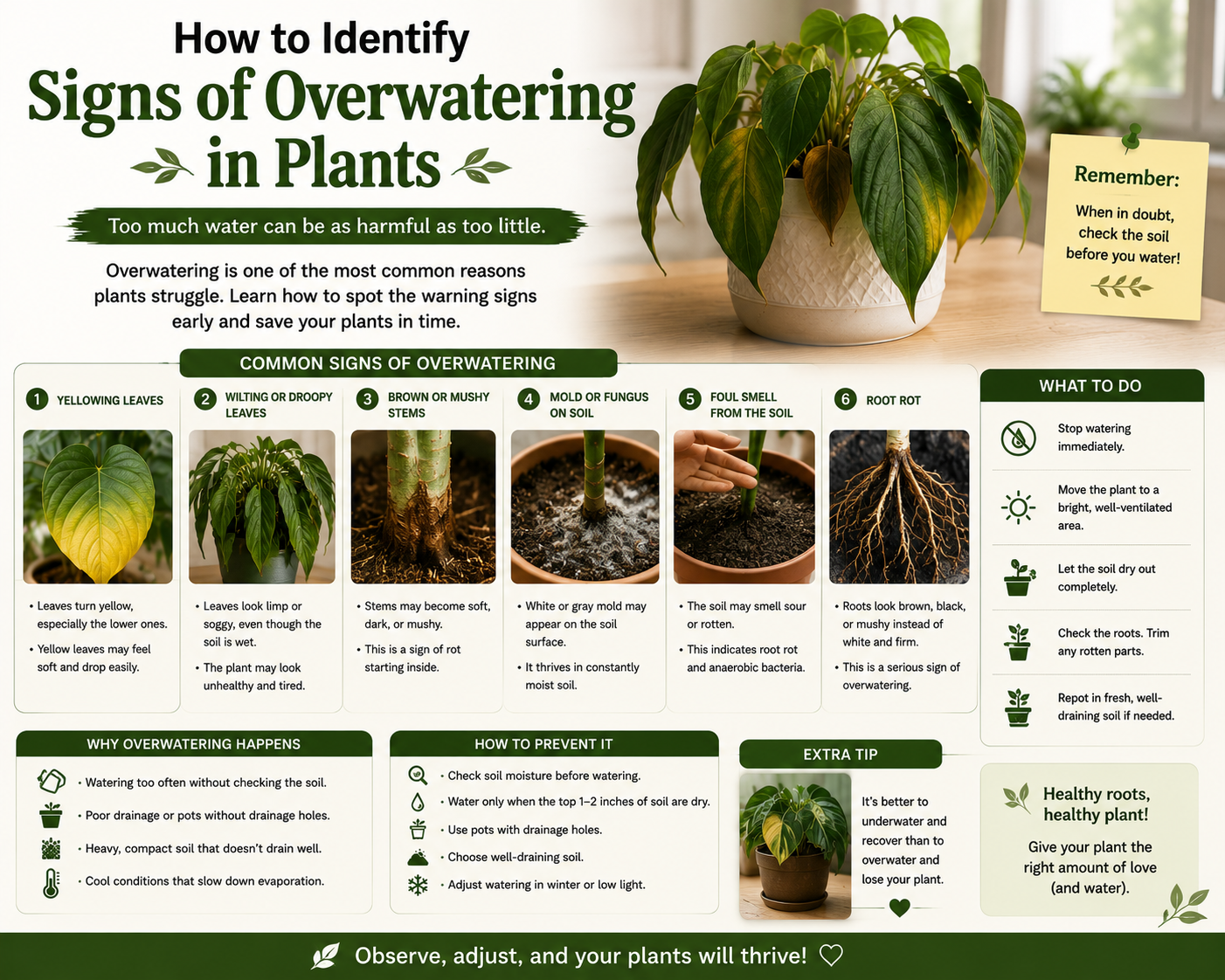
Overwatering is the single most common cause of houseplant death, and the frustrating irony is that it is almost always the result of too much care rather than too little. Plant owners who water frequently out of attentiveness, who soak their plants at the first sign of any wilting, or who follow rigid watering schedules regardless of what the soil or plant is actually communicating are the ones most likely to unknowingly drown their plants in good intentions. Learning to recognize the signs of overwatering — and understanding why it causes such serious damage — is one of the most important skills any plant owner can develop.
Why Overwatering Is So Damaging
The damage caused by overwatering is not simply a matter of too much water in the soil. When soil remains saturated for extended periods, the tiny air pockets between soil particles — which roots depend on for oxygen — fill with water completely. Roots deprived of oxygen cannot perform the cellular respiration they need to function, and they begin to suffocate even while surrounded by water. This creates the deeply counterintuitive situation where an overwatered plant is simultaneously drowning and dying of thirst, because roots that have suffocated cannot transport water upward to the rest of the plant regardless of how much moisture surrounds them.
The second stage of overwatering damage is root rot — a condition caused by anaerobic bacteria and fungi that thrive in waterlogged, oxygen-depleted soil and begin to decompose living root tissue. Root rot spreads progressively through the root system, and because it happens entirely underground where it cannot be seen, it is often not discovered until the plant is showing severe above-ground symptoms that indicate extensive root damage has already occurred. Understanding that overwatering damage is primarily a root problem, not a surface problem, changes the way you interpret the symptoms your plant displays.
The difference between overwatering and underwatering symptoms
One of the reasons overwatering is so difficult to catch is that its early symptoms look almost identical to those of underwatering. Both conditions cause wilting, drooping, and yellowing leaves — which often leads overwatered plant owners to respond by watering even more heavily, dramatically worsening the situation. The critical diagnostic difference is in the soil: an underwatered plant will have soil that is completely dry several inches down, while an overwatered plant will have soil that feels cold and wet even deep in the pot. Always check the soil before responding to any wilting or drooping symptom, and never water a plant that is already sitting in moist soil regardless of how distressed it appears above ground.
Early Warning Signs of Overwatering
The earliest signs of overwatering are subtle and easy to miss if you are not specifically looking for them. Leaves that feel soft and almost waterlogged rather than firm and turgid are often the first indicator — this waterlogged quality is caused by cells that have taken on more water than they can process and are beginning to break down. Leaves that appear slightly translucent or glassy at their base, or that develop small blisters or pustules on their surfaces, are showing a condition called edema — a direct result of the root system taking up water faster than the leaves can release it through transpiration.
Soil that remains consistently dark and cool to the touch long after watering, a slight sour or musty smell rising from the pot, and the appearance of moss, algae, or fungal growth on the soil surface are all reliable early indicators that the growing medium is staying too wet for too long. Addressing overwatering at this early stage — before root rot has established — is straightforward and highly effective. Simply withhold water and allow the soil to dry out completely before watering again, improve the drainage of the potting mix if needed, and consider moving the plant to a brighter, airier position where evaporation from the soil surface is faster.
More Serious Overwatering Symptoms
As overwatering progresses and root damage increases, the symptoms become more dramatic and harder to reverse. Yellowing leaves that begin at the bottom of the plant and progress upward are a classic sign that the root system is losing its ability to deliver nutrients to the foliage — the plant sacrifices its oldest, lowest leaves first as it attempts to sustain the growing tips with its diminishing resources. Leaves that yellow uniformly across the entire plant simultaneously, without the bottom-to-top progression, may indicate a more advanced and widespread root system collapse.
Wilting that does not respond to watering — or that worsens immediately after watering — is a serious sign that root rot has progressed to the point where the roots can no longer function as water transport organs. At this stage, the plant needs immediate intervention: remove it from its pot, examine and trim rotted roots, allow the root system to dry briefly before repotting into fresh, well-draining soil, and give the plant time to regenerate new healthy roots before resuming normal care. This rescue process works for many plants even when the symptoms look severe, but it must be carried out before the rot has consumed the entire root system.
- Soft, waterlogged-feeling leaves — cells overwhelmed with water, early sign of overwatering
- Edema — small blisters on leaf surfaces — root uptake exceeding leaf transpiration rate
- Persistently cold, dark, wet soil — drainage is inadequate for the watering frequency
- Sour or musty smell from the pot — anaerobic bacteria active in waterlogged soil
- Yellowing leaves progressing upward from the base — roots failing to deliver nutrients
- Wilting that does not improve after watering — root rot preventing water uptake
- Brown, mushy stems at the soil line — rot extending from roots into the stem base
Diagnosing Overwatering Through Root Inspection
If your plant is showing multiple symptoms of overwatering and you want to assess the extent of the damage directly, removing the plant from its pot for a root inspection is the most reliable diagnostic tool available. Gently tip the plant out of its container and shake or brush away as much soil as possible to expose the root system. Healthy roots are white or light tan, firm when pressed between your fingers, and have a clean, slightly earthy smell. Roots damaged by rot are distinctly different — they are brown or black, feel soft and mushy when pressed, and often have a foul, rotten odor that is immediately recognizable.
If you find rotted roots, trim all affected tissue back to clean, firm root material using sterilized scissors or pruning shears. After cutting, dust the cut surfaces with powdered cinnamon or activated charcoal — both have natural antifungal properties that help prevent the rot from spreading into the trimmed root ends. Allow the root system to air dry for one to two hours before repotting into fresh, dry, well-draining potting mix in a clean pot. Water very sparingly for the first two to three weeks after rescue repotting to give the trimmed root system time to heal and begin generating new growth before being subjected to water again.
Preventing Overwatering Going Forward
The most effective prevention strategy for overwatering is shifting from a schedule-based watering approach to a soil-moisture-based one. Rather than watering on specific days of the week regardless of conditions, check the soil moisture before every watering session by pressing a finger one to two inches into the soil. If it feels moist, wait. If it feels dry at the appropriate depth for your plant type, water thoroughly. This single habit change prevents the vast majority of overwatering incidents and adapts automatically to seasonal changes in evaporation rate, temperature, and plant growth activity.
Improving the drainage of your potting mix by incorporating perlite, choosing pots with adequate drainage holes, and ensuring saucers are emptied after watering all create structural conditions that make overwatering less likely even when watering frequency is slightly higher than ideal. These preventive physical measures work alongside better watering habits to create a growing environment where excess moisture cannot accumulate around roots long enough to cause damage.
Common Mistakes to Avoid
- Watering a wilting plant without checking the soil first — Wilting is not always caused by underwatering. Always check the soil before responding to drooping or wilting symptoms with more water.
- Using pots without drainage holes — Without drainage, excess water has nowhere to go and will inevitably accumulate at the root level. Every pot needs drainage holes.
- Watering on a fixed schedule regardless of season — Plants need significantly less water in winter than in summer. A schedule appropriate for July will overwater most plants in December.
- Giving up on an overwatered plant before attempting rescue repotting — Many plants that appear beyond saving can be rescued through root trimming and repotting into fresh dry soil. The attempt costs very little and often succeeds even when the prognosis looks poor.
- Resuming normal watering immediately after rescue repotting — A plant recovering from root rot needs very sparing water for the first few weeks while its root system regenerates. Normal watering resumed too soon simply repeats the original problem.
Frequently Asked Questions
Q: Can a plant recover from severe overwatering?
A: Yes, many plants recover from even quite severe overwatering if the problem is caught before the entire root system has rotted and the rescue process is carried out promptly. Remove the plant from its pot, trim all rotted roots, dust with cinnamon, repot into fresh dry soil, place in bright indirect light, and water very sparingly for three to four weeks. New root growth is the sign that recovery is underway.
Q: How long should I wait between waterings to avoid overwatering?
A: There is no universal answer because watering frequency depends on the plant species, pot size, potting mix, light level, temperature, humidity, and season. The only reliable approach is to check soil moisture directly before each watering rather than counting days between sessions. For most common houseplants in average indoor conditions, this check reveals that watering every seven to fourteen days in summer and every fourteen to twenty-one days in winter is appropriate.
Q: My plant has been sitting in wet soil for two weeks. What should I do immediately?
A: Stop watering immediately and move the plant to a brighter, warmer position with good airflow to speed evaporation from the soil surface. If the pot has a saucer with standing water, empty it. Do not water again until the soil has dried out completely to at least two inches deep. If the plant shows signs of serious stress — widespread yellowing, wilting despite moist soil, or mushy stem tissue at the base — remove it from the pot and inspect the roots for rot, treating as described above if rot is found.