
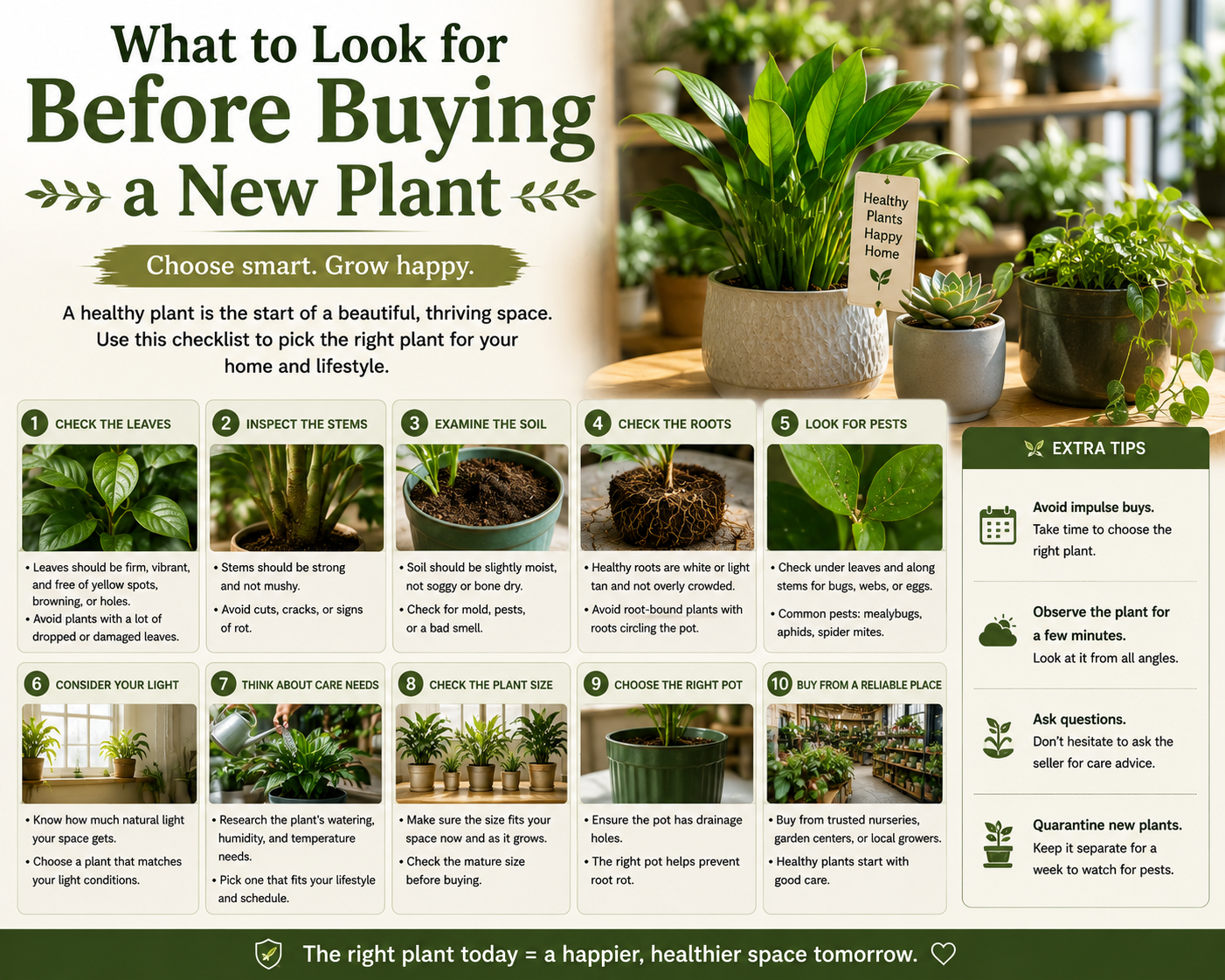
Walking into a garden center or plant nursery is one of life’s quiet pleasures — the smell of damp soil, the rows of lush greenery, the temptation to bring home far more than you originally planned. But impulse plant purchases made without careful evaluation are one of the most common reasons houseplants fail within weeks of arriving home. Taking a few extra minutes to assess a plant thoroughly before buying it dramatically increases the likelihood that it will thrive in your care, saves you money in the long run, and helps you build a collection of genuinely healthy, vigorous specimens rather than a rotation of struggling plants that never quite establish.
Start With the Right Questions Before You Even Enter the Store
The most important decisions about a new plant are made before you even see it in person. Before visiting a nursery, take a few minutes to consider where in your home the new plant will live. What is the light level in that spot — bright and sunny, moderate indirect light, or dim? How does the temperature fluctuate there — is it near a heating vent or a drafty window? How humid is the room? Answering these questions first means you can shop deliberately for a plant that suits your actual conditions rather than falling in love with something that is fundamentally wrong for the space you have available.
It is also worth being honest with yourself about how much time and attention you can realistically offer. If you travel frequently and often forget to water, the lush maidenhair fern that caught your eye is probably not the right choice, however beautiful it looks on the shelf. A ZZ plant or snake plant will give you just as much visual impact with a fraction of the care. Matching the plant to your lifestyle as much as to your space is the foundation of a successful long-term relationship with any new plant.
Researching the plant before you buy it
If you are drawn to a plant you are not already familiar with, take thirty seconds to look it up on your phone before deciding to buy. A quick search will tell you its light requirements, watering needs, typical mature size, and any known difficulties — information that immediately tells you whether it is suitable for the spot you have in mind and the level of care you can provide. This thirty-second research habit prevents the all-too-common experience of bringing a plant home, placing it where you think it looks best, and watching it slowly decline because its needs and its environment are fundamentally incompatible.
Inspecting the Plant’s Overall Health
Once you have identified the type of plant you want, assessing the health of the individual specimens available to you is the next critical step. Healthy plants have firm, turgid foliage that holds its shape without drooping. The color should be rich and consistent for the variety — deep green in most foliage plants, or the specific variegation pattern the cultivar is known for, without pale patches, brown edges, or general dullness that suggests stress or deficiency. Stems should be sturdy and upright, not elongated and leggy, which would indicate the plant has been grown in insufficient light and is reaching desperately toward a light source.
New growth is one of the most reassuring signs of a healthy plant. Look for fresh, unfurling leaves at the growing tips, emerging buds, or new shoots at the base of the plant. Active new growth tells you that the plant’s root system is functioning well, that it has sufficient nutrients and energy, and that it is in a productive rather than stressed state. A plant with multiple signs of active growth will establish in its new home significantly faster and more successfully than one that appears static or struggling.
Checking for Pests and Disease
Inspecting for pests before you buy is non-negotiable, and it needs to be done thoroughly rather than with a casual glance at the top of the plant. Many of the most common and troublesome houseplant pests hide on the undersides of leaves, in the joints between leaves and stems, and in the soil at the base of the plant — precisely the areas that a quick visual assessment misses entirely. Turn the plant over and look carefully at the undersides of several leaves. Check stem joints closely. Part the foliage at the base and look at where the stems meet the soil.
You are looking for any signs of spider mites — fine webbing between leaves and a dusty, stippled appearance on leaf surfaces. Check for mealybugs, which appear as white cottony clusters in stem joints and along leaf midribs. Look for scale insects, which present as small, immobile brown or tan bumps attached to stems. Inspect the soil surface for tiny flying insects that suggest a fungus gnat infestation. Any signs of pest activity at the point of purchase mean you should select a different specimen — or a different plant entirely if every available specimen appears affected.
Identifying signs of disease and cultural problems
Beyond pests, look for signs of disease and poor cultural history. Brown, mushy patches on leaves or stems suggest fungal or bacterial infection. Black or soft areas at the base of a stem indicate rot that may have already reached the roots. Yellowing leaves without any obvious pattern might point to root problems, overwatering history, or nutrient deficiency. Dry, papery brown leaf tips are common and often cosmetic, but extensive brown edges across multiple leaves suggest the plant has experienced significant stress — whether from underwatering, low humidity, cold drafts, or chemical damage — that may take weeks to fully recover from.
Evaluating the Pot and Root System
The pot a plant comes in tells you a great deal about its root health. Check the drainage holes at the base — if roots are visibly emerging in significant quantities, the plant is root-bound and has outgrown its current container. While this is not necessarily fatal, a severely root-bound plant is already under stress and will need repotting almost immediately after you bring it home, adding to the workload of establishment. A modest amount of root at the drainage holes is normal and even a positive sign of vigorous root growth, but roots that are tightly coiled around the outside of the drainage holes or forming a thick mat suggest a plant that has been left in too small a pot for too long.
If you are comfortable doing so, gently tip the plant out of its nursery pot to check the root system directly. Healthy roots are white or light tan and firm, filling the pot with a dense network of growth. Brown or black roots that feel mushy indicate root rot — a serious problem that will continue to affect the plant after purchase. Pale, sparse roots that barely fill the pot suggest a young plant that has not yet established a strong root system, which is fine for seedlings and small plants but less ideal if you are looking for a specimen that will perform immediately.
Choosing Between Multiple Specimens
When a nursery has multiple specimens of the plant you want, always compare them directly rather than picking up the first one you see. Look for the specimen with the most active new growth, the fullest and most symmetrical form, the cleanest foliage without blemishes or damage, and no signs of pest activity. Avoid plants that are leaning heavily to one side, which suggests they have been consistently reaching toward a light source and may take time to adjust to a different orientation. Avoid the largest specimen automatically — younger, smaller plants often establish more readily in a new environment than large, mature ones that have spent months adapting to the very specific conditions of the nursery.
Common Mistakes to Avoid
- Buying plants based on appearance in the store without researching their care needs — A plant that looks spectacular in the nursery under optimal greenhouse conditions may be entirely unsuited to your home environment. Always check care requirements before buying.
- Skipping the pest inspection — Pests on a single new plant can spread to every plant in your home within weeks. A thorough inspection at the point of purchase costs two minutes and protects your entire collection.
- Choosing the biggest or most dramatic specimen available — Larger plants have more established habits and adapt less readily to new conditions. A slightly smaller, younger plant often settles in faster and grows more vigorously once established.
- Buying plants when they are in full bloom to maximize the display — Plants in full bloom are directing all their energy toward flowering rather than root establishment. A plant bought just before it blooms will establish more strongly and still provide the flower display you want.
- Ignoring the condition of the potting mix — Soil that is bone dry, covered in moss or algae, or pulling away from the pot edges has been poorly managed in the nursery. Choose plants in fresh, properly moist potting mix wherever possible.
Frequently Asked Questions
Q: Is it safe to buy plants online without seeing them in person?
A: Online plant purchasing has become increasingly reliable as specialist sellers have improved their packaging and dispatch methods. Look for sellers with strong reviews specifically mentioning plant condition on arrival, clear photos of actual stock rather than stock images, and a reasonable returns or replacement policy for plants that arrive damaged. Research the seller’s dispatch schedule — plants spending a weekend in transit packaging are more stressed than those dispatched Monday to Wednesday for swift delivery.
Q: Should I repot a plant immediately after buying it?
A: As a general rule, give a new plant two to four weeks to acclimatize to your home before repotting, unless the plant is severely root-bound or the potting mix is clearly waterlogged or diseased. The adjustment to new light, humidity, and temperature conditions is already a significant stress — adding the disruption of repotting simultaneously slows establishment and can cause excessive leaf drop. Let the plant settle first, then repot once it shows signs of active new growth.
Q: How do I know if a plant from a supermarket rather than a nursery is worth buying?
A: Supermarket plants are typically grown quickly under optimal commercial conditions and sold as short-term displays rather than long-term specimens. They can be excellent value if you select the healthiest individual available, pot them on immediately into better-draining soil, and treat them as young plants that need gradual acclimatization to your home rather than expecting the instant performance they showed under nursery conditions. Avoid any supermarket plants that are already showing stress symptoms — they have often been kept in poor conditions on the shop floor and are unlikely to recover easily.