
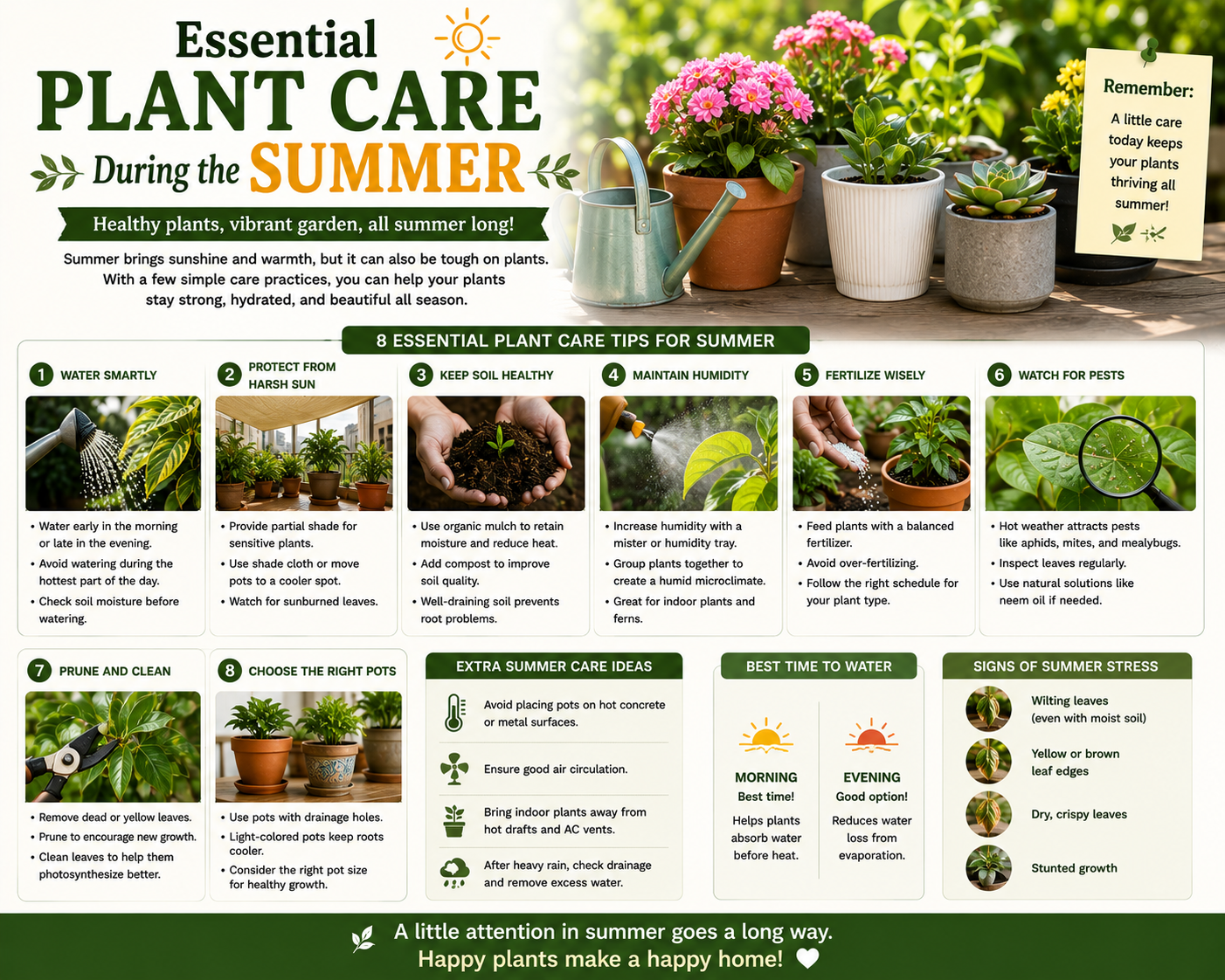
Summer is the season of maximum plant activity — long days, warm temperatures, and intense sunlight drive growth rates that can be dramatically faster than at any other time of year. For outdoor gardeners, summer is a period of abundance and constant management. For indoor plant owners, the warmer months bring their own set of challenges and opportunities that differ significantly from the more restrained care routines of winter. Understanding what summer specifically demands from your plant care routine ensures that your plants make the most of the season’s energy while remaining protected from the stresses that intense summer conditions can impose.
Managing Water Needs in Summer Heat
Watering is the most time-intensive aspect of summer plant care, both indoors and outdoors. Higher temperatures accelerate evaporation from soil surfaces, increased light drives faster plant metabolism and higher water consumption, and for outdoor plants, the combination of heat, wind, and direct sun can dry containers to the point of wilting within a single day during heat waves. Monitoring soil moisture more frequently during summer than at any other time of year is not optional — it is essential to preventing the drought stress that permanently damages root systems and sets plants back for weeks even after normal watering resumes.
For outdoor containers, daily watering checks during periods of hot, dry summer weather are necessary and appropriate. A large terracotta pot in full sun on a hot day can lose its entire moisture content within twenty-four hours, and the roots of a plant stressed by acute drought cannot recover their function immediately even after thorough rehydration — there is always a lag period of one to several days before a drought-stressed plant returns to full health. Watering in the early morning is ideal: the water has time to penetrate to the root zone before the heat of the day accelerates evaporation, and the foliage is dry by the afternoon, reducing the risk of fungal disease that perpetually wet foliage encourages.
Managing indoor plant watering in summer
Indoor plants in summer need watering more frequently than in winter but significantly less frequently than outdoor plants in direct sun. The key variable is the temperature and light level in the specific spot where each plant lives — a plant near a south-facing window in a warm room will dry out much faster than the same plant in a cool, shaded corner of the same house. Check soil moisture regularly rather than assuming that your winter or spring watering frequency is still appropriate in summer conditions, and adjust your schedule in response to what the soil moisture tells you rather than what the calendar says.
Protecting Plants From Intense Summer Sun
While most plants need good light to thrive, the intense direct sun of peak summer — particularly through glass, which concentrates and intensifies sunlight — can cause genuine damage to many popular houseplants and even to outdoor plants accustomed to filtered light. Leaf scorch presents as bleached, pale, or brown patches on leaf surfaces directly exposed to intense sun, and it is permanent — scorched leaf tissue cannot recover its green color or photosynthetic function. Prevention is the only effective strategy.
For indoor plants, assess whether south and west-facing windowsills that were perfect in winter and spring are now receiving too much direct midday and afternoon sun. A sheer curtain or translucent window film reduces the intensity of direct sun by thirty to fifty percent while still allowing abundant light into the room — enough to prevent etiolation while protecting sensitive plants from scorch. For outdoor plants that have been growing in partial shade, be cautious about moving them into full summer sun without a gradual acclimatization period, as the sudden increase in light intensity can cause scorch even in varieties that ultimately tolerate full sun well.
- Water outdoor containers daily during hot, dry weather and check soil moisture morning and evening
- Water early in the morning to minimize evaporation and allow foliage to dry before evening
- Protect sensitive indoor plants from intense direct afternoon sun with sheer curtains or translucent film
- Mulch outdoor beds and containers to reduce evaporation and keep roots cooler
- Group potted plants together to raise local humidity and reduce individual water loss
- Move heat-sensitive plants to shadier positions during heat waves
Feeding Plants During the Growing Season
Summer is the most important time of year for fertilizing plants. The rapid growth of the summer months depletes the nutrients in potting mix quickly, and plants that are producing abundant new growth — leaves, stems, flowers, and fruit — have significantly higher nutritional demands than the same plants in their slow winter phase. A consistent feeding routine throughout summer is the difference between plants that grow vigorously and look their best and plants that produce pale, slow, underwhelming growth despite adequate light and water.
For most houseplants, applying a balanced liquid fertilizer every two to four weeks throughout summer provides the nutritional foundation for strong, healthy growth. For flowering plants, use a fertilizer with a higher proportion of phosphorus during the budding and flowering phase to support bloom production. For fruiting edible plants like tomatoes, peppers, and strawberries, switch to a high-potassium feed once fruiting begins to support fruit development, flavor, and disease resistance. Always apply fertilizer to moist soil rather than dry soil to prevent the concentrated nutrients from burning roots.
Pest Management in Summer
Warm summer temperatures accelerate the reproduction rates of virtually every common plant pest, making summer the peak season for infestations of spider mites, aphids, whitefly, mealybugs, and scale insects. The speed with which pest populations build during warm weather means that an early-stage infestation that would be manageable in cooler months can expand to a significant problem within one to two weeks in peak summer. Weekly pest inspections during summer — checking both leaf surfaces, stem joints, and growing tips — are essential for catching and treating problems before they escalate.
Increase the frequency of your pest checks during and after heat waves, when the hot, dry conditions that spider mites particularly favour create ideal breeding environments. A regular preventive spray of diluted neem oil on all leaf surfaces, applied every two to three weeks throughout summer, provides a broad-spectrum deterrent that significantly reduces the likelihood of pest establishment without harming the plant or any beneficial insects that visit outdoor plants.
Common Mistakes to Avoid
- Maintaining winter watering frequencies into summer — Increased heat and growth activity in summer significantly raises water consumption. Continuing winter watering schedules causes drought stress that permanently damages roots.
- Fertilizing irregularly or not at all during the growing season — Summer growth depletes potting mix nutrients rapidly. Irregular or absent feeding produces pale, slow growth and reduces the plant’s resilience to pests and environmental stress.
- Leaving plants in water-filled saucers during summer — While standing water in saucers can help extend moisture for a brief period during hot weather, leaving roots sitting in water for extended periods in warm temperatures creates ideal conditions for root rot.
- Forgetting to adjust care when going on summer holiday — Plants left unattended through a summer heat wave can experience acute drought stress within forty-eight to seventy-two hours. Arrange for care, invest in self-watering systems, or move plants to cooler, shadier positions before leaving.
- Pruning flowering plants during their blooming period — Allow plants to complete their flowering cycle before pruning. Cutting back during active flowering removes the flowers you have been cultivating and stresses the plant during its most energetically demanding phase.
Frequently Asked Questions
Q: How do I keep my garden watered during a heat wave when I cannot water twice daily?
A: Applying a generous layer of organic mulch — bark chips, straw, or compost — to the surface of beds and containers dramatically reduces evaporation and can more than double the time between necessary waterings. Water deeply and thoroughly in the early morning before leaving, and invest in drip irrigation or soaker hose systems that deliver water directly to the root zone with minimal waste. Self-watering containers are excellent for houseplants, and grouping outdoor pots in a shaded location significantly reduces their water demands during extreme heat.
Q: My houseplants look healthy but are not growing much despite summer being the growing season. What could be wrong?
A: If light, watering, and temperature all appear appropriate, the most likely causes of stalled summer growth are insufficient fertilizing, root-binding, or a potting mix that has become too old and compacted to support active growth. Check whether the roots have outgrown the container, refresh the potting mix if it has been in place for more than two years, and begin a consistent summer fertilizing schedule if you have not been feeding regularly.
Q: Can I move my houseplants outside for summer?
A: Yes, and most houseplants benefit enormously from a summer outdoors in terms of light exposure, air circulation, and overall vitality. The key is acclimatization — move plants to a shaded outdoor spot first and gradually increase their light exposure over two to three weeks before positioning them in full or partial sun. Bring them back inside well before autumn temperatures drop and inspect carefully for pests before reintroducing them to your indoor collection.