
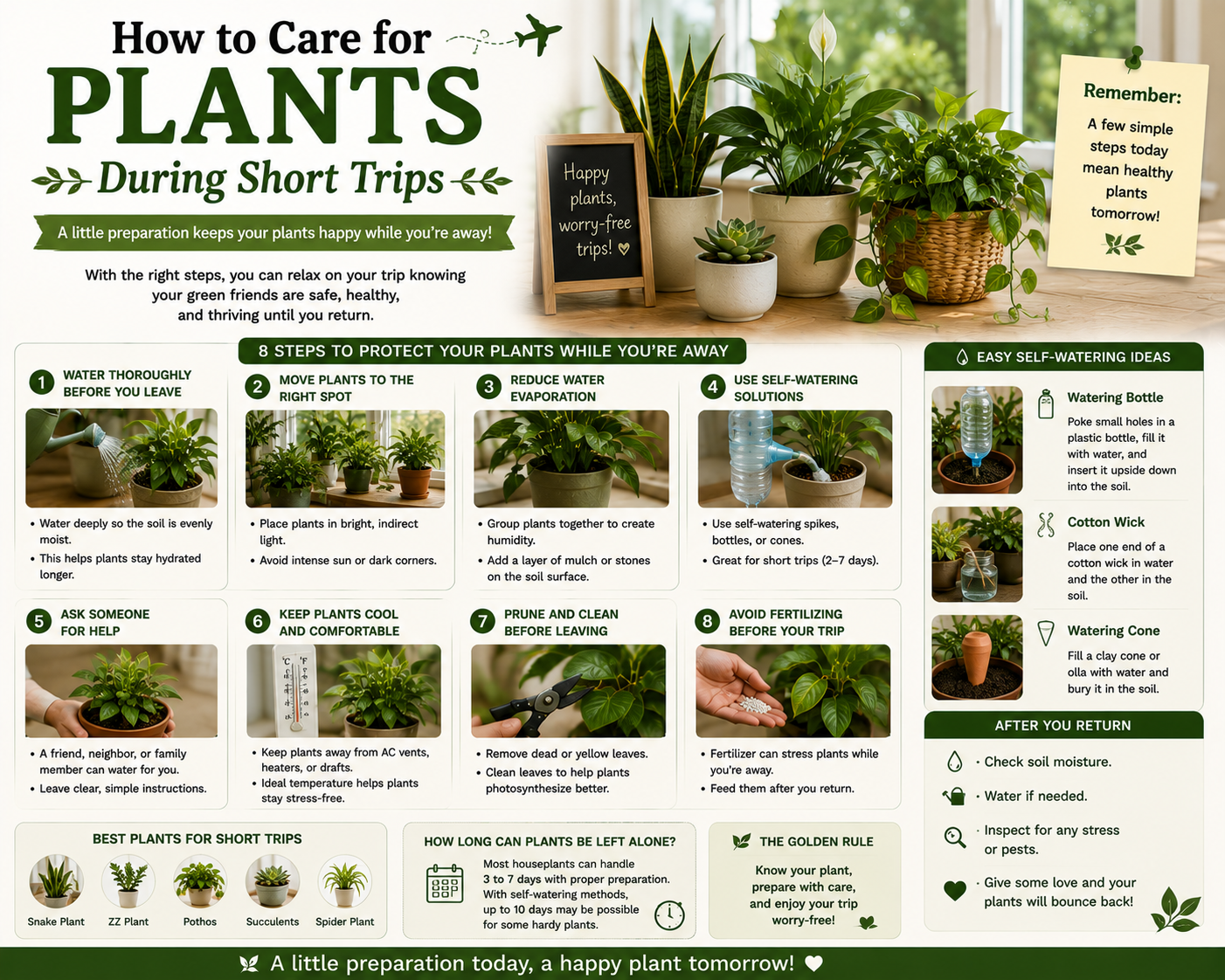
One of the most common anxieties among plant owners is what happens to their beloved collection while they are away from home. Whether you are traveling for a long weekend, a week-long work trip, or a two-week holiday, leaving plants unattended raises legitimate concerns about watering, light, temperature, and all the other care variables that normally receive your daily attention. The reassuring reality is that with a little advance preparation, the vast majority of houseplant collections can be left unattended for one to two weeks — and sometimes longer — without suffering any significant harm.
Preparing Your Plants Before You Leave
The most important plant care happens in the two to three days before your departure, not during your absence. Begin by watering all your plants thoroughly — not just a surface wetting, but a deep, complete soaking that saturates the entire root ball and runs freely from the drainage holes. Do this one to two days before leaving rather than on the day of departure, which allows any excess surface moisture to evaporate and reduces the risk of fungal disease developing on perpetually wet foliage while you are away.
Move all your plants away from their normal positions near south or west-facing windows to locations that receive bright but indirect light. This single step dramatically slows evaporation from the soil and reduces the plants’ water consumption, extending the time before they become drought-stressed. The reduction in light intensity will slow growth slightly but cause no lasting harm over a trip of one to two weeks, and the reduced water consumption it produces is significantly more important than maintaining maximum light levels during your absence.
Grouping plants together for mutual benefit
Grouping all your plants together in one location before you leave creates a microclimate of elevated humidity around the collection that benefits every plant within it. As plants transpire — releasing water vapor through their leaves — the moisture rises and is shared among neighboring plants, slowing each individual plant’s water loss and creating a more stable, humid environment than any single isolated pot would experience. Place the group in a bathroom or kitchen where ambient humidity is naturally higher, and the combination of collective transpiration and naturally moist air can noticeably extend the time before any plant shows drought stress.
Self-Watering Solutions for Longer Absences
For trips longer than one week, or for collections of particularly thirsty plants like ferns, calatheas, or peace lilies, some form of automated or passive watering system is worth setting up before you leave. The simplest and most widely available solution is a self-watering plant spike or dripper — a small terracotta spike that screws onto a standard plastic water bottle, which you fill, invert, and push into the pot soil. The spike releases water slowly and continuously into the soil as it dries, providing a steady trickle of moisture that can sustain most plants for five to fourteen days depending on pot size and the size of the bottle used.
A simple wick watering system can be assembled at home with nothing more than absorbent cotton rope and a container of water. Cut lengths of cotton rope long enough to reach from the bottom of a large water container to the interior of each pot. Push one end of the rope several inches into the soil of each pot and place the other end in the water container, positioned higher than the pots. Water will travel up through the rope by capillary action and deliver a steady supply of moisture to the root zone, sustaining plants for as long as water remains in the container.
- Water all plants thoroughly one to two days before departure
- Move plants away from direct sun to reduce evaporation and water consumption
- Group plants together in a humid room to create a shared microclimate
- Use self-watering spikes or wick systems for trips longer than one week
- Place pots in shallow trays of pebbles and water for passive humidity and minimal moisture supply
- Ask a neighbor or friend to check in for trips longer than two weeks
Which Plants Can Manage Longest Without Attention
Understanding which plants in your collection are most and least tolerant of temporary neglect allows you to focus your preparation efforts where they are most needed. Succulents, cacti, ZZ plants, snake plants, and cast iron plants can survive two to three weeks or more without watering in appropriate conditions, making them essentially self-sufficient for the duration of any trip of reasonable length. These plants should need nothing more than a thorough pre-departure watering and a move to indirect light.
At the other end of the spectrum, moisture-loving plants like maidenhair ferns, calatheas, peace lilies, and most orchids will begin showing drought stress within four to seven days depending on conditions. These are the plants that most benefit from self-watering systems, the plants you should ask a friend to check on for longer trips, and the plants that most justify the investment in smart self-watering pots that alert your phone when soil moisture drops below a set threshold — a technology that has become remarkably affordable and accessible in recent years.
Returning Home After Your Trip
When you return from a trip, resist the impulse to immediately water every plant in the collection regardless of what the soil moisture actually is. Check each plant individually by pressing a finger into the soil, and water only those that are genuinely dry. Some plants — particularly the drought-tolerant varieties — may be perfectly fine and need no immediate attention. Overwatering a plant that has been in cool, indirect light for a week, where its water consumption has been reduced, is a common post-trip mistake that causes more harm than the absence itself.
After watering the plants that genuinely need it, gradually return them to their normal positions over one to two days rather than moving them all at once from indirect light back to their usual sunny spots. The gradual reintroduction to higher light levels prevents the mild shock that sudden changes in light intensity can produce, particularly in plants that have been in significantly lower light for an extended period.
Common Mistakes to Avoid
- Overwatering immediately before departure in an attempt to extend the time before watering is needed — Waterlogging soil just before leaving creates ideal conditions for root rot to develop during your absence, when no one is there to notice the problem and take action.
- Leaving plants in direct summer sun while away — Plants in direct summer sun without daily watering can experience severe drought stress within one to two days. Always move plants to indirect light before any absence of more than a day or two in warm weather.
- Not arranging for care for longer trips with moisture-sensitive plants — For trips of two weeks or more, the most responsible approach for a collection that includes moisture-demanding plants is to ask a trusted person to check in and water when needed. No passive system fully replaces attentive human judgment for collections with diverse watering requirements.
- Watering all plants immediately upon return without checking soil moisture — Check each plant individually before watering. Some will need immediate attention; others will be perfectly fine and do not need water for several more days.
- Leaving sick or pest-affected plants without treatment before departure — A plant with an active pest infestation or disease problem will worsen significantly during your absence without treatment. Address any plant health issues before leaving rather than hoping they will resolve on their own.
Frequently Asked Questions
Q: How long can most houseplants survive without being watered?
A: Most common houseplants in typical indoor conditions can survive one to two weeks without watering if properly prepared before departure — thorough pre-trip watering and positioning in indirect light. Drought-tolerant plants like succulents, cacti, and ZZ plants can manage three weeks or more. Moisture-demanding plants like ferns and calatheas may show stress within five to seven days without supplemental watering systems.
Q: Should I leave plants in water-filled saucers while I am away?
A: For short trips of three to five days in moderate conditions, placing pots on trays of pebbles and water — where the pot bottom sits above the water level — provides beneficial humidity without direct waterlogging. Submerging the pot directly in water for extended periods, however, risks root rot even in plants that are otherwise robust. The pebble tray approach is the safer option for any absence longer than a couple of days.
Q: Can I ask a non-plant-person to water my plants while I am away?
A: Yes, but give them very specific, simple instructions rather than general guidance. Write down which plants need water and approximately when, using clear descriptions like the soil should feel dry an inch down before watering rather than vague instructions like water when needed. Leave a clearly marked watering can with a note showing the approximate amount to use for each plant. Specific instructions turn an inexperienced helper into a competent plant sitter remarkably reliably.