
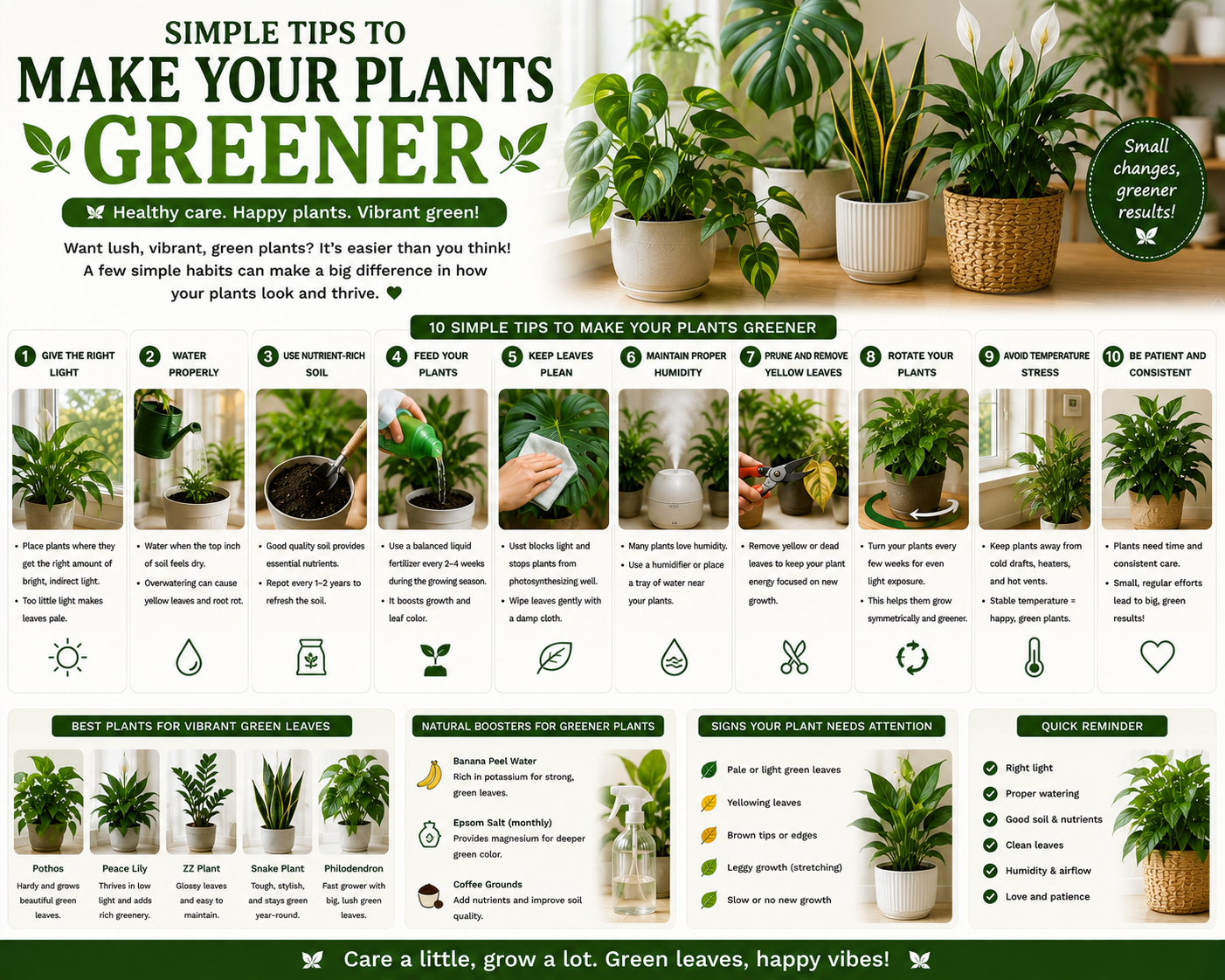
There is a particular satisfaction in a deeply, richly green plant — one whose foliage has an almost luminous quality, dense with chlorophyll and vibrant with health. The difference between a plant that is merely surviving and one that is genuinely thriving is often visible first in the quality of the green: a stressed, undernourished, or poorly positioned plant has a dull, pale, or yellowish cast to its foliage, while a well-cared-for plant in the right conditions has a depth and richness of color that immediately signals its vitality. The good news is that the interventions that produce richer, deeper green foliage are straightforward and accessible to any plant owner willing to make a few targeted adjustments.
Light: The Primary Driver of Leaf Color
The intensity and quality of light a plant receives is the single most important variable determining the richness of its green color. Chlorophyll — the pigment that makes leaves green and drives photosynthesis — is produced in direct response to light availability. A plant in adequate light produces abundant chlorophyll, resulting in the deep, rich green that signals optimal photosynthetic function. A plant in insufficient light has less incentive to maintain high chlorophyll concentrations, and the existing chlorophyll breaks down progressively without adequate replacement, producing the pale, yellowed, or washed-out green of a light-deprived plant.
Before reaching for any fertilizer or other intervention to improve leaf color, assess the light conditions your plant is actually receiving. Move the plant progressively closer to a bright window over the course of a week or two and observe whether the new growth emerging after this repositioning is darker and more richly colored than what was produced in the previous position. This simple test almost always confirms whether light deficiency is the primary cause of pale or dull foliage, and the improvement visible in new growth emerging in better light conditions provides clear confirmation that the repositioning was the right intervention.
The role of indirect versus direct light in leaf color
It is worth noting that different plant types respond differently to light intensity in terms of leaf color. Many tropical foliage plants actually develop their richest, deepest green in bright indirect light rather than direct sun — the latter can bleach chlorophyll from leaves of shade-adapted plants, producing pale or washed-out colors that are the opposite of the deep green being sought. For shade-adapted plants like pothos, philodendrons, and peace lilies, bright indirect light from a few meters from a window often produces more vibrant, deeper green foliage than direct sun exposure, which overwhelms their chlorophyll production capacity rather than maximizing it.
Nutrition and Its Effect on Leaf Color
After light, nutrition is the most significant controllable variable in leaf color quality. Nitrogen is the nutrient most directly responsible for chlorophyll production and, consequently, for the richness of green color in plant foliage. A plant with adequate nitrogen produces abundant chlorophyll and maintains the deep green color that indicates optimal photosynthetic function. A nitrogen-deficient plant shows characteristic yellowing that begins in the oldest lower leaves and progresses upward as the plant scavenges nitrogen from existing tissue to supply its growing tips.
Applying a balanced liquid fertilizer containing a meaningful proportion of nitrogen during the active growing season directly supports chlorophyll production and visibly deepens leaf color within two to three weeks of application. For plants whose pale or dull color is specifically caused by nitrogen deficiency, a fertilizer with a higher nitrogen proportion — look for the first number in the NPK ratio to be highest, such as 10-5-5 or 20-10-10 — produces faster, more dramatic color improvement than a balanced formula where all three macronutrients are present in equal proportions.
- Move pale-leaved plants progressively closer to bright indirect light over one to two weeks
- Apply a nitrogen-containing liquid fertilizer every two to four weeks during the growing season
- Clean leaves regularly to remove dust that reduces light absorption and deepens the green quality
- Ensure roots are healthy — root problems prevent nutrient uptake regardless of fertilizer application
- Maintain appropriate humidity, particularly for tropical foliage plants that respond visibly to dry air
- Repot into fresh potting mix if the existing mix is more than two years old and nutrient-depleted
The Role of Root Health in Leaf Color
A plant whose root system is damaged, constricted, or functioning below capacity cannot absorb nutrients efficiently regardless of how generously it is fertilized. A root-bound plant, one with rotted roots from overwatering, or one growing in old, compacted potting mix that has lost its structure and nutrient-holding capacity will show pale, dull foliage even when fertilizer is applied regularly — because the fertilizer cannot reach the leaves effectively through a root system that is unable to transport it. Before assuming that more fertilizer is the answer to pale leaves, check root health and potting mix condition and address any issues at the root level before resuming feeding.
Common Mistakes to Avoid
- Over-fertilizing in an attempt to force green color — Excess fertilizer causes salt burn that damages roots and actually produces pale, scorched foliage rather than improving color. Always apply fertilizer at the recommended rate or diluted to half strength.
- Cleaning pale leaves with commercial leaf shine products — Leaf shine products create an artificial surface gloss but do nothing for the underlying chlorophyll production that determines true leaf color quality. Address the root cause rather than masking it with a surface coating.
- Assuming pale color always indicates a nutrient deficiency — Light deficiency is at least as common a cause of pale foliage as nutrient deficiency. Always assess and improve light conditions before adding more fertilizer to a pale plant.
- Repotting into fresh soil and expecting immediate color improvement — Color improvement following repotting into fresh nutrient-rich potting mix takes several weeks to become visible as new growth emerges in better conditions. Patience after repotting is required rather than a quick second intervention.
- Ignoring micronutrients in the quest for deeper green — Iron, magnesium, and manganese deficiencies all produce characteristic pale or yellowed leaves that may not respond to nitrogen supplementation. If nitrogen-focused fertilizing fails to improve color, a foliar spray or soil drench of a chelated micronutrient solution addresses deficiencies that macronutrient fertilizers cannot correct.
Frequently Asked Questions
Q: Why are my plant’s new leaves pale green while older leaves are darker?
A: Pale new growth on otherwise healthy plants most commonly indicates an iron or manganese deficiency — these micronutrients are essential for chlorophyll synthesis in new tissue and their deficiency manifests first in young emerging leaves rather than in established older ones. Apply a chelated iron supplement or a complete micronutrient foliar spray to address the deficiency directly. If new growth is consistently paler than mature foliage despite micronutrient supplementation, insufficient light is the more likely cause.
Q: Can coffee grounds improve the green color of plant leaves?
A: Coffee grounds contain nitrogen, which supports chlorophyll production and potentially improves leaf color. However, they also increase soil acidity, which is beneficial for acid-loving plants like azaleas, blueberries, and ferns but potentially harmful for plants that prefer neutral to alkaline conditions. Use coffee grounds sparingly and only for acid-tolerant plants, diluted in water rather than applied directly to the soil surface in quantity where they can become water-repellent and encourage fungal growth.
Q: Is the very deep, almost black-green color of some plant leaves healthy?
A: Very dark, deep green foliage is normal and healthy for some plant varieties — it is a cultivar characteristic rather than a sign of any problem. Rubber plants in the ‘Burgundy’ cultivar, certain ZZ plant varieties, and many dark-leafed begonias naturally have very deep, dark foliage as a genetic characteristic. If your plant has always had this coloring and is otherwise vigorous and growing well, the dark color is simply part of its natural appearance rather than an indication of any deficiency or stress.