
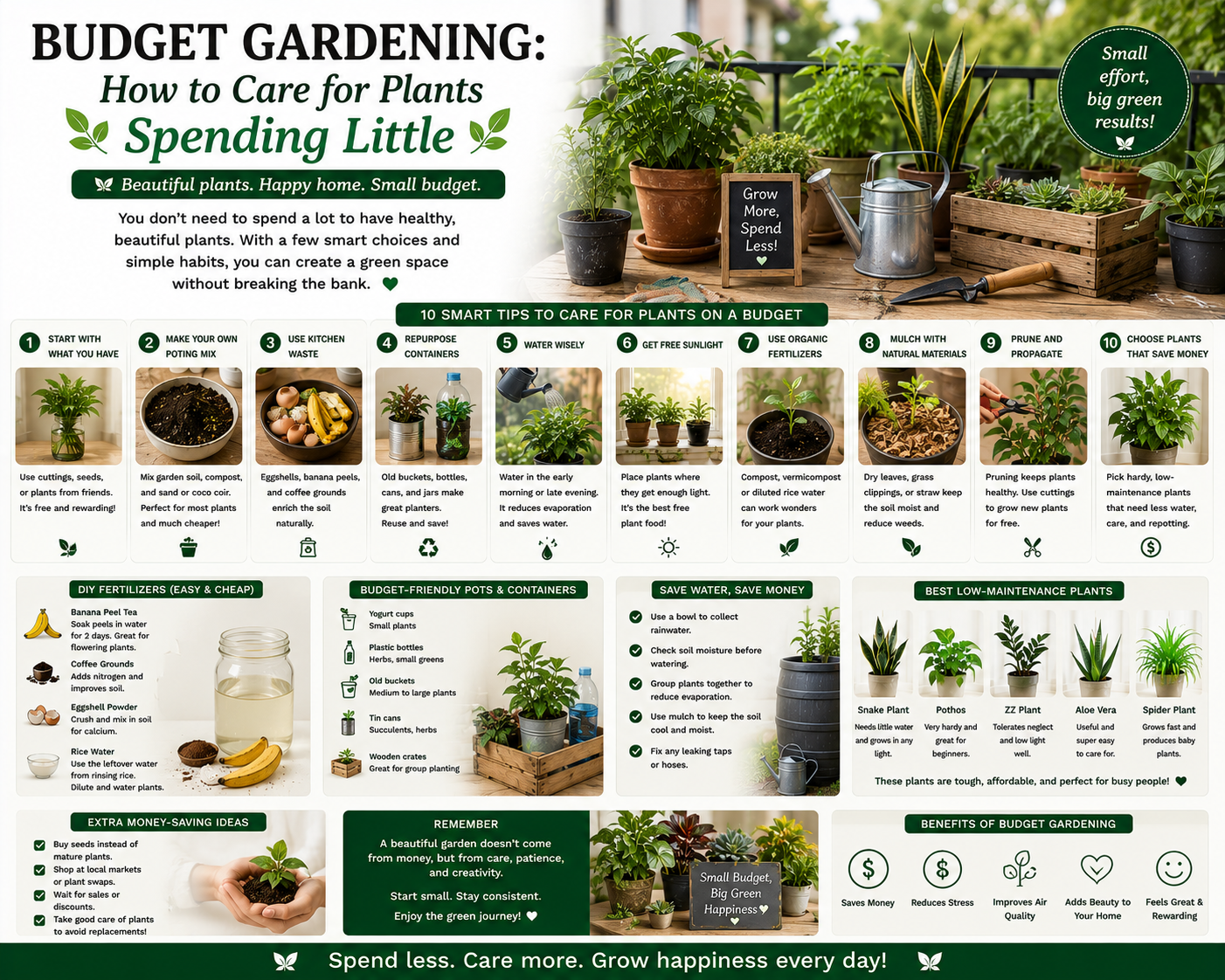
Gardening is sometimes perceived as an expensive hobby, and it can certainly become one if you pursue every new plant variety, invest in elaborate equipment, and replace struggling specimens without investigating why they failed. But the fundamental truth of gardening is that plants want to grow — that is their entire biological imperative — and the primary inputs they need are sunlight, water, nutrients, and appropriate soil, most of which are either free or inexpensive when approached thoughtfully. Budget gardening is not a compromise or a constraint — it is an approach that develops real horticultural knowledge, creative problem-solving skills, and a deeper engagement with plants than money-intensive approaches often produce.
Getting Plants for Free or Near Free
The most significant way to reduce plant care costs is to acquire plants through channels that cost little or nothing. Propagation — creating new plants from existing ones — is the most powerful and satisfying of these approaches. A single healthy pothos, tradescantia, or philodendron can produce dozens of rooted cuttings within a single growing season, each of which becomes an independent plant that can be grown on, given as gifts, or traded with other gardeners for varieties you do not yet have. Taking cuttings costs nothing beyond a clean blade and a cup of water or small pot of moist compost.
Online community plant swaps, local gardening groups, and neighborhood social platforms are abundant sources of free plants from gardeners who have surplus divisions, rooted cuttings, or seedlings they cannot use themselves. The culture of generosity among plant enthusiasts is one of the most reliable features of gardening communities — most experienced gardeners are happy to share divisions and cuttings of their plants with beginners who ask politely and demonstrate genuine interest. Garden clubs and allotment associations often hold annual plant sales where mature, quality plants are available for very modest prices as members thin and divide their established collections.
Seeds as the most economical plant source
Growing plants from seed is the most economical plant-acquisition strategy available, producing large numbers of plants from a tiny initial investment. A single seed packet costing a few dollars can produce twenty, fifty, or even a hundred plants — a quantity that would cost many times as much if purchased as established specimens. Save seeds from your own plants and from fruit and vegetables you eat — tomatoes, peppers, squash, beans, and many flowering plants all produce viable seed that germinates readily and produces plants identical or very similar to the parent. Seed libraries operated by public libraries, gardening clubs, and community organizations provide additional access to seeds at no or minimal cost.
Making Your Own Growing Inputs
Potting mix, fertilizer, and soil amendments represent significant ongoing costs in conventional gardening that can be dramatically reduced or eliminated by making your own. Compost is the most universally useful garden input and one of the easiest to produce at home at essentially zero cost. A simple compost heap or bin converts kitchen vegetable scraps, garden clippings, cardboard, and paper into rich, fertile growing medium within three to six months. Home compost mixed with a proportion of perlite or coarse grit creates an excellent general-purpose potting mix for most houseplants and garden uses.
Natural fertilizers made from kitchen waste eliminate the recurring cost of commercial fertilizers for many plant types. Banana peel liquid feed provides potassium. Compost tea provides a broad spectrum of nutrients and beneficial microorganisms. Diluted nettle tea provides nitrogen and iron. Eggshell water provides calcium. These free inputs, made from materials that would otherwise be discarded, cover the nutritional requirements of most common houseplants and garden plants through the growing season without any financial outlay beyond the containers to make them in.
- Propagate from cuttings and divisions to create new plants for free
- Participate in local plant swaps and gardening community groups for free plant exchanges
- Grow plants from seed — the most economical plant source available
- Make your own compost to create free potting mix and soil amendment
- Prepare homemade liquid fertilizers from kitchen waste — banana peel, compost tea, nettle tea
- Collect rainwater for free, plant-friendly irrigation
Reducing Ongoing Care Costs
Beyond plant acquisition and inputs, ongoing care costs can be minimized through a few consistent practices. Collecting rainwater rather than using treated tap water is free, better for plants, and reduces the mineral buildup in potting mix that tap water causes over time. Repurposing household containers as plant pots — tins, colanders, wooden crates, old boots — eliminates the cost of purchasing decorative pots for every new plant. Making your own tools from salvaged materials and maintaining existing tools well rather than replacing them when they wear reduces equipment costs significantly.
Choosing plants that propagate easily and freely — pothos, tradescantia, spider plants, succulents, herbs — creates a collection that perpetually renews and expands itself without additional purchase. Every new plant acquired through propagation or division has zero purchase cost and comes with the additional satisfaction of having grown it yourself from a cutting or seed. Over time, a collection built primarily through propagation and swap develops a depth of personal investment and horticultural knowledge that a collection built through purchase alone rarely achieves.
Common Mistakes to Avoid
- Buying cheap tools that break quickly and need frequent replacement — Inexpensive tools are often false economy — they wear out faster, make tasks harder, and cost more over time than quality tools bought once. Buy the best tools you can afford and maintain them well.
- Purchasing plants impulsively rather than propagating from existing ones — Every healthy plant in your collection is a potential source of free new plants. Before buying a new specimen of a plant you already have, consider whether propagating from your existing plant would produce the same result for nothing.
- Discarding plants that could be revived with basic intervention — A declining plant is often a learning opportunity rather than a lost cause. Investigate the cause of decline before replacing — root rot, pest damage, and nutrient deficiency are all treatable with low-cost interventions that restore plant health.
- Using expensive specialist fertilizers when homemade alternatives work as well — Homemade compost tea, banana peel liquid feed, and nettle tea provide the nutritional requirements of most plants as effectively as commercial liquid fertilizers at a fraction of the cost. Invest in commercial fertilizer only for plants with very specific nutritional requirements that homemade alternatives cannot address.
- Overbuying plants and losing them to poor care — A modest collection of plants you care for well is more economical and more satisfying than a large collection of plants struggling from insufficient attention. Match your collection size to the time and resources you can genuinely invest.
Frequently Asked Questions
Q: What is the absolute cheapest way to start a plant collection from scratch?
A: Begin by asking friends, family, neighbors, and online community groups for cuttings or divisions of plants they already have. Most plant owners are happy to share propagation material from vigorous, well-established plants. One rooted cutting of pothos, tradescantia, or spider plant placed in a recycled tin or jar with drainage holes punched in the base, filled with homemade compost, costs nothing beyond the soil and a small amount of time — and produces a thriving, beautiful plant within weeks.
Q: Is homemade compost really adequate for growing houseplants?
A: Good quality homemade compost, mixed with a proportion of perlite or coarse grit to improve drainage, is an excellent growing medium for the majority of common houseplants. Its nutrient content is variable but generally sufficient for established plants during the growing season, and its biological activity — the diverse community of beneficial microorganisms it contains — is often superior to sterilized commercial potting mixes. For seed sowing and propagation, a finer, lower-nutrient mix is preferable, but mature plants grow very well in well-made homemade compost.
Q: How do I propagate the most popular houseplants for free?
A: Pothos and philodendrons root readily in a glass of water — cut a stem just below a leaf node, remove the lower leaves, and place in water in indirect light. Roots appear within two to three weeks. Succulents propagate from individual leaves placed on dry potting mix in indirect light, producing tiny rosettes from their bases within a month. Spider plants produce ready-rooted offsets on long runners that can be separated and potted directly. Snake plants can be divided at the base or propagated from leaf sections pushed into moist soil. Each of these methods produces new plants at zero cost from specimens you already own.