
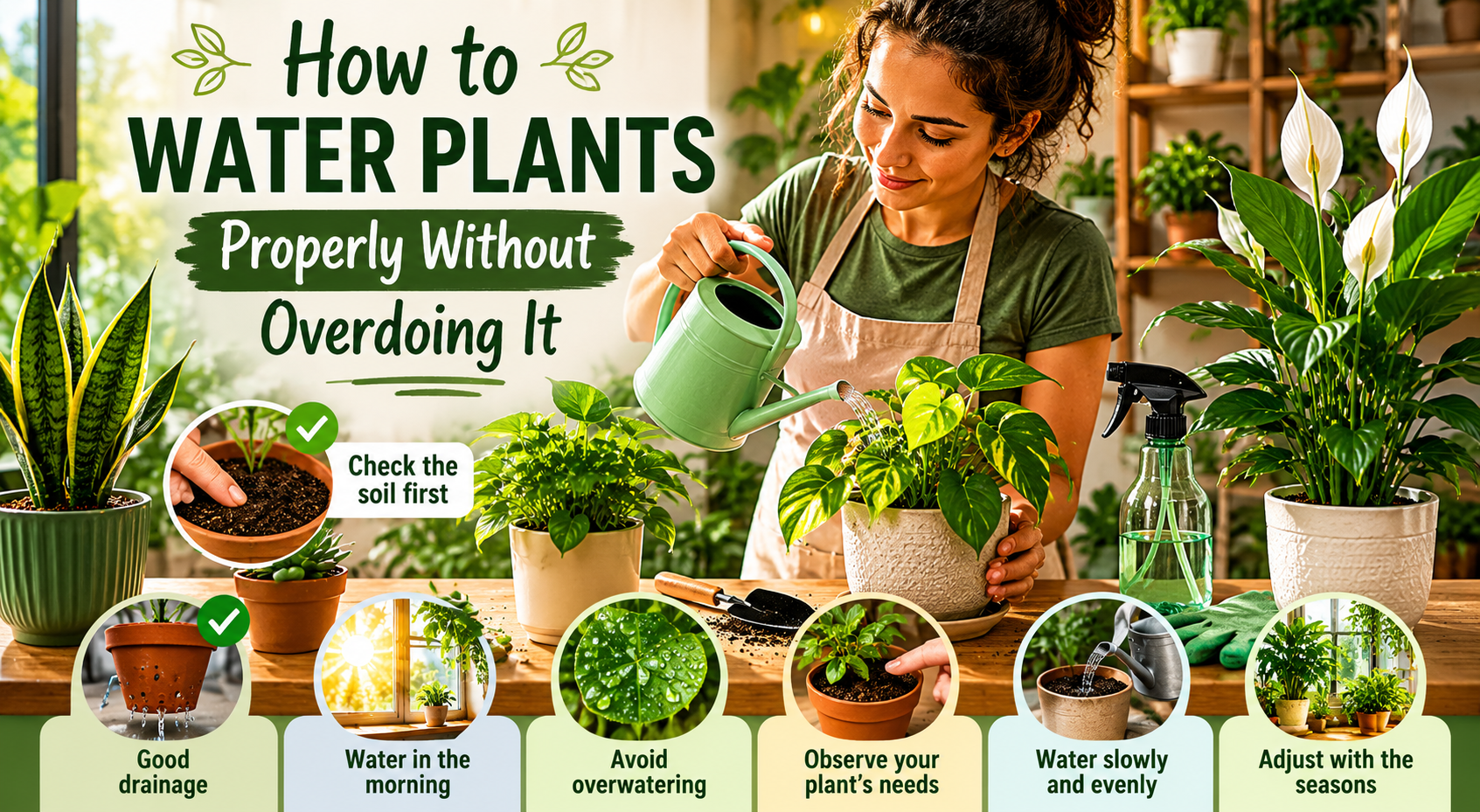
Watering is the plant care task that beginners perform most often and get wrong most consistently — and the mistake is almost never giving too little water. It is giving too much. The instinct to water frequently, to keep soil visibly moist, and to respond to any sign of drooping with an immediate drink is natural and well-intentioned, but it produces the chronically saturated root zones that are responsible for more houseplant deaths than any other single cause. Learning to water correctly is less about memorizing schedules and more about developing the observational habits that allow you to give each plant exactly what it needs, exactly when it needs it — no more and no less.
Why Getting Watering Right Matters So Much
Water is the medium through which plants transport nutrients from roots to leaves, maintain the internal pressure that keeps stems and foliage upright, and carry out the cellular processes that drive growth and metabolism. Too little water and these processes slow, stall, and eventually cease — producing the wilting, browning, and progressive decline of a drought-stressed plant. Too much water and the oxygen supply to the root zone is cut off entirely, as waterlogged soil fills every available air pocket with moisture and leaves roots unable to breathe. The resulting oxygen deprivation kills root cells and creates the ideal conditions for the fungal and bacterial pathogens that cause root rot — a condition that progresses silently underground for weeks before any above-ground symptoms appear.
The reason overwatering kills more houseplants than underwatering is precisely this invisibility. A drought-stressed plant shows its distress immediately and obviously — wilting, brown leaf edges, dry soil — and recovers quickly and completely once thorough watering restores its water supply. An overwatered plant, by contrast, may look perfectly healthy for weeks while its root system is being progressively destroyed below the soil surface, and by the time yellowing leaves and wilting signal that something is seriously wrong, the damage is often extensive and difficult to reverse.
The single most important watering habit you can develop
Every reliable watering practice ultimately reduces to one foundational habit: checking the soil before every watering session rather than watering on a schedule. Press a finger one to two inches into the soil. If it feels moist at that depth, the plant does not need water — regardless of how long it has been since you last watered, regardless of how the surface looks, and regardless of what schedule you have been following. If it feels dry, water thoroughly until water flows freely from the drainage holes at the base of the pot. This soil-check habit adapts automatically to seasonal changes in evaporation rate, to varying pot sizes, and to the individual water consumption patterns of each plant in your collection, making it the most universally reliable watering guidance available.
Reading the Signs Your Plant Gives You
Plants communicate their watering status continuously through changes in their appearance and posture, and learning to read these signals accurately is one of the most valuable skills any plant owner can develop. The challenge for beginners is that the most dramatic above-ground symptom of poor watering — wilting and drooping — is produced by both overwatering and underwatering, and responding to it without first checking the soil is how one problem is mistaken for the other and inadvertently made significantly worse.
An underwatered plant wilts because its cells have lost the internal water pressure that maintains their rigidity. The soil around it will be bone dry several inches down, the pot will feel noticeably lighter than usual when lifted, and the leaf edges and tips may have developed a dry, papery brown coloring from the edges inward. This plant recovers completely and quickly — usually within a few hours — after a thorough, deep watering that saturates the entire root ball. An overwatered plant wilts because its root system has been sufficiently damaged by oxygen deprivation and rot that it can no longer transport water upward effectively, even though the soil surrounding it is saturated. The soil will feel cold and wet, there may be a sour or musty odor from the pot, and the leaves may feel soft and waterlogged rather than firm. Additional water makes this plant worse, not better.
How to Water Thoroughly and Effectively
The technique of watering matters almost as much as the frequency. Light, frequent surface watering — adding a small amount of water to the top of the soil without saturating the root ball — is one of the most common watering mistakes and one that reliably produces plants that are simultaneously stressed and overwatered at different depths. Surface watering encourages roots to grow toward the soil surface where moisture is available, creating a shallow root system that dries out extremely rapidly and has none of the resilience that deep-rooted plants develop against brief dry periods.
Thorough, deep watering that saturates the entire root ball encourages roots to grow deep into the pot in search of moisture — a deep root system that takes significantly longer to dry out and provides far greater resilience against brief dry spells. When you water, pour slowly and steadily until water flows freely from the drainage holes at the base of the pot, confirming that moisture has reached the entire depth of the root zone. Then stop, allow the pot to drain completely, and do not water again until the soil has dried to the appropriate depth for your specific plant. This approach — water less frequently but more thoroughly each time — consistently produces healthier, more resilient plants than frequent light watering does.
- Always water slowly and steadily rather than pouring large amounts quickly onto the soil surface
- Continue watering until water flows freely from the drainage holes — this confirms the entire root ball is moistened
- Allow the pot to drain completely before returning it to its saucer — never leave pots sitting in standing water
- Empty saucers after every watering session — standing water in saucers is absorbed back into the soil and contributes to root rot
- Use lukewarm or room-temperature water — cold water shocks tropical plant roots and can cause temporary stress
- Consider letting tap water sit uncovered overnight before use — this allows chlorine to dissipate naturally and benefits sensitive plants
Watering Different Plant Types Correctly
No single watering frequency suits all plants, because different species evolved in environments with dramatically different water availability patterns and have developed correspondingly different relationships with soil moisture. Understanding the broad categories of water need that define the plants in your collection is essential for applying the right watering approach to each one rather than treating them all identically.
Succulents and cacti evolved in environments where rainfall is rare, irregular, and followed by rapid drainage through sandy, mineral soils. Their water-storing leaves and stems allow them to survive extended dry periods that would kill most other plants, and their roots are specifically adapted to fast drainage and aeration rather than consistent moisture. The correct watering approach for these plants is thorough soaking followed by complete drying — water generously until it drains freely from the bottom, then wait until the soil is completely dry throughout before watering again. In typical indoor conditions this means watering every two to four weeks in summer and once a month or less in winter. Tropical foliage plants like pothos, peace lilies, and philodendrons prefer the top inch or two of soil to dry out between waterings but do not want the root ball to dry completely. Mediterranean herbs like rosemary, thyme, and oregano prefer conditions similar to succulents — infrequent, thorough watering with excellent drainage. Culinary herbs like basil and mint prefer more consistent moisture, checking every two to three days and watering when the top inch feels dry.
Adjusting watering through the seasons
One of the most important and most overlooked aspects of effective plant watering is its seasonal variation. During spring and summer, warmer temperatures increase evaporation from the soil surface, higher light levels drive faster plant metabolism and greater water consumption, and active growth demands a more generous and consistent water supply. During autumn and winter, most houseplants slow their growth significantly and enter a semi-dormant phase in which their water consumption drops substantially. Maintaining the same watering frequency year-round — continuing summer watering schedules into winter — is one of the most reliable ways to cause root rot in an otherwise healthy plant. As growth slows in autumn, reduce watering frequency gradually in response, allowing the soil to dry more thoroughly between sessions than you would have permitted in the active growing season.
The Role of Drainage in Watering Success
Even the most precise and attentive watering practice is undermined by inadequate drainage. Every pot used as a permanent plant home must have drainage holes at its base — this is the one aspect of container selection that is genuinely non-negotiable. Without drainage, every watering session adds to a gradually accumulating reservoir of water at the base of the pot where it cannot escape and where roots inevitably grow into it and begin to rot. No amount of watering precision compensates for a pot that cannot release excess moisture after each session.
Beyond drainage holes, the composition of the potting mix significantly affects how quickly soil dries between waterings and how effectively oxygen circulates around the root zone. Standard all-purpose potting mix retains moisture well but can hold excess water for too long in lower-light or cooler indoor conditions. Adding twenty to thirty percent perlite by volume to any potting mix dramatically improves drainage and aeration, creating a medium that holds enough moisture for root hydration between waterings while releasing excess moisture efficiently and maintaining the air pockets that roots need for healthy respiration. For succulents and cacti, this amendment proportion should be forty to fifty percent, or a dedicated cactus mix used from the outset.
Common Mistakes to Avoid
- Watering on a fixed weekly schedule regardless of soil moisture — Plant water needs change with season, temperature, pot size, light level, and growth activity. The soil, not the calendar, is the only reliable guide to when watering is actually needed. A schedule that works in July overwatering most plants in December.
- Responding to wilting with immediate watering without checking the soil — Wilting is produced by both overwatering and underwatering. Always check the soil before responding — cold, wet soil in a wilting plant means the last thing it needs is more water.
- Watering lightly and frequently rather than deeply and infrequently — Surface watering creates shallow, fragile root systems. Deep, thorough watering followed by an appropriate drying period produces deep, resilient roots that maintain plant health through brief dry spells.
- Leaving pots sitting in water-filled saucers — Water that accumulates in saucers is gradually reabsorbed into the soil from below, keeping the root zone perpetually moist and creating the conditions for root rot. Empty saucers after every watering session without exception.
- Using cold tap water directly on tropical plants — Cold water causes brief temperature shock in tropical plant roots that can manifest as pale patches on leaves. Allow water to reach room temperature before use, and let it sit uncovered for a few hours if your tap water is heavily chlorinated.
Frequently Asked Questions
Q: How do I know if I have been overwatering my plant and what should I do about it?
A: The most reliable way to confirm overwatering is to remove the plant from its pot and examine the roots directly. Healthy roots are white or light tan and firm to the touch. Roots damaged by overwatering are brown or black, feel mushy when pressed, and may have an unpleasant smell. If you find rotted roots, trim all affected tissue back to firm, healthy material with sterilized scissors, dust the cut surfaces with powdered cinnamon or activated charcoal to prevent further fungal spread, and repot into fresh, dry, well-draining potting mix. Water very sparingly for the following two to three weeks to allow the root system to regenerate before resuming normal care.
Q: My plant always seems to wilt two or three days after watering. What am I doing wrong?
A: Rapid wilting shortly after watering almost always indicates one of three things: the plant is in a pot that is too small and the root mass is exhausting the available moisture very quickly; the watering was too shallow and did not saturate the entire root ball despite appearing thorough; or the root system has been damaged by previous overwatering and can no longer transport water efficiently. Check the drainage holes for roots emerging in quantity, try bottom-watering by placing the pot in a shallow tray of water for twenty to thirty minutes to ensure thorough root-zone saturation, and if the problem persists, remove the plant from its pot to examine root health directly.
Q: Is it better to water plants a little every day or thoroughly less often?
A: Thorough, less frequent watering is consistently better for the vast majority of plants. Daily light watering keeps only the surface soil moist, encouraging roots to grow upward toward the moisture rather than downward into the pot — a shallow root system that dries rapidly and requires constant attention. Thorough watering that saturates the entire root ball, followed by an appropriate drying period before the next watering, encourages deep root growth and creates a resilient plant that manages brief dry spells without stress. The only exceptions are very small seedlings and freshly rooted cuttings whose immature root systems need consistent surface moisture — once established, these plants benefit from the same deep, infrequent watering approach as their mature counterparts.