
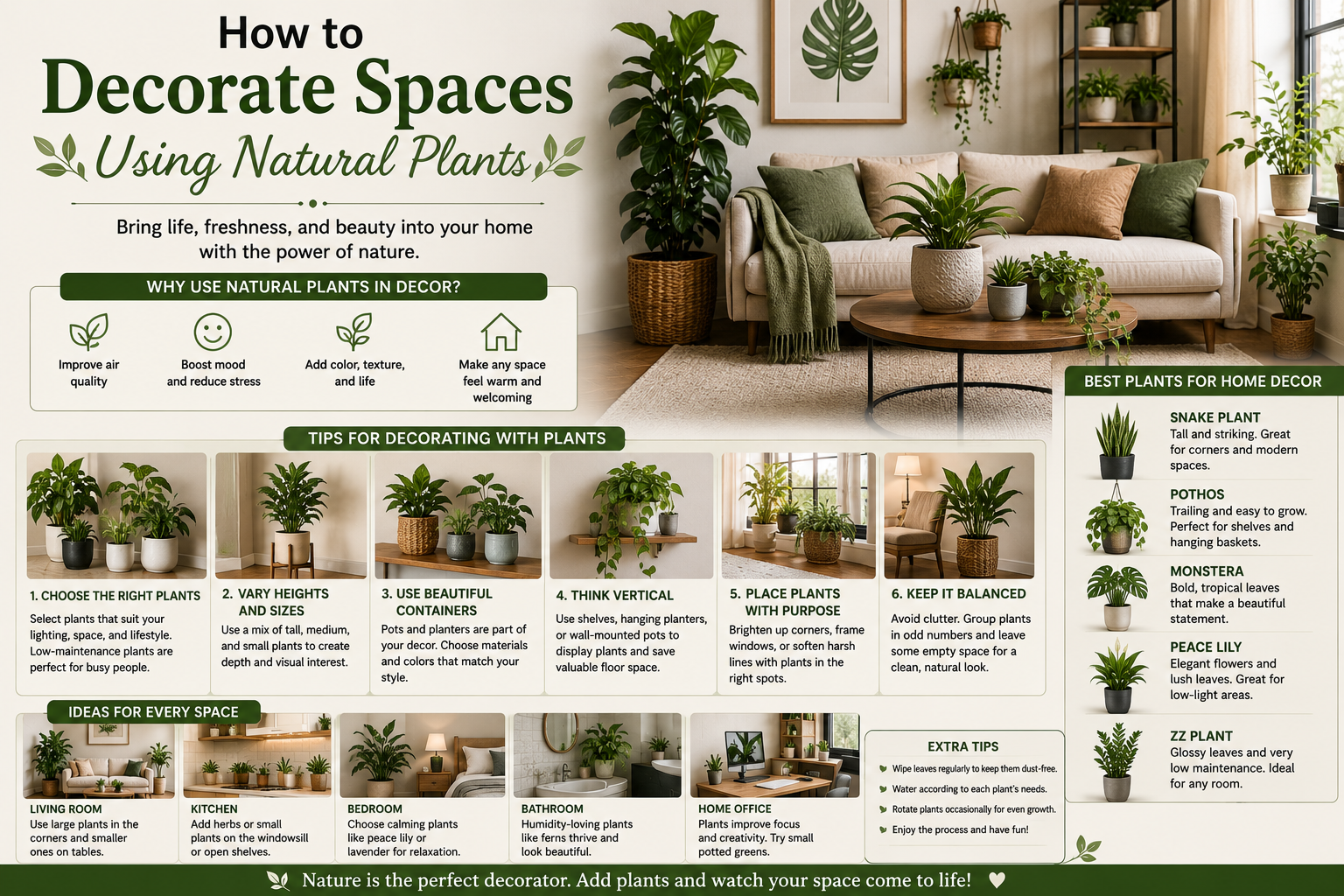
Plants are among the most versatile and rewarding decorating tools available. Unlike furniture or art, they change and grow over time, bringing a sense of life and movement to a space that no inanimate object can replicate. They add color, texture, scale, and natural fragrance. They soften hard architectural lines, fill awkward empty corners, and bring a warmth and organic quality to interiors that even the most carefully curated decor struggles to achieve without them. Best of all, decorating with plants is accessible to virtually anyone, at almost any budget, in almost any space.
Understanding Plants as Design Elements
To use plants effectively as decorating tools, it helps to think of them through the same lens you would apply to any other design element. Plants have form — the overall shape and silhouette they create in a space. They have texture — the visual and tactile quality of their leaves, from the smooth gloss of a rubber plant to the feathery delicacy of an asparagus fern. They have scale — the relationship between the size of the plant and the size of the space around it. And they have color — not just green but the extraordinary range across different species, from deep burgundy to silver-grey to variegated gold and white.
Thinking about these qualities before choosing plants for a space allows you to make selections that genuinely enhance the room rather than simply filling it with greenery. A tall, architectural snake plant or fiddle-leaf fig brings vertical energy and drama to a corner that lacks height. A trailing pothos or string of pearls softens the edge of a shelf and draws the eye along a horizontal surface. A low, spreading succulent arrangement at table height creates an interesting focal point without blocking sightlines across the room.
Creating a cohesive plant palette
Just as interior designers work with a cohesive color palette for walls and upholstery, a thoughtful plant palette creates a sense of visual unity across a decorated space. Choose plants that share complementary aesthetic qualities — similar leaf shapes, related color tones, or a shared stylistic character — rather than assembling a random mix of whatever catches your eye. A room filled with lush tropical foliage plants in shades of deep green creates a maximalist jungle aesthetic. A collection of architectural succulents and cacti in simple geometric pots creates a minimalist desert character. Both are beautiful — but mixing them without a clear vision tends to create visual noise rather than decorative harmony.
Using Plants to Enhance Specific Rooms
Different rooms have different characters, different light conditions, and different practical requirements that should guide your plant choices for each space. Living rooms are typically the largest and best-lit spaces, making them ideal for statement plants that can be appreciated from across the room — large specimens of Monstera deliciosa, rubber plants, bird of paradise, or Dracaena create the kind of bold, beautiful presence that transforms a living space. Position these focal plants in corners where two walls meet, where they are supported from behind and their form can be fully appreciated from the main seating area.
Kitchens are natural homes for herb gardens — practical and beautiful simultaneously. A row of terracotta herb pots on a sunny kitchen windowsill provides both fresh flavors for cooking and living greenery that makes the kitchen feel warm and inhabited. Bathrooms, with their naturally higher humidity, are excellent environments for moisture-loving tropical plants that might struggle in the drier air of other rooms. Maidenhair ferns, orchids, air plants, and peace lilies all thrive in bathroom conditions and bring an elegant, spa-like quality to the space.
- Living room — statement plants like monstera, fiddle-leaf fig, or bird of paradise as focal points
- Bedroom — calming, air-purifying plants like snake plant, peace lily, or lavender
- Kitchen — productive herb gardens on windowsills, pothos trailing from cabinets
- Bathroom — humidity-loving plants like ferns, orchids, air plants, and bamboo
- Home office — small desk plants like succulents, pothos, or ZZ plant to improve focus
- Hallway — tall, narrow plants like snake plants or dracaenas for impact in limited space
Styling Plants With Pots and Accessories
The container a plant lives in is as much a part of the decorating decision as the plant itself. A beautifully chosen pot elevates any plant, while an ill-considered one diminishes even the most stunning specimen. The most effective approach is to choose a container style and material that complements both the plant’s natural aesthetic and the broader decorating style of the room. Terracotta suits bohemian, rustic, and Mediterranean-inspired interiors. Matte ceramic in neutral tones pairs beautifully with minimalist and Scandinavian aesthetics. Woven basket pot covers add warmth and texture to naturalistic and casual spaces.
Beyond the pots themselves, the way you arrange plants in a space matters enormously. Grouping plants in odd numbers — three, five, or seven — creates arrangements that feel naturally balanced and abundant. Varying the heights within a grouping adds depth and visual interest. Using plant stands, stacked books, or small tables to lift some plants higher than others creates the layered, tiered effect that makes a plant display look intentional and well-composed rather than randomly assembled.
Common Mistakes to Avoid
- Choosing plants based purely on appearance without considering care requirements — A plant that needs bright light placed in a dark corner will decline quickly regardless of how beautiful it looked in the garden center.
- Using pots that are too small for the space — Small pots get lost in large rooms. A single large statement plant in a proportionate pot almost always makes more decorative impact than a cluster of tiny pots.
- Ignoring the ceiling height when choosing tall plants — A fast-growing plant like a fiddle-leaf fig can reach the ceiling within a few years in a room with standard ceiling height. Consider the mature size before committing to it as a long-term decorating feature.
- Placing all plants at the same height — A flat arrangement at the same level lacks visual dynamism. Use variation in height to create layering and depth.
- Overcrowding plants for instant impact — Dense planting looks lush immediately but quickly becomes cramped as plants grow. Allow appropriate space between plants from the beginning.
Frequently Asked Questions
Q: How many plants does a room need to feel well-decorated with greenery?
A: There is no fixed number. As a starting point, one large statement plant in a corner plus two or three medium plants positioned around the room creates a generous feeling of greenery without overwhelming the space. From there, add plants gradually until the balance feels right rather than filling the room all at once.
Q: What plants work best in a room with very little natural light?
A: For rooms with minimal natural light, choose plants genuinely adapted to low-light conditions: ZZ plants, snake plants, pothos, cast iron plants, Chinese evergreens, and peace lilies are the most reliable choices. Supplement with a grow light if natural light is truly insufficient for even these tolerant species.
Q: How do I make a small room feel larger using plants?
A: Tall, narrow plants like snake plants and dracaenas draw the eye upward and make ceilings feel higher. Mirrors positioned beside plant arrangements reflect the greenery and make the space feel larger. Avoid placing large, wide-spreading plants in very small rooms — instead use vertical growing to add plant volume without consuming floor space.