
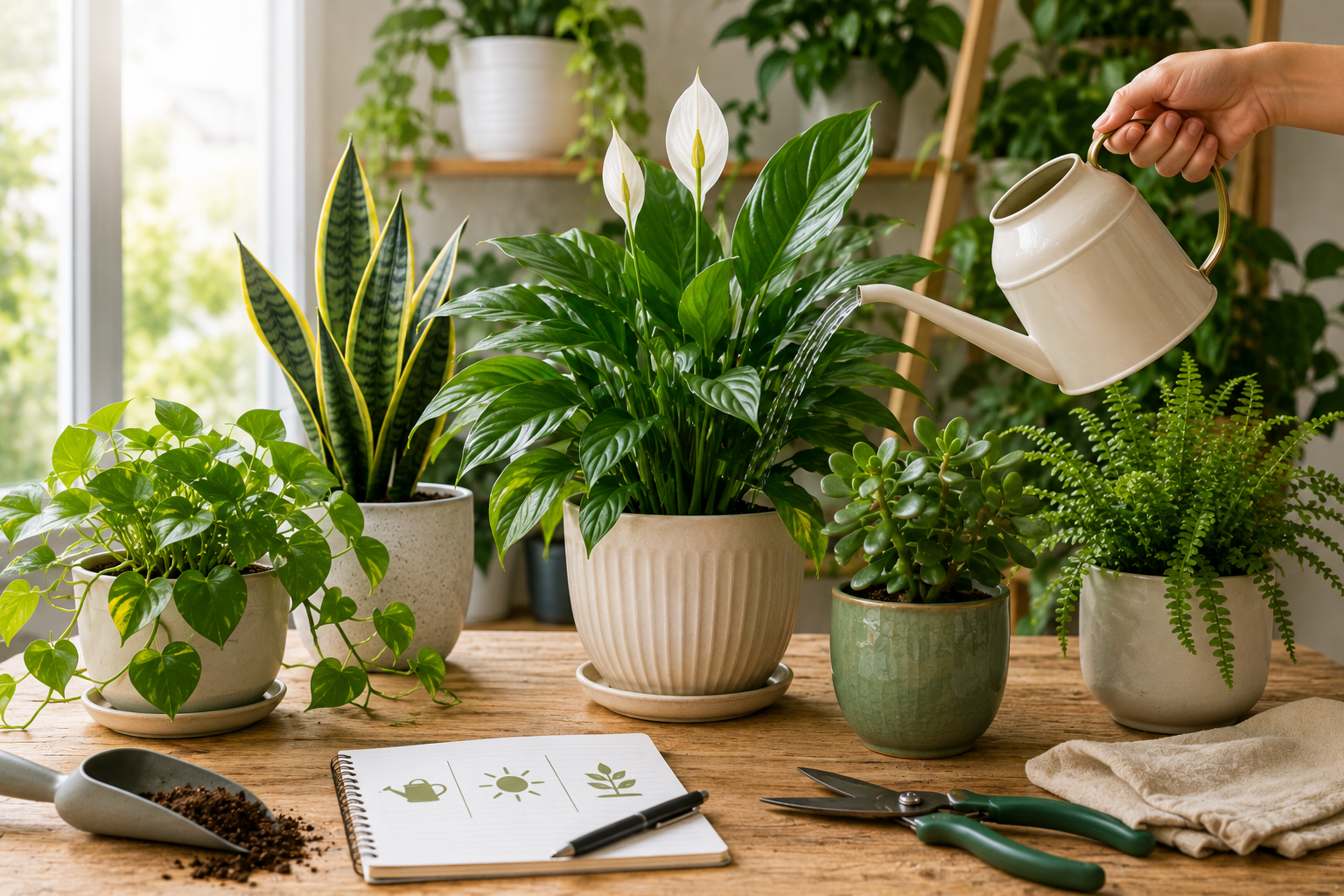
Keeping plants healthy throughout every season is one of the most rewarding challenges a plant lover can take on, and one that is far more accessible than most beginners initially believe. Whether you have a sprawling backyard garden or a single potted fern on your windowsill, the principles that produce consistently thriving plants are the same — and none of them require professional knowledge, expensive products, or hours of daily attention. With a handful of consistent habits and a genuine willingness to observe your plants closely, you can keep your collection looking its best from January all the way through December.
Understanding What Your Plants Actually Need to Thrive
Every plant is different, but all of them share four fundamental requirements: appropriate light, correct watering, adequate nutrition, and suitable soil. When any one of these four factors is significantly misaligned with a plant’s actual needs, the plant will communicate its dissatisfaction through yellowing leaves, drooping stems, stunted growth, or the pale, washed-out coloring of a specimen that is surviving rather than thriving. Learning to read these signals accurately and respond to them promptly is the single most valuable skill any plant owner can develop, and it begins with understanding what each plant genuinely needs in the first place.
The most important first step with any plant — whether newly acquired or long established — is researching its specific requirements rather than assuming it will perform well with generic care. A succulent and a fern share almost nothing in terms of their environmental preferences: one evolved in hot, dry, sun-drenched landscapes and demands bright light, fast-draining soil, and infrequent watering, while the other evolved on humid forest floors and needs consistent moisture, indirect light, and elevated humidity. Treating them identically is one of the most common and most avoidable reasons houseplants decline.
Learning to read what your plants are telling you
Plants communicate constantly through their appearance, posture, and growth patterns, and developing the habit of reading these signals before problems escalate is what separates plant owners whose collections consistently thrive from those who perpetually react to crises. A plant with soft, drooping leaves and persistently wet soil is overwatered. A plant with crispy brown leaf edges and bone-dry soil is underwatered. Pale, elongated new growth reaching toward a window signals insufficient light. Dark patches or bleached spots on leaves in a sunny position indicate too much direct sun. Each of these signals, caught early, is straightforwardly correctable — caught late, the same problems require significantly more intervention to resolve.
Getting Watering Right Throughout the Year
Overwatering is the single most common cause of houseplant death, and it is almost always the result of too much attentiveness rather than neglect. The intuition to water frequently — to check on plants daily and add water at the first sign of dry-looking soil — produces chronically saturated root zones that deprive roots of the oxygen they need to function and creates ideal conditions for the root rot that silently destroys plants before visible above-ground symptoms appear. Shifting from a schedule-based watering approach to a soil-moisture-based one is the single most impactful change most plant owners can make.
Before every watering session, press a finger one to two inches into the soil. If it feels moist, wait. If it feels dry at the appropriate depth for your specific plant, water thoroughly until it flows freely from the drainage holes at the base of the pot — then do not water again until the soil has dried to the appropriate level once more. This simple habit adapts automatically to seasonal changes in temperature and evaporation rate, to variations in pot size, and to the individual water consumption patterns of each plant in your collection.
Adjusting watering with the seasons
One of the most important and most overlooked aspects of year-round plant care is that watering needs change significantly across the seasons. During spring and summer, when plants are growing actively and temperatures are higher, soil dries faster and plants consume water more rapidly — most houseplants will need watering every one to two weeks, and outdoor plants may need daily attention during heat waves. As autumn arrives, reduce watering gradually in response to slowing growth and lower evaporation rates. In winter, most houseplants enter a semi-dormant period and need water only half as frequently as in summer. Maintaining summer watering frequencies through winter is one of the most reliable ways to cause root rot in an otherwise healthy plant.
Providing the Right Light in Every Season
Light is the energy source that drives every biological process in a plant, and getting it right is foundational to year-round plant health. The human eye adapts so effectively to varying light levels that a room that feels bright and cheerful to us can be genuinely dim from a plant’s perspective — a spot one meter back from a window can receive ten times less light than the windowsill itself, a difference that determines whether a sun-loving plant thrives or struggles in that position.
Seasonal light changes require active management throughout the year. In winter, shorter days and a lower sun angle deliver significantly less light through windows even to plants in the same position they occupied all summer. Move light-hungry plants closer to windows during the colder months and consider supplementing with a grow light for particularly demanding species. Conversely, the intense direct afternoon sun of midsummer through south and west-facing windows can scorch the leaves of plants that were perfectly positioned in winter — a sheer curtain or a slight repositioning protects sensitive foliage while maintaining adequate brightness.
Feeding Your Plants for Strong, Consistent Growth
Plants growing in containers depend entirely on you for their nutrition because the limited soil in a pot cannot regenerate the minerals that roots continuously extract from it. A plant that has never been fertilized, or one that has been growing in the same potting mix for two or more years, will gradually exhaust its available nutrient supply and begin to show the signs of deficiency — pale, yellowing foliage, slowed growth, smaller leaves, and a general loss of the vitality that makes a healthy plant visually striking.
During the active growing months of spring and summer, apply a balanced liquid fertilizer every two to four weeks to sustain the nutrient supply that vigorous growth demands. For foliage plants, a fertilizer with a higher proportion of nitrogen supports the rich green leaf color and steady growth that make them beautiful. For flowering plants, switch to a formula higher in phosphorus during the budding season to support bloom production. Stop fertilizing entirely in autumn and winter — feeding a plant that is slowing toward dormancy pushes it to produce soft, weak growth at exactly the wrong time of year and can cause root damage from accumulated fertilizer salts in soil that is being processed more slowly.
- Spring — restart fertilizing at half strength as new growth appears, repot root-bound plants, prune dead winter growth
- Summer — water more frequently, feed every two to four weeks, watch for pests, protect from intense afternoon sun
- Autumn — reduce watering gradually, stop fertilizing, bring tender outdoor plants inside before first frost
- Winter — water sparingly, no feeding, maximize light access, keep plants away from cold drafts and heating vents
Choosing the Right Soil and Keeping It in Good Condition
Soil does far more than simply anchor a plant in its pot. It regulates moisture availability, provides a reservoir of nutrients, supports the microbial communities that make those nutrients accessible to roots, and determines how much oxygen reaches the root zone between waterings. Potting mix that is too dense holds excess moisture around roots and creates conditions for rot. Mix that is too coarse drains so rapidly that roots cannot absorb adequate water between irrigations. The ideal potting mix for any given plant strikes a balance between moisture retention and drainage that suits that plant’s specific native environment.
Most potting mixes perform well for the first one to two years before the organic components break down and the physical structure collapses. Old, compacted soil retains too much moisture, develops poor aeration, and loses the nutrient-holding capacity that fresh mix provides. Refreshing the potting mix in spring every one to two years — even without necessarily moving the plant to a larger pot — restores the growing conditions that support healthy root function and vigorous above-ground growth. This simple annual intervention is one of the most reliably effective ways to reinvigorate a plant that has been looking tired and growing slowly.
Simple Habits That Make a Lasting Difference
Beyond the four fundamentals of light, water, nutrition, and soil, a small set of consistent habits performed regularly contribute significantly to year-round plant health with minimal time investment. Rotating pots a quarter turn every week or two ensures all sides of a plant receive equal light exposure and encourages the symmetrical, even growth that makes plants look their best from every angle. Removing dead, yellowing, or damaged leaves promptly redirects the plant’s energy toward healthy new growth and prevents the decay that can encourage fungal disease. Cleaning leaves regularly with a soft damp cloth removes the household dust that accumulates on indoor foliage and acts as a barrier reducing light absorption.
Weekly pest inspection is perhaps the most impactful of these simple habits. Checking the undersides of leaves — where the majority of common pests shelter and feed — at every care session catches infestations in their earliest, most treatable stages, long before population levels cause significant plant damage. A pest problem discovered when it involves a handful of insects on a single plant is resolved in minutes with a damp cloth or a spray of diluted neem oil. The same problem discovered six weeks later, when it has spread to multiple plants and established populations in the hundreds, requires weeks of repeated treatment and causes damage that can take months to fully recover from.
Building a weekly plant care routine
The most consistent, reliably well-maintained plant collections belong to owners who have established a simple weekly care routine rather than reacting to problems as they appear. Set aside fifteen to thirty minutes once a week as a non-negotiable plant care session. Begin with a slow observational pass through your entire collection — looking at the posture and color of every plant before touching anything — then check soil moisture in each pot, water those that need it, remove any dead growth, wipe dusty leaves, rotate pots a quarter turn, and check the undersides of leaves for pest activity. This weekly ritual catches problems early, maintains plants in consistently good health, and builds the close observational familiarity with each plant that makes excellent care feel intuitive rather than effortful over time.
Common Mistakes to Avoid
- Watering on a fixed schedule regardless of soil moisture — Plant water needs vary with season, temperature, pot size, and growth activity. Always check the soil before watering rather than following a calendar that ignores what your plants are actually communicating.
- Maintaining the same care routine year-round without seasonal adjustment — A care routine appropriate for July will overwater and overfeed most plants in December. Reduce watering and stop feeding as growth slows in autumn, and rebuild gradually in spring as growth resumes.
- Placing plants in positions chosen for decoration rather than for appropriate light — A beautiful dark corner is not a good home for a plant that needs light. Always confirm that a position provides adequate light for the specific plant before committing it there long-term.
- Neglecting to repot or refresh potting mix for years at a time — Old, compacted potting mix limits root function and nutrient availability regardless of how well you water and feed. Refresh the growing medium every one to two years in spring to maintain optimal growing conditions.
- Skipping weekly pest inspections — Pest problems caught in their earliest stages are resolved quickly and easily. Problems discovered after weeks of undetected growth require extended treatment and cause lasting plant damage. Inspect the undersides of leaves every week without exception.
Frequently Asked Questions
Q: How often should I fertilize my houseplants?
A: During spring and summer, fertilize most houseplants once every two to four weeks using a balanced liquid fertilizer diluted to the recommended strength or slightly below. In autumn, reduce the frequency to once a month as growth slows. Stop fertilizing entirely in winter when most plants are resting and have no capacity to use additional nutrients effectively. Resume in early spring as soon as you observe the first signs of new growth emerging.
Q: Why do my plants always look worse in winter despite consistent care?
A: Lower light levels in winter — a result of shorter days and a lower sun angle — naturally slow plant growth and can cause some leaf drop, dullness, and reduced vigor even in plants that are otherwise well cared for. Reduce your watering frequency to match the plant’s reduced consumption, clean leaves thoroughly to maximize the absorption of available light, move light-hungry plants as close to windows as possible, and consider supplementing with a grow light for species that show signs of struggling. The improvement in spring, when longer days restore natural light levels, is almost always rapid and gratifying.
Q: Is it normal for plants to drop some leaves in autumn?
A: Yes — some leaf drop as conditions change seasonally is a normal and healthy response in many houseplants, particularly those that are sensitive to changes in day length. Plants naturally shed leaves that they can no longer efficiently support as light levels and temperatures drop, directing their remaining energy toward the growth they can sustain through the winter months. As long as the remaining foliage appears healthy and the plant is not losing leaves at an alarming rate, seasonal leaf drop is nothing to be concerned about. Address it only if it is accompanied by other signs of stress such as yellowing, pest activity, or persistently wet soil.