
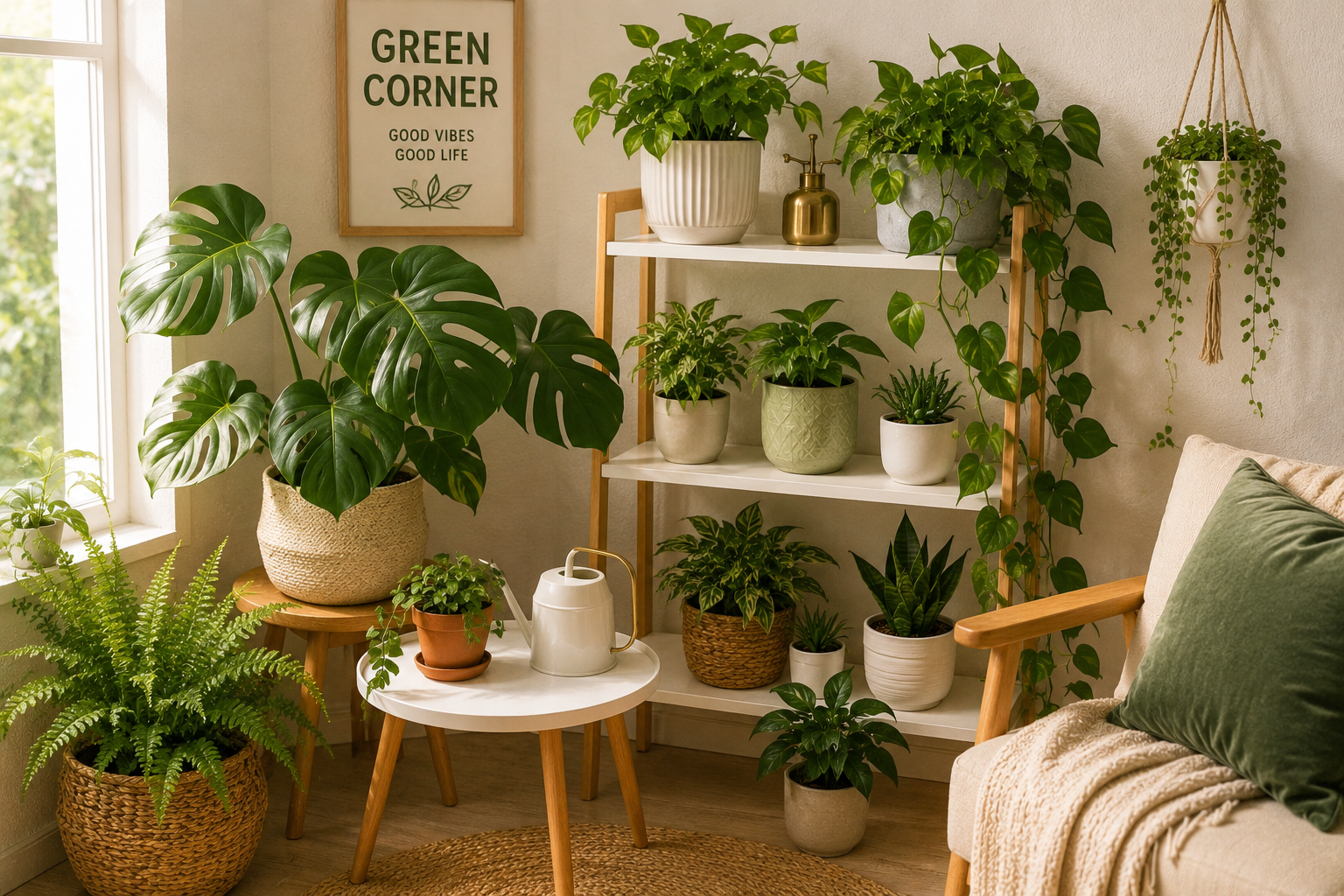
Having a dedicated green corner in your home does not require a large space, an unlimited budget, or years of gardening experience. All it takes is a thoughtful approach to plant selection, smart use of vertical space, and a genuine desire to bring a little nature indoors. Even the smallest apartment can accommodate a lush, beautiful plant display that transforms the energy of an entire room.
Choosing the Right Spot in Your Home
Before you buy a single plant, spend a day observing how light moves through your home. Walk from room to room in the morning, at midday, and in the late afternoon, and notice where natural light falls and for how long. This simple exercise will save you from placing sun-hungry plants in dark corners or scorching delicate shade lovers on a bright south-facing windowsill.
The best spots for a green corner are areas that receive consistent indirect light for several hours each day. North-facing windows tend to offer soft, even light that suits ferns, pothos, peace lilies, and other low-light lovers. East-facing windows provide gentle morning sun, which is ideal for a wide variety of houseplants. South and west-facing windows offer the strongest light and work well for succulents, cacti, and herbs.
Considering the room’s humidity and temperature
Different rooms in your home have very different environmental conditions, and plants respond to these differences powerfully. Bathrooms and kitchens naturally have higher humidity levels, making them excellent environments for tropical plants like maidenhair ferns, orchids, and philodendrons. Living rooms tend to be drier, especially in winter when central heating runs constantly, so plants placed there may need occasional misting or a pebble tray with water to boost moisture around their leaves.
Avoid placing your green corner near heating vents, air conditioning units, or drafty windows. Sudden temperature changes and dry blasts of air stress plants quickly, causing leaf drop and browning tips even when everything else in your care routine is perfect.
Selecting Plants That Work Together
A beautiful green corner is not a random collection of plants — it is a thoughtfully composed arrangement where each plant complements the others in terms of size, texture, color, and care needs. Grouping plants with similar watering and light requirements together also makes your maintenance routine dramatically simpler.
Aim for variety in leaf shape and texture. Combine broad, architectural leaves like those of the rubber plant or monstera with the delicate feathery fronds of a Boston fern or the trailing vines of a pothos or string of pearls. This layering of textures creates a lush, natural feeling that a collection of identical plants simply cannot achieve.
Plants that work beautifully together in a green corner:
- Monstera deliciosa — bold, split leaves that create a dramatic backdrop
- Pothos — fast-growing trailing vines that spill elegantly over shelves
- ZZ plant — glossy, upright stems that thrive in low light
- Peace lily — adds white blooms and tolerates shade exceptionally well
- Snake plant — architectural and nearly indestructible, perfect as a vertical accent
- Baby rubber plant — compact, glossy, and easy to manage in small spaces
Making the Most of Vertical Space
In a small home, the floor space available for plants is limited, but the walls and vertical space around you are largely untapped. Embracing vertical gardening techniques is the single most effective way to create an abundant, impressive green corner in a compact area.
Wall-mounted plant shelves are one of the most popular and practical solutions. A series of floating shelves at different heights allows you to display plants at multiple levels, creating depth and visual interest. Place taller plants like snake plants or dracaenas on the floor, medium-sized plants on lower shelves, and trailing varieties like pothos or string of hearts on upper shelves where they can cascade downward naturally.
Using plant stands and hangers effectively
Plant stands come in a wonderful variety of heights and styles, from minimalist bamboo tripods to elegant iron structures with multiple tiers. A tall single-arm stand with a trailing plant placed in a bright corner creates a sculptural focal point that anchors the entire room. Macramé hangers are another excellent option, particularly for smaller trailing plants in compact spaces — they draw the eye upward and make the ceiling feel higher while keeping floor space completely free.
Group your plant stands in odd numbers for the most visually pleasing arrangement. Three plants of different heights clustered together will always look more natural and intentional than two plants placed side by side.
Choosing Pots That Enhance the Aesthetic
The containers you choose for your green corner are just as important as the plants themselves. Mismatched pots in clashing colors and materials can make even a beautiful plant collection feel chaotic. A cohesive pot palette, on the other hand, instantly elevates the entire display.
Choose two or three complementary materials and stick to them throughout your green corner. Terracotta pots bring warmth and an organic, earthy feel that suits botanical and rustic interiors beautifully. Ceramic pots in matte white or soft neutral tones create a clean, modern look. Woven baskets used as pot covers add texture and a relaxed, natural atmosphere without the weight of ceramic.
Vary the sizes of your pots deliberately, moving from large statement pots on the floor to medium containers on shelves and small pots for trailing plants in hangers. This size variation reinforces the sense of depth and abundance that makes a green corner feel truly lush.
Common Mistakes to Avoid
- Buying plants before checking the light — Always assess your light conditions first. A plant that requires bright indirect light will slowly decline in a dim corner no matter how well you water it.
- Overcrowding plants immediately — Start with a few well-chosen plants and add gradually. An overcrowded corner looks messy rather than lush, and plants need airflow around their leaves to stay healthy.
- Mixing plants with very different care needs — Placing a cactus next to a fern creates an impossible situation where one of them will always be suffering. Group plants by their water and light requirements.
- Ignoring pot drainage — Decorative pots without drainage holes trap water at the roots and cause rot. Always use a nursery pot with drainage inside your decorative outer pot.
- Choosing only large plants — Scale matters enormously in a small space. A mix of small, medium, and large plants always looks more intentional and interesting than a collection of plants that are all the same size.
Adding Finishing Touches to Your Green Corner
Once your plants are in place, a few small styling details can transform a simple plant grouping into a truly beautiful vignette. Place a small stack of books, a piece of driftwood, or a smooth river stone among your pots to add organic texture between the plants. A small watering can displayed near your green corner serves a practical purpose while also adding a charming, lived-in quality to the space.
Consider adding a simple grow light if your chosen corner lacks sufficient natural light. Modern grow lights are sleek and unobtrusive, and many are designed to blend naturally with home decor. They make it possible to create a thriving green corner in virtually any part of your home, regardless of window proximity.
Pro Tip: Rotate each plant a quarter turn every time you water it. This ensures all sides of the plant receive equal light exposure and encourages symmetrical, even growth — keeping your green corner looking full and balanced from every angle.
Conclusion
Setting up a small and beautiful green corner at home is one of the most accessible and rewarding ways to improve your living space. It requires no major renovation, no large investment, and no advanced gardening skills — just thoughtful plant selection, a little creativity with space, and consistent basic care. The result is a corner of your home that feels alive, calming, and genuinely personal.
Start small, choose plants you love, and let your green corner grow organically over time. Some of the most beautiful plant displays in the world began with just two or three well-placed pots and a clear patch of window light.
Frequently Asked Questions
Q: How many plants do I need to create a green corner? A: You can create a beautiful and impactful green corner with as few as three to five plants. Focus on varying the height, leaf texture, and pot size rather than simply adding more plants. Quality and composition always matter more than quantity.
Q: Can I create a green corner in a room with no windows? A: Yes, but you will need to invest in a quality grow light to compensate for the lack of natural light. Choose plants that are naturally adapted to low light conditions, such as pothos, ZZ plants, and snake plants, and position the grow light to mimic the angle and duration of natural sunlight as closely as possible.
Q: How do I keep my green corner looking tidy over time? A: Set aside a few minutes each week to remove dead or yellowing leaves, wipe dust from large leaves with a damp cloth, and trim any stems that are growing in unwanted directions. Regular small interventions keep the display looking intentional and well-maintained without requiring significant time or effort.