
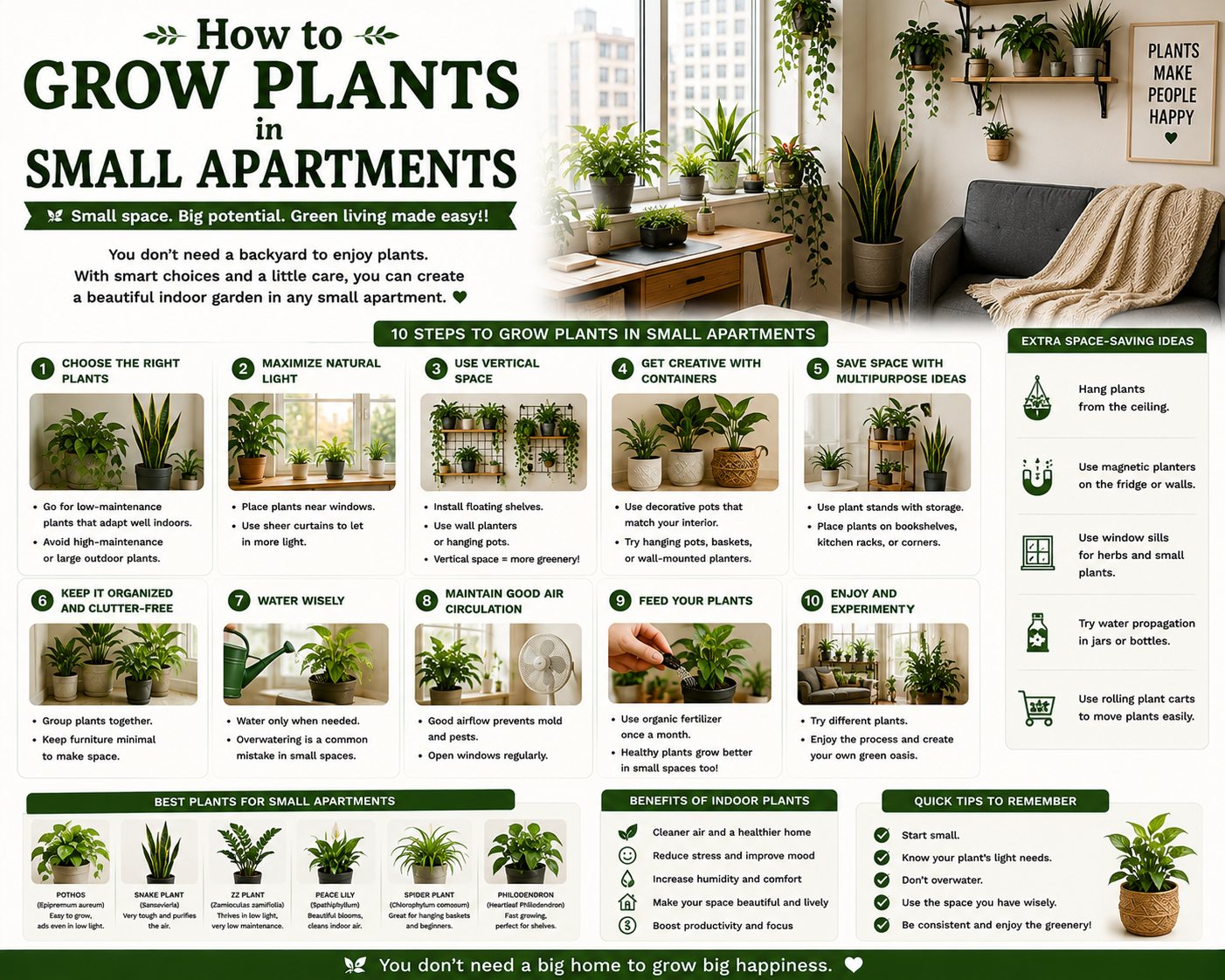
Living in a small apartment presents some of the most creative plant-growing challenges and opportunities available to any plant lover. Limited floor space, potentially restricted natural light, landlord restrictions on structural modifications, and the particular atmospheric qualities of a small enclosed living space all require thoughtful adaptation of standard plant care approaches. But small apartments are also intimate environments where plants have an outsized impact on how the space feels — a few well-chosen, beautifully maintained plants can transform a compact apartment from a place that merely functions into one that genuinely feels like a home.
Assessing Your Apartment’s Growing Conditions
The first step in creating a thriving apartment plant collection is understanding the specific growing conditions your apartment offers. Spend a full day observing how natural light moves through your space from morning to evening. Note which windows receive direct sunlight and at which times, how far into the room that light penetrates effectively, and which areas remain in shade throughout the day. This light map is the most important piece of information you can gather before buying any plants, because light is the one variable that most constrains what you can grow successfully and that is most difficult to modify significantly without structural intervention.
Temperature and humidity in a small apartment are often more variable than in larger spaces. Small rooms heat up and cool down quickly, heating systems can create intensely dry air in winter, and cooking and bathing generate localized humidity that makes certain rooms — kitchens and bathrooms — noticeably more hospitable to moisture-loving plants than the drier main living areas. Understanding these microclimatic variations within your apartment allows you to place plants strategically in the rooms and positions where their specific preferences are best met.
Working with limited natural light
Many small apartments, particularly those in densely built urban areas, receive less natural light than plants ideally require. Before concluding that your apartment cannot support plants, assess the quality of the light you do receive. A north-facing window with no obstructions provides soft, diffuse, consistent light throughout the day — genuinely adequate for a wide range of shade-tolerant plants. An unobstructed south-facing window, even in a small apartment, creates a bright spot that many light-demanding plants, including most herbs, can thrive in. A grow light positioned above a shelf or in a corner with insufficient natural light expands your growing options dramatically and pays for itself quickly in the expanded range of plants it makes possible.
Space-Maximizing Plant Strategies for Small Apartments
In a small apartment, the vertical dimension is your most valuable and underused plant-growing resource. Floating shelves mounted at varying heights on a bright wall can accommodate a significant plant collection without consuming any floor area. A single narrow floor-to-ceiling shelving unit positioned near a window becomes a plant tower that houses ten to fifteen plants in a footprint of less than half a square meter. Magnetic wall-mounted planters on metal surfaces, ceiling-hung macramé planters, and window-mounted suction cup holders for small plants all utilize space that would otherwise contribute nothing to your plant collection.
Window ledges are prime real estate in a small apartment and deserve careful curation. A wide windowsill can accommodate several plants of varying sizes in a well-organized arrangement that maximizes the available light while creating a beautiful interior display. If your windowsills are too narrow for standard plant pots, window boxes mounted on the interior of the window frame extend the available space without requiring any external installation that might conflict with landlord restrictions.
The Best Plants for Small Apartments
The most successful apartment plants combine visual impact with genuine adaptability to the varied and sometimes challenging conditions of small indoor spaces. Pothos is arguably the perfect apartment plant — it thrives in low to medium indirect light, tolerates the dry air of heated apartments, grows quickly enough to fill a shelf or cascade attractively from a high position within a few months, and asks for nothing more than watering when the top inch of soil dries out. A single pothos in a hanging planter above a window fills an entire corner with lush, trailing greenery from a pot that takes up less than thirty centimeters of floor space.
Air plants — species of Tillandsia — are perhaps the most space-efficient plants available for apartment growing. They grow without any soil at all, mounting on wood, wire, or glass, and require only a brief weekly soak in water to thrive. Their geometric, sculptural forms are genuinely beautiful and suit minimalist apartment aesthetics exceptionally well. A collection of several air plants displayed on a piece of driftwood, a wire frame, or a series of glass terrariums creates a striking living display that occupies minimal space and requires minimal care.
- Pothos — adaptable, trailing, grows rapidly in most indoor conditions
- Air plants — soil-free, minimal space requirement, architectural beauty
- Snake plant — narrow, tall, tolerates low light and dry apartment air
- Herbs on a windowsill — productive, fragrant, and beautiful in a small kitchen
- Peperomia — enormous variety in small, compact forms, very easy care
- Mini succulents — tiny footprint, virtually no care, extraordinary variety of forms
- Heartleaf philodendron — tolerates low light, trails beautifully, fast growing
Managing Watering and Mess in a Small Space
Watering plants in a small apartment requires more care and organization than in a house with outdoor spaces where drips and spills are less consequential. Bottom-watering — placing pots in a tray of water and allowing them to draw moisture upward through the drainage holes — is one of the cleanest and most effective watering methods for apartment use. It eliminates the risk of water overflowing from the top of the pot, keeps foliage dry, and delivers water evenly throughout the root zone without creating mess on floors or furniture.
Use saucers under every pot without exception and empty them promptly after watering to prevent standing water from damaging floors and furniture. A small, attractive watering can with a long, narrow spout allows precise delivery of water directly to the soil without wetting surrounding surfaces — far more practical in a small apartment than a large can with a broad rose head designed for outdoor use.
Common Mistakes to Avoid
- Buying plants without assessing light levels first — In a small apartment, light availability is the primary constraint on what you can grow. Assessing it accurately before buying plants prevents the most common and costly mistakes.
- Placing all plants on the floor where they consume valuable living space — Floor-level plants in a small apartment take up space that is needed for living. Vertical display systems, shelving, and hanging planters are almost always better choices for compact spaces.
- Using large pots that overpower a small room — Scale matters intensely in small spaces. A single pot that is too large makes an entire room feel smaller and more cramped. Choose pot sizes that are proportionate to the space as well as the plant.
- Creating a messy watering area that discourages regular plant care — If watering your plants is inconvenient or creates significant mess, you will water less frequently than your plants need. Organize your watering setup to make the task clean, simple, and quick.
- Choosing fast-growing large plants that quickly outgrow the apartment — A fiddle-leaf fig or bird of paradise that is charming and proportionate in a small apartment today can become an overwhelming presence within a year or two of vigorous growth. Choose slow-growing varieties or plan from the beginning for regular pruning to maintain appropriate scale.
Frequently Asked Questions
Q: Can I grow food plants in a small apartment?
A: Yes, particularly if you have at least one reasonably bright window. Herbs are the most practical edible plants for small apartments — a collection of basil, thyme, chives, mint, and parsley on a kitchen windowsill provides fresh flavors year-round in a minimal footprint. Cherry tomatoes and chili peppers can be grown in containers near a south-facing window or under a grow light and produce genuine harvests in surprisingly small spaces. Microgreens are perhaps the most space-efficient food crop available — grown in shallow trays on any surface and harvested within two weeks of sowing.
Q: How do I prevent my apartment from smelling of soil and plants?
A: Fresh, good-quality potting mix has a pleasant, clean earthy smell rather than an unpleasant one. Odors from plants typically indicate overwatering — wet, anaerobic soil develops a sour, musty smell that is the first sign of root rot. Allowing soil to dry appropriately between waterings, ensuring good drainage, and replacing old, compacted potting mix regularly prevents this issue entirely. Adding a layer of decorative gravel or moss on the soil surface also reduces any earthy smell from the potting mix while improving the aesthetic appearance of the pot.
Q: My apartment gets very little natural light. Can I still have a significant plant collection?
A: Yes, with the right combination of plant selection and artificial lighting. A quality LED grow light running for twelve to sixteen hours per day on a timer makes it possible to grow a diverse and healthy plant collection in even a windowless room. Focus on naturally shade-tolerant varieties — ZZ plants, snake plants, pothos, peace lilies, cast iron plants — that perform well under artificial light, and position the grow light close enough to the plants to deliver effective intensity at the leaf level rather than from a distance where its output is too diffuse to be truly effective.