
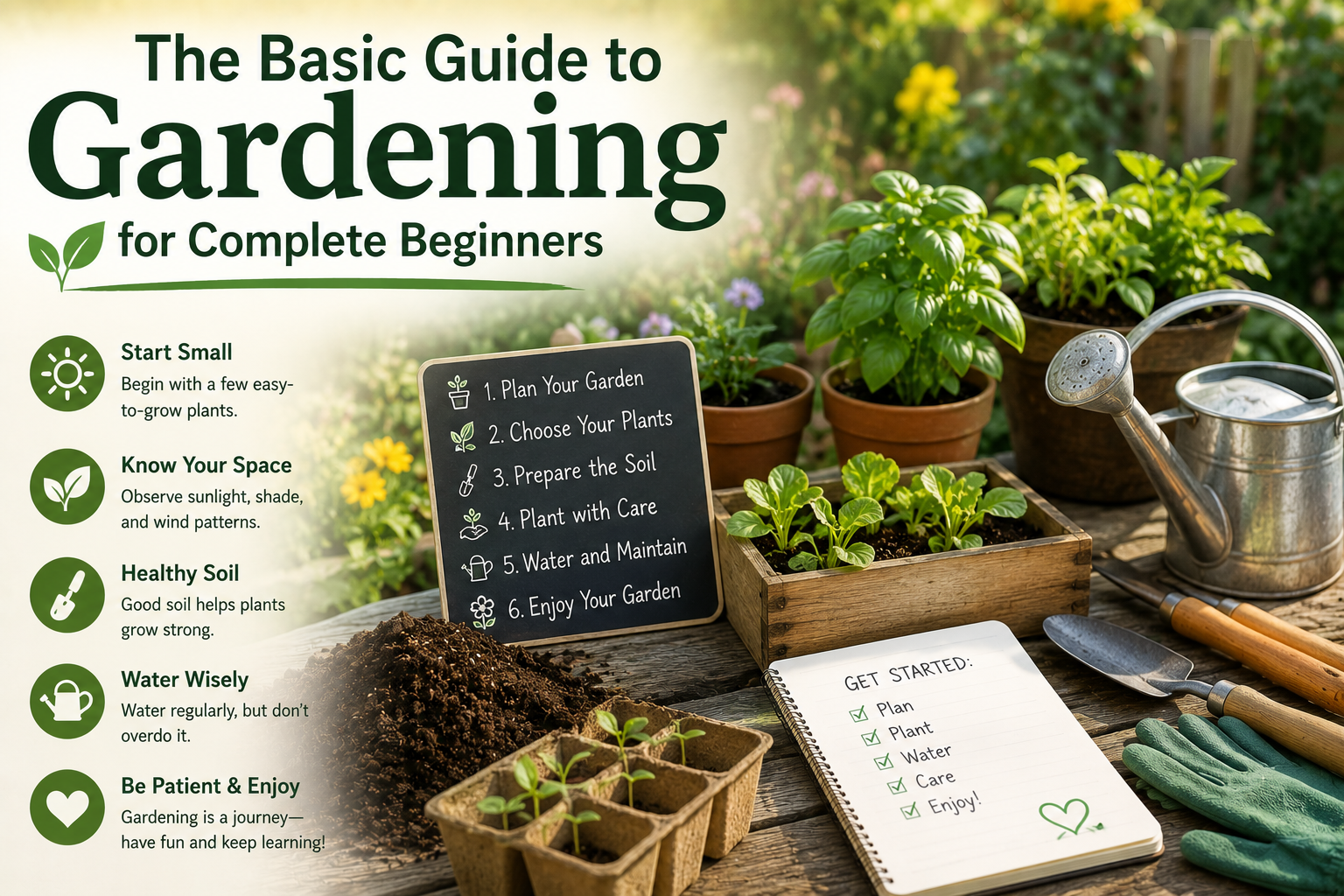
Everyone who gardens today was once a complete beginner who did not know the difference between annual and perennial, had never heard of pH levels, and killed their first plant despite their best intentions. Gardening has a learning curve, but it is a gentle and deeply rewarding one. The skills that make a confident gardener are not mysterious or difficult — they are simply a collection of practical habits and basic knowledge that accumulate naturally over time. This guide gives you the honest, jargon-free foundation you need to start growing plants with confidence, even if you have never put a seed in soil before.
Understanding the Basics Before You Buy Anything
The single most important thing a beginning gardener can do before spending any money is to observe their growing environment carefully. Spend a week noticing where sunlight falls in your garden, balcony, or home at different times of day. Notice which areas stay moist after rain and which dry out quickly. Identify which spots are sheltered from wind and which are exposed. This observational knowledge is the foundation on which every successful planting decision is built, and it costs nothing but a little time and attention.
Understanding your climate is equally important. Find out your local hardiness zone, which tells you the average minimum winter temperature in your area and determines which plants can survive outdoors year-round where you live. Learn roughly when your last spring frost and first autumn frost typically occur — this determines your planting calendar for vegetables, annual flowers, and tender plants that need to be brought indoors before cold weather arrives.
Starting small and building gradually
The most common beginner mistake is starting too large. An ambitious first garden is exciting to plan but quickly becomes overwhelming to maintain, particularly when the inevitable learning-curve problems arise. Start with a small, manageable space — two or three large pots, a single raised bed, or a small border — and commit to doing that small space well. A beautifully maintained small garden teaches you far more than a neglected large one, and the confidence you build from small successes is the fuel that naturally drives expansion over time.
Choosing the Right Plants for a Beginner
Not all plants are equally forgiving of beginner mistakes, and choosing the right ones from the start makes the difference between early success and early frustration. Look for plants described as vigorous, hardy, or easy-care in their variety descriptions. For vegetables, courgettes, radishes, salad leaves, and climbing beans are all fast-growing, productive, and tolerant of imperfect care. For flowers, marigolds, sunflowers, nasturtiums, and cosmos are nearly impossible to fail with and reward beginners with generous color from early summer onward.
For houseplants, the classics are classic for a reason. Pothos, snake plants, spider plants, ZZ plants, and rubber plants have all earned their reputations as beginner-friendly precisely because they tolerate the inconsistent watering, imperfect light, and occasional neglect that are inevitable while you are still finding your footing as a plant owner. Master these first before moving on to more demanding varieties like orchids, fiddle-leaf figs, or calatheas.
- Best beginner vegetables — courgette, radish, salad leaves, climbing beans, cherry tomatoes
- Best beginner flowers — sunflower, marigold, nasturtium, cosmos, sweet peas
- Best beginner houseplants — pothos, snake plant, spider plant, ZZ plant, rubber plant
- Best beginner herbs — mint, chives, rosemary, thyme, basil
The Fundamentals of Planting Correctly
Whether you are sowing seeds or planting young plants bought from a nursery, a few fundamental techniques apply universally and determine how well your plants establish themselves. For seeds, the most important factors are sowing depth and consistent moisture during germination. As a general rule, sow seeds at a depth of approximately twice their diameter — tiny seeds like lettuce and basil are sown at the surface, while larger seeds like beans and courgettes go an inch or two deep. Keep the soil consistently moist but never waterlogged during germination, and provide warmth — most seeds germinate fastest at temperatures between eighteen and twenty-four degrees Celsius.
When planting young plants from nursery pots, dig a hole that is slightly wider and the same depth as the root ball. Remove the plant from its nursery pot, gently loosen any circling roots, and place it in the hole so that the base of the stem sits at the same level as it did in its original pot. Firm the soil around the roots to eliminate air pockets, water thoroughly, and keep the soil consistently moist for the first two to four weeks while the plant establishes its root system in its new home.
The importance of hardening off
If you have grown seedlings indoors or in a greenhouse and plan to move them outside, hardening off is an essential step that beginners frequently skip. Hardening off is the process of gradually acclimatizing indoor-grown plants to outdoor conditions over one to two weeks. Begin by placing them outside in a sheltered spot for an hour or two on the first day, then gradually increase the time outdoors each day while exposing them to progressively more sun and wind. Plants moved directly from a warm, still indoor environment to the variable conditions outdoors frequently experience transplant shock, wilting, and leaf scorch that sets them back by weeks.
Watering, Feeding, and Basic Soil Care
For beginning gardeners, the rules around watering, feeding, and soil are simple enough to summarize in a few key principles. Water deeply and infrequently rather than shallowly and often — this encourages roots to grow deep into the soil in search of moisture, making plants progressively more drought-tolerant and resilient. Feed plants during their active growing season with a balanced fertilizer appropriate to the plant type, and stop feeding in autumn and winter. Improve your soil every year by adding compost or well-rotted manure, which improves structure, drainage, moisture retention, and nutrient content simultaneously — the single best investment you can make in long-term garden productivity.
Common Mistakes to Avoid
- Planting too much too soon — Start small and expand as your skills and confidence grow. An overwhelmed beginner abandons gardening; a successful small-scale beginner becomes a lifelong grower.
- Ignoring soil quality — Plants grown in poor soil struggle regardless of how well you water and feed them. Invest in good quality compost or potting mix from the beginning.
- Overwatering seedlings and young plants — Young plants need consistent moisture but not waterlogged conditions. More seedlings are killed by overwatering than by any other single cause.
- Not reading plant labels — Every plant label contains essential information about light requirements, spacing, and care needs. Reading it takes thirty seconds and prevents many common mistakes.
- Giving up after the first failure — Every gardener loses plants. Failure is information, not defeat. Note what went wrong, adjust your approach, and try again with the knowledge you have gained.
Frequently Asked Questions
Q: What is the easiest thing to grow for a complete beginner?
A: Radishes are arguably the easiest edible plant to grow from seed — they germinate within a week, are ready to harvest in as little as three weeks, and require nothing more than a sunny spot and regular watering. For flowers, sunflowers are equally rewarding: push a seed into any reasonably fertile soil, keep it watered, and watch it grow into something spectacular within a couple of months.
Q: Do I need to buy expensive tools to start gardening?
A: Absolutely not. For container gardening or a small garden bed, a hand trowel, a watering can, and a pair of gardening gloves are genuinely all you need to begin. Buy quality over quantity — a single well-made hand trowel will serve you better for years than a set of cheap tools that bend and break within a season.
Q: How do I know if my soil is good enough to plant in?
A: Good garden soil is dark in color, crumbles easily in your hand, smells earthy and pleasant, and contains visible signs of biological activity such as earthworms. If your soil is pale, compacted, clumps into hard lumps, or drains extremely slowly after rain, it needs improvement before planting. Dig in a generous layer of garden compost or well-rotted manure to transform almost any poor soil into a productive growing medium over one to two seasons.