
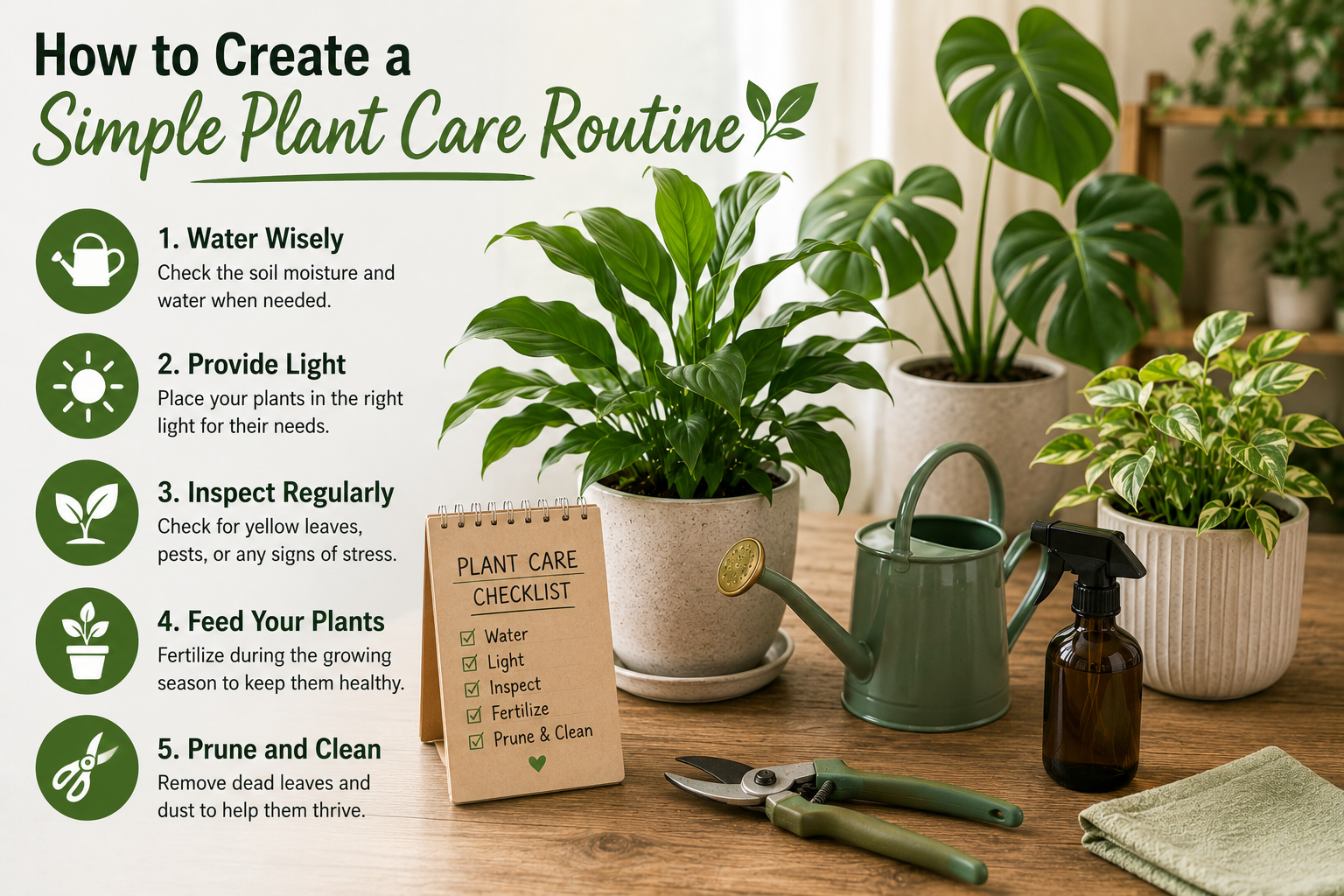
One of the most transformative things you can do for your plants — and for your own peace of mind as a plant owner — is to establish a simple, consistent care routine. Without a routine, plant care becomes reactive: you water when you notice the soil looks dry, you fertilize when you remember, and you only really pay attention to a plant when something starts to go wrong. A structured routine shifts you from reactive to proactive, catching problems early, keeping plants consistently healthy, and turning what can feel like a stressful responsibility into one of the most calming and enjoyable parts of your week.
Why a Routine Makes Everything Easier
Plants thrive on consistency. They respond positively to regular watering cycles that allow their roots to follow a predictable pattern of hydration and aeration. They benefit from routine feeding schedules that maintain a steady supply of nutrients rather than the peaks and valleys of occasional fertilizing. They grow more evenly when they are regularly rotated, pruned, and inspected. A care routine is not a rigid set of rules that you must follow perfectly — it is a framework that ensures the most important tasks get done regularly and nothing important is forgotten for weeks at a time.
The other benefit of a routine is that it sharpens your ability to observe your plants. When you interact with your plants on a regular, structured schedule, you become intimately familiar with how each one normally looks, how quickly its soil dries out, how fast it grows, and what healthy versus stressed foliage looks like for that specific variety. This familiarity means you notice the early signs of problems — a slight yellowing, a new pest, a root beginning to emerge from the drainage hole — long before they escalate into serious issues.
How often should you check your plants
For most indoor plant collections, a weekly care session is the ideal frequency. Once a week is often enough to catch the earliest signs of any problem, regular enough to maintain consistent soil moisture for most plant types, and infrequent enough that the routine does not feel burdensome. A weekly session of fifteen to thirty minutes is sufficient to check, water, and attend to the basic needs of a collection of ten to twenty plants. If your collection is smaller or contains primarily low-maintenance varieties, a check every ten to fourteen days may be perfectly adequate.
Building Your Weekly Plant Care Checklist
A good weekly care routine covers four core activities: observation, watering, cleaning, and minor maintenance. Each of these takes only a few minutes per plant but collectively keeps your entire collection in excellent health with minimal effort. The key is to do them consistently rather than perfectly — a brief, regular check is always more valuable than an infrequent but thorough session.
Begin each care session with observation before you do anything else. Walk slowly through your plant collection and simply look. Check the color and posture of the leaves — are they upright and vibrant, or drooping and dull? Look at the soil surface — does it appear dry and pulling away from the pot edges, or still dark and moist? Look at the undersides of a few leaves on each plant for any signs of pest activity. This two-minute observational pass sets the agenda for everything that follows and prevents you from watering a plant that does not need it or missing one that is urgently thirsty.
- Check soil moisture — press a finger an inch into the soil of every pot before deciding whether to water
- Water plants that need it — water thoroughly until it drains from the bottom, never lightly from the top
- Inspect leaves for pests — check both surfaces of leaves, particularly on new growth and stem joints
- Remove dead or yellowing leaves — clean the plant up and redirect its energy toward healthy growth
- Wipe dusty leaves — use a damp cloth on large-leafed plants to keep foliage clean and photosynthetically efficient
- Rotate pots a quarter turn — ensures even light exposure and balanced, symmetrical growth
Monthly Tasks That Keep Plants Thriving Long-Term
Beyond weekly maintenance, a set of monthly tasks addresses the slower-moving aspects of plant health that do not need attention every week but make a significant cumulative difference over the course of a growing season. Fertilizing is the most important of these monthly tasks. During spring and summer, apply a balanced liquid fertilizer to all actively growing plants once every three to four weeks, following the package instructions and diluting to half strength if you are unsure. Keep a brief note of when you last fertilized each plant to avoid accidentally overfeeding.
Monthly is also a good time to assess whether any plants have become root-bound or are in need of repotting. Lift each pot and check the drainage holes — if roots are visibly emerging from the bottom, the plant is telling you it needs more space. Check the soil surface as well: a network of fine roots appearing at the top of the soil is another sign that the root system has outgrown its current container. Spring is the ideal time for repotting, but a plant that is severely root-bound will benefit from being moved up regardless of the season.
Seasonal adjustments to your routine
A truly effective plant care routine is not static — it shifts with the seasons to reflect the changing needs of your plants. In spring, increase watering frequency gradually as growth accelerates, restart your fertilizing schedule, and assess which plants need repotting or pruning. In summer, monitor soil moisture more frequently as heat speeds evaporation, watch for pest activity which peaks in warm weather, and move sensitive plants away from direct afternoon sun. In autumn, begin reducing watering and stop fertilizing as growth slows naturally. In winter, water sparingly, keep plants away from cold drafts, and resist the urge to fertilize dormant plants that have no capacity to use the nutrients.
Keeping Track of Your Plant Care
For plant collections of more than five or six plants, keeping a simple plant care log transforms your routine from a general intention into a reliable system. Your log does not need to be elaborate — a basic spreadsheet, a notes app on your phone, or a dedicated plant care app all work equally well. For each plant, record its name, location, preferred watering frequency, last watering date, last fertilizing date, and any observations about its health or growth. Reviewing this log at the start of each care session takes thirty seconds and immediately tells you which plants need attention and which were recently tended to.
Over time, a care log becomes genuinely valuable as a reference. You will be able to look back and see exactly when a plant started showing symptoms, how long it took to recover from a pest infestation, or when you last refreshed its potting mix. This historical record removes the guesswork from plant care and helps you make better, more informed decisions about every plant in your collection.
Adapting Your Routine to Your Lifestyle
The best plant care routine is one that fits realistically into your actual life rather than an idealized version of it. If you travel frequently, structure your collection around plants that tolerate irregular watering and can go two weeks between sessions without stress. If you are consistently busy during the week, set aside a specific time on weekend mornings for your plant care session and treat it as a non-negotiable appointment with yourself. If you have a large collection, divide it into sections and rotate through them so that no single session becomes overwhelming.
Remember that a routine is a tool, not a source of guilt. Missing a week occasionally will not harm most plants. What matters is the overall pattern of consistent care across months and seasons. A plant that receives attentive care eighty percent of the time will be far healthier and more resilient than one that receives intense but sporadic attention whenever you happen to remember it.
Common Mistakes to Avoid
- Watering all plants on the same fixed schedule — Different plants have different needs, and the same plant needs different amounts of water in summer versus winter. Always check the soil rather than following a rigid timetable.
- Skipping the observation step — Jumping straight to watering without first looking at your plants means you miss the early warning signs that routine observation would catch.
- Doing too much in a single session — Repotting, fertilizing, pruning, and moving plants all at once overwhelms them. Spread major interventions out over several weeks.
- Creating a routine so complex it becomes unsustainable — A simple routine followed consistently beats an elaborate one abandoned after two weeks. Start with the basics and add complexity gradually as your confidence grows.
- Neglecting plants in winter because they look dormant — Dormant plants still need periodic checking. They can still develop root rot from excess moisture, attract pests in heated indoor environments, and suffer from cold drafts near windows.
Frequently Asked Questions
Q: How do I remember to care for my plants consistently?
A: Set a recurring alarm or calendar reminder on your phone for your chosen plant care day each week. Linking your plant care session to an existing habit — such as doing it every Sunday morning with your coffee — makes it far easier to maintain consistently. A plant care app with built-in reminders is another excellent option for those who prefer a more structured system.
Q: Is it better to care for plants in the morning or the evening?
A: Morning is generally the better time for most plant care tasks. Watering in the morning gives foliage that gets accidentally wet time to dry before nighttime, reducing the risk of fungal disease. Plants also begin photosynthesizing at first light, so they are primed to take up water and nutrients efficiently in the morning hours. Evening watering is perfectly acceptable for most houseplants, but avoid wetting the foliage of plants that are prone to mildew or fungal issues.
Q: What should I do if I go on holiday and cannot maintain my routine?
A: Before leaving, water all your plants thoroughly and move them away from direct sunlight to slow moisture loss. Group plants together so they share humidity through transpiration. For trips longer than two weeks, ask a trusted friend or neighbor to check in and water the most thirsty plants once while you are away. Self-watering pots and wicking systems are also practical solutions for frequent travelers who want to maintain a healthy plant collection without depending on other