
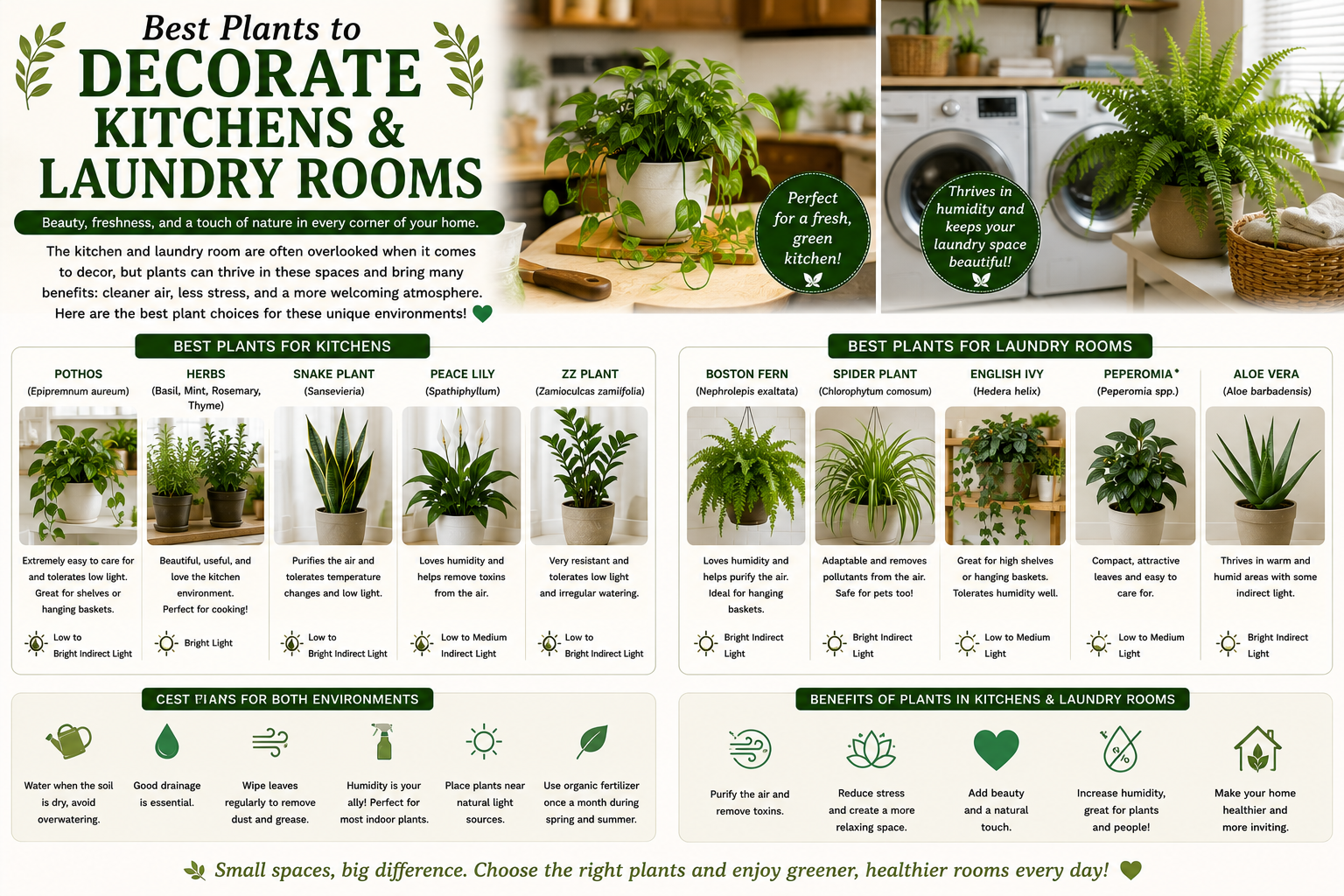
Kitchens and laundry rooms are among the most challenging indoor environments for plants — fluctuating temperatures from cooking and appliance heat, periodic steam and humidity spikes, limited natural light in many layouts, and the practical constraints of spaces designed primarily for function rather than horticulture. But they are also among the most rewarding spaces to plant, because greenery in functional rooms transforms the experience of spending time in them in a way that decoration in living rooms does not — a plant on a kitchen windowsill makes washing up more pleasant, a herb pot near the stove makes cooking more connected and enjoyable, and a trailing plant in a laundry room makes a purely utilitarian space feel more alive and human.
Understanding the Conditions in Kitchens and Laundry Rooms
Before choosing plants for a kitchen or laundry room, spend a few days observing the actual environmental conditions in those specific spaces. Kitchen environments are characterized by temperature fluctuations — the heat generated by cooking can raise ambient temperatures significantly for extended periods — combined with periodic bursts of steam from boiling and the possibility of cooking oil particulates settling on leaf surfaces. These conditions suit some plants and are genuinely harmful to others. Laundry rooms generate significant heat and humidity during washing and drying cycles and are often among the more humid rooms in a house, making them ideal for moisture-loving plants that struggle in the dry air of living areas.
Light is frequently the most limiting factor in kitchen and laundry room planting. Kitchens with south or east-facing windows over a sink or counter are among the best plant-growing locations in the home — warm, bright, and with the natural humidity of cooking and dishwashing. Kitchens with north-facing windows or no windows directly accessible to counter or windowsill space are significantly more challenging. Laundry rooms are often windowless or have small, high windows that admit minimal light — a condition that limits plant choices to the most shade-tolerant varieties or requires supplemental grow lighting.
Managing the steam and temperature cycles of kitchen environments
The periodic high-humidity events of a kitchen — steam from a boiling pot, the opening of a dishwasher mid-cycle — are generally beneficial rather than harmful for most houseplants. Brief spikes in humidity do not cause the fungal problems that chronically wet conditions create, and most tropical plants respond positively to the intermittent steam. The more challenging variable is temperature fluctuation: plants positioned directly above a hob or near an oven may be exposed to temperatures that exceed their tolerance during cooking, particularly in small kitchens where the cooking area and available counter space are in close proximity. Ensure that any plant placed near cooking equipment is not directly exposed to rising heat from burners or oven vents.
The Best Plants for Kitchen Windows and Counters
Herbs are the most obvious and most rewarding choice for kitchen plants — practical, beautiful, fragrant, and perfectly suited to the warm, humid conditions that kitchen environments create. A collection of culinary herbs on a bright kitchen windowsill — basil, thyme, chives, parsley, mint, rosemary, and oregano — provides both an abundant living display and a fresh supply of flavors that transforms everyday cooking. Position sun-loving herbs like basil and rosemary in the brightest available spot, and more shade-tolerant varieties like mint and parsley slightly further from the window where light is less intense.
Pothos is an exceptional kitchen plant for positions with moderate to low light — its trailing stems and heart-shaped leaves look beautiful cascading from a shelf or cabinet top, and it tolerates the humidity, temperature fluctuations, and irregular attention that kitchen life produces with remarkable composure. Aloe vera is another excellent kitchen choice for a practical reason beyond its appearance: its gel-filled leaves provide an immediately available natural treatment for the minor burns that kitchen cooking occasionally produces, making it one of the most genuinely useful plants you can keep anywhere in the home.
- Herbs — basil, thyme, chives, mint, parsley — practical, fragrant, and beautiful on a bright windowsill
- Pothos — tolerates lower light, trailing form works beautifully from shelves and cabinet tops
- Aloe vera — practical burn treatment, tolerates kitchen heat and irregular watering
- Spider plant — thrives in humidity, produces cascading offsets, tolerates varying light
- Peace lily — elegant, tolerates low light and high humidity, purifies air effectively
- Chinese evergreen — beautiful patterned foliage, extremely adaptable to kitchen conditions
Best Plants for Laundry Rooms
The high humidity of laundry rooms makes them ideal environments for tropical moisture-loving plants that struggle in the dry air of heated living spaces. Boston ferns, which require the consistently moist air conditions that most homes cannot provide, thrive in laundry rooms where the frequent operation of washing machines and dryers maintains elevated humidity levels that closely approximate the humid forest environments in which they evolved. A large Boston fern hung near a laundry room window creates a genuinely beautiful, lush display in a space that would otherwise feel purely utilitarian.
Peace lilies, orchids, and philodendrons all appreciate the elevated humidity of laundry rooms and will perform better there than in the drier air of other rooms in the home. Cast iron plants are an outstanding choice for windowless or very low-light laundry rooms — their tolerance of deep shade and irregular watering makes them practically indestructible in even the most challenging light conditions, and their deep, glossy green foliage adds a touch of elegance to an otherwise functional space without requiring the attention that more sensitive plants would demand in difficult conditions.
Practical Considerations for Kitchen and Laundry Room Plants
Plants in kitchens require more frequent leaf cleaning than those in other rooms because cooking produces oil particulates, steam residue, and dust that settle on leaf surfaces and progressively reduce their ability to absorb light and exchange gases effectively. Wipe the leaves of kitchen plants with a damp cloth every two to three weeks — more frequently if the kitchen is used heavily — to maintain clean, fully functional foliage. This task takes only a few minutes but makes a noticeable difference in both the appearance and the health of plants in kitchen environments.
In laundry rooms, the main practical consideration is positioning plants where they will not be disturbed by the physical activity of laundry tasks and where dripping water from wet laundry does not regularly land on them. Hanging plants from ceiling hooks or mounting them on wall shelves above the laundry area avoids the most common practical conflicts and creates a beautiful overhead display that uses the frequently neglected vertical space of laundry rooms effectively.
Common Mistakes to Avoid
- Placing delicate plants near cooking heat sources — Direct heat from hobs, ovens, and toasters damages most plant foliage rapidly. Keep plants a comfortable distance from cooking equipment and check for heat exposure during actual cooking before committing a plant to a permanent kitchen position.
- Choosing high-maintenance plants for rooms where care time is limited — Kitchens and laundry rooms are busy, functional spaces where daily plant care is rarely practical. Choose plants that tolerate irregular attention rather than ones that need daily monitoring.
- Ignoring the effect of cleaning product fumes on sensitive plants — Strong cleaning products used in kitchens and laundry rooms release chemical compounds that can damage sensitive plant foliage. Ensure adequate ventilation when cleaning near plants, or temporarily move the most sensitive specimens to another room during intensive cleaning sessions.
- Underestimating how much steam from cooking and laundry helps moisture-loving plants — Many plant owners choose only robust, drought-tolerant plants for kitchens and laundry rooms when in fact the humidity these rooms generate makes them ideal for moisture-loving tropical plants that need help elsewhere in the home.
- Not considering the oil and residue from cooking on leaf surfaces — Kitchen plants accumulate cooking residue on their leaves faster than plants in other rooms. Establish a regular leaf-cleaning routine for kitchen plants to maintain their health and appearance.
Frequently Asked Questions
Q: Can I grow herbs successfully in a kitchen without a south-facing window?
A: Yes, with the right herb selection and supplemental lighting. Mint, parsley, and chives tolerate lower light levels than Mediterranean herbs and can produce usable harvests in east-facing or even north-facing kitchen windows. For a more diverse herb collection in a low-light kitchen, a small LED grow light positioned above the herb pots and running for twelve to fourteen hours daily makes it possible to grow virtually any culinary herb successfully regardless of window orientation.
Q: Is a laundry room really a good environment for plants?
A: For the right plant selections, absolutely. The elevated humidity produced by washing and drying cycles creates conditions that moisture-loving tropical plants genuinely thrive in. Boston ferns, peace lilies, and philodendrons all perform better in a humid laundry room than in the dry air of most living rooms. The main challenge is usually light, which can be addressed with a grow light in windowless laundry rooms. The result — a lush, living display in what is usually the least decorated room in the home — is genuinely striking and worth the modest investment of choosing and positioning the right plants.
Q: How do I prevent soil mess from kitchen plants?
A: Use pots with well-fitting saucers that contain any water or soil that escapes during watering. Choose potting mixes with coco coir rather than peat as the primary ingredient — coco coir is slightly denser and less prone to scattering when dry. Bottom-watering — placing pots in a container of water to absorb moisture from below — eliminates the risk of water overflowing from the top of the pot entirely and is the cleanest watering method for kitchen environments where spilled water and soil can create safety and cleanliness issues.