
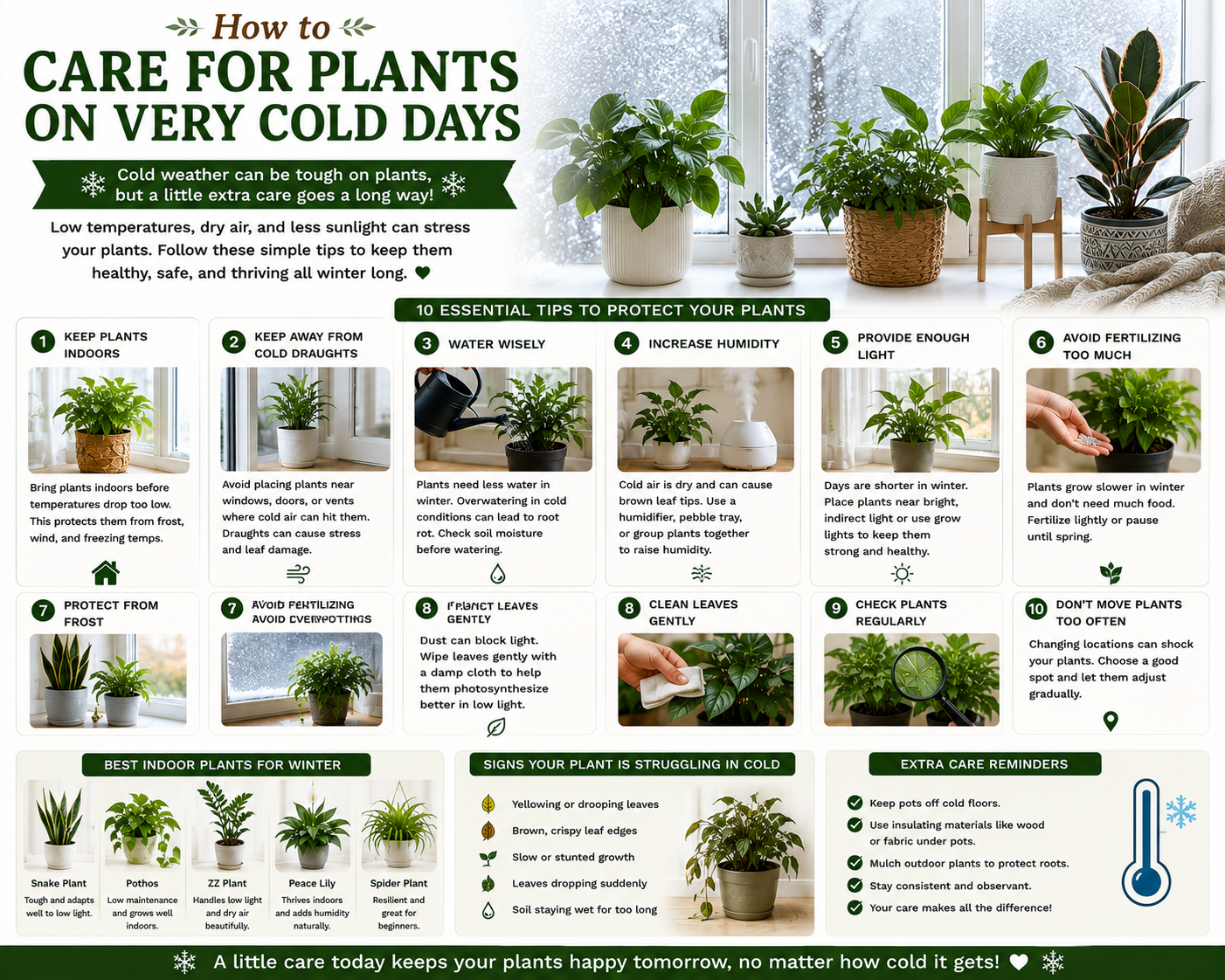
Winter cold is one of the most significant stresses that plants face, and it operates on both indoor and outdoor plants in ways that are sometimes obvious and sometimes surprisingly subtle. A single night below a plant’s cold tolerance threshold can cause damage that takes weeks or months to fully manifest and assess, and cold damage accumulated gradually over a harsh winter can weaken a plant so thoroughly that it never fully recovers its former vigor. Understanding how cold affects plants, which specific cold-related stresses are most damaging, and what protective measures are most effective allows you to support your plants through even the most challenging winter weather with confidence.
How Cold Damages Plants
Cold damages plants through two distinct mechanisms, and understanding the difference is important for providing the right type of protection. The first mechanism is cellular freezing — when temperatures drop below a critical threshold, ice crystals form within plant cell walls, physically rupturing the delicate membrane structures that keep cells functional. This type of damage is immediate and irreversible: cells that have frozen solid cannot recover their function, and the tissue they form dies. The characteristic blackened, mushy appearance of frost-damaged foliage in the days following a frost event is the visible result of this cellular freezing.
The second mechanism is more gradual and often more insidious: cold stress without actual freezing. Many tropical and subtropical plants — including the majority of popular houseplants — begin to suffer cellular dysfunction at temperatures significantly above freezing. Reduced metabolic efficiency, impaired water uptake, slowed photosynthesis, and increased susceptibility to fungal disease all develop as temperature drops, even in the range of five to fifteen degrees Celsius where actual freezing is not occurring. This is why houseplants placed too close to cold windows in winter, or tender outdoor plants left out too long in autumn, often show progressive decline without any dramatic frost event having occurred.
Recognizing cold damage in its early stages
The early signs of cold stress in plants are subtle but recognizable once you know what to look for. Leaves that develop a slightly translucent or water-soaked appearance, foliage that curls or puckers at the edges, growth that suddenly stalls completely during a cold snap, and a general loss of the turgid, upright posture of healthy leaves are all early indicators of cold stress before more dramatic damage manifests. Catching these signs early and moving the plant to warmer conditions immediately can prevent the progression from cold stress to irreversible cold damage.
Protecting Indoor Plants on Cold Days
Indoor plants face cold stress primarily through proximity to cold windows, exterior walls, and doors during winter weather. The temperature directly against a single-pane glass window on a cold night can be significantly lower than the room temperature even a meter further away — cold enough to stress or damage tropical houseplants placed on the windowsill for maximum light. During cold snaps, move light-hungry plants slightly back from windows rather than letting them touch the glass, and place a piece of cardboard or insulating material between the plants and the glass on the coldest nights.
Cold drafts from gaps around windows and doors are another significant source of cold stress for indoor plants. The brief but intense burst of cold air that enters each time an exterior door is opened can shock nearby plants, particularly those with large, thin tropical leaves that respond immediately to temperature changes. Keep cold-sensitive plants away from frequently opened exterior doors during winter, and check for cold air leaking from window frames — a stick of incense held near the frame will reveal drafts as its smoke wavers — sealing any significant gaps with weatherstripping or draft excluders.
Protecting Outdoor Plants From Cold
For outdoor plants, the most vulnerable time is not typically the coldest part of winter but the transitional periods — early autumn when tender plants are still in the ground and unexpected early frosts arrive, and early spring when new growth has begun in response to warming temperatures but a late frost can damage or kill the fresh, unprotected shoots. Monitoring weather forecasts and being prepared to provide protection on short notice during these transitional periods is essential for preventing the most damaging and disappointing cold events in the garden.
Horticultural fleece — a lightweight, breathable fabric specifically designed for frost protection — is the most practical and effective tool for protecting outdoor plants from light to moderate frost. Drape it over vulnerable plants before nightfall on forecast frost nights and remove it the following morning once temperatures have risen above freezing. Horticultural fleece allows light and some moisture to pass through while trapping enough warmth to raise the temperature under the cover by two to four degrees Celsius — enough to prevent damage from all but the most severe frost events.
- Move houseplants away from cold glass windows during cold snaps to prevent temperature damage
- Identify and seal cold drafts from windows and doors that create cold stress in nearby plants
- Raise pots off cold stone or tile floors using cork mats or wooden boards to insulate roots
- Cover outdoor plants with horticultural fleece before forecast frost nights and remove the next morning
- Move tender container plants to a sheltered position — against a warm wall, under a porch — during cold spells
- Reduce watering for both indoor and outdoor plants during cold weather when metabolism is reduced
Caring for Plants After Cold Damage
When cold damage has already occurred, the most important initial step is patience — assessing the full extent of the damage before taking any action. Cold-damaged plant tissue often continues to deteriorate visibly for several days after the cold event that caused it, and cutting back immediately to apparently living tissue risks removing parts of the plant that are still viable. Wait until temperatures have risen and stabilized before assessing the damage, then remove all clearly dead, brown, mushy, or blackened tissue back to firm, live growth below.
After removing damaged growth, support recovery by moving the plant to the warmest, most sheltered position available, reducing watering temporarily to match the plant’s reduced metabolic rate, and avoiding fertilizing until active new growth resumes. Cold-damaged plants direct their remaining energy toward regenerating root systems and new growing points — adding the stress of unnecessary interventions during this period slows rather than accelerates recovery. Most plants, even those that appear catastrophically damaged after a cold event, will begin to produce new growth from their base or surviving stems once temperatures warm consistently, and this new growth is often more vigorous than the growth it replaces.
Common Mistakes to Avoid
- Placing houseplants directly against cold window glass in winter — The temperature at cold glass can be dramatically lower than room temperature and cold enough to damage or kill tropical plants. Keep plants slightly back from glass during cold weather.
- Leaving tender plants outdoors too late in autumn — A single unexpected frost can permanently damage or kill tender plants that would have survived winter perfectly well if brought inside two weeks earlier. Bring tender plants in well before the first forecast frost rather than waiting for a close call.
- Pruning cold-damaged plants immediately after a frost event — The full extent of cold damage continues to reveal itself for several days after a frost. Wait and assess fully before pruning, or risk cutting into tissue that was still viable.
- Overwatering plants during cold weather — Cold slows plant metabolism and water consumption dramatically. Continuing summer watering frequencies through winter leads inevitably to overwatering in a plant that is using far less water than usual.
- Using plastic sheeting directly on plant foliage as frost protection — Plastic traps condensation that can freeze on contact with foliage, causing frost damage even when the air temperature barely drops below freezing. Use breathable horticultural fleece rather than non-breathable plastic for frost protection.
Frequently Asked Questions
Q: At what temperature do houseplants start to suffer cold damage?
A: Most popular tropical houseplants — including pothos, philodendrons, peace lilies, and monsteras — begin to show signs of cold stress at temperatures below ten to twelve degrees Celsius, well above freezing. True cold damage at the cellular level typically begins below five degrees Celsius for these plants. Mediterranean plants like olive, lavender, and rosemary tolerate significantly colder temperatures, surviving to minus ten or lower when established. Check the specific cold tolerance of each plant in your collection to know exactly where its threshold lies.
Q: Can I use a heat lamp to protect outdoor plants from frost?
A: Heat lamps can provide effective frost protection for small, high-value plants in sheltered positions, but they are expensive to run, present a fire risk if the lamp contacts plant material or mulch, and require access to outdoor power. Horticultural fleece, thermal mulch, and moving container plants to sheltered positions are more practical and safer frost protection approaches for most gardeners. If you do use heat lamps, ensure they are rated for outdoor use and positioned safely away from any plant material.
Q: How do I tell if a cold-damaged plant will recover?
A: The most reliable way to assess recovery potential after cold damage is to scratch the bark or stem surface gently with a fingernail or knife blade a few centimeters below the soil line. If the tissue beneath is green or white and firm, the plant has surviving living tissue and will almost certainly produce new growth once conditions warm. If the tissue is brown and dry all the way down to the roots, the damage is likely terminal. Wait several weeks after the damage event before making a final assessment — plants often surprise with recovery that originates from surviving root tissue even when all above-ground growth appears dead.