
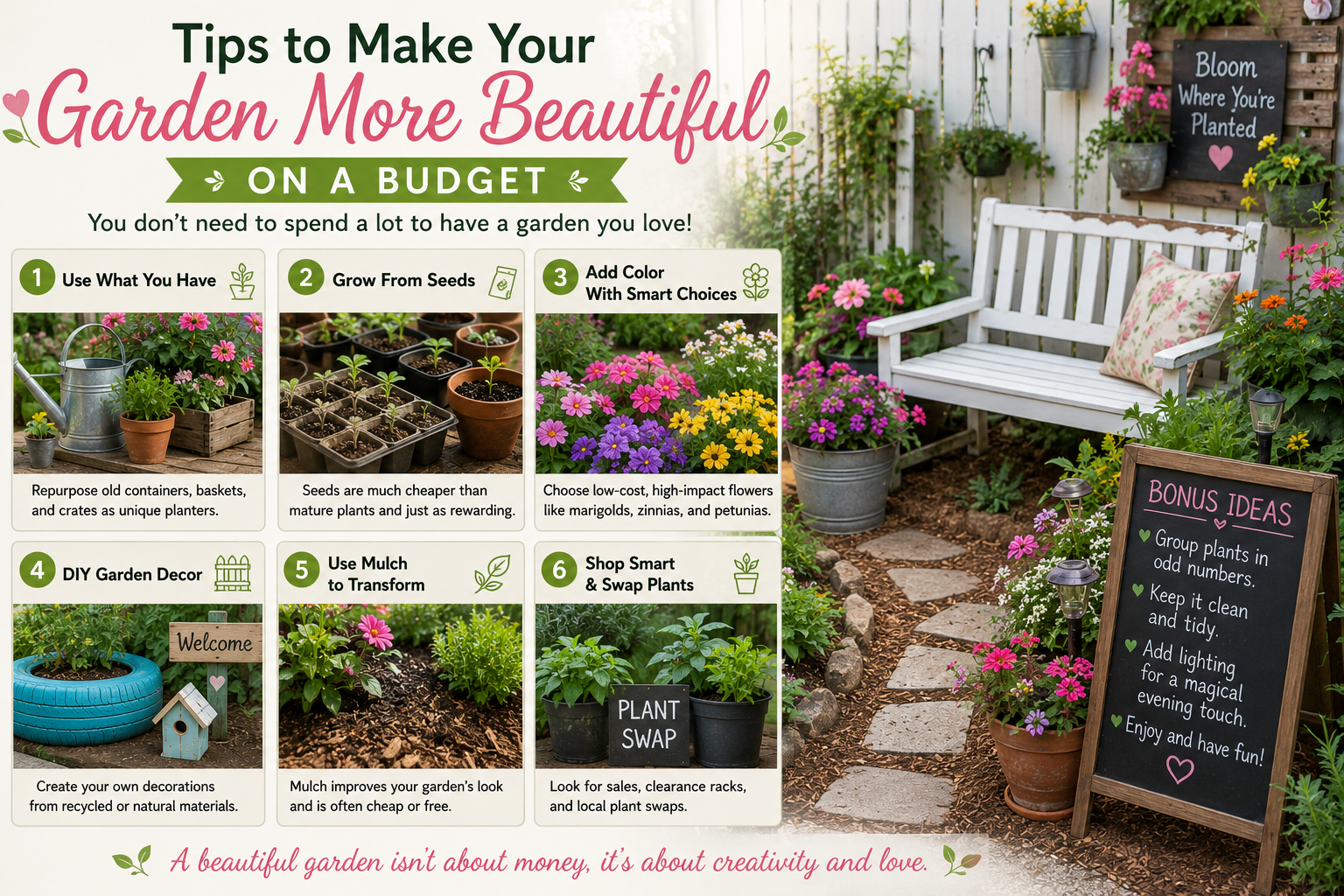
A beautiful garden does not require an unlimited budget or professional landscaping. Some of the most charming and inspiring gardens in the world have been created by patient, creative people working with modest resources, a willingness to learn, and a genuine love of growing things. With the right strategies, it is entirely possible to transform even a tired, bare, or neglected outdoor space into something genuinely beautiful without spending more than a small fraction of what professional garden design would cost.
Planning Before Spending
The most expensive gardening mistakes happen when people spend money before they have a clear vision of what they want to achieve. Before buying a single plant or tool, spend time in your garden at different times of day and in different weather conditions. Identify which areas get the most sun, which stay shaded, where water collects after rain, and which spots you naturally gravitate toward when you are outside. This observational groundwork shapes every planting and design decision that follows and prevents you from buying plants that are wrong for your conditions.
Sketch a simple plan of your garden space, marking existing features you want to keep, areas you want to transform, and the general style you are drawn toward. Having a plan before you begin means every purchase is intentional rather than impulsive, and you avoid the expensive trap of buying plants that look beautiful at the garden center but have no logical place in your actual garden.
Working with what you already have
Before spending anything, take a thorough inventory of what already exists in your garden. Established shrubs, mature trees, existing hedging, and even well-placed rocks or structures are assets that many gardeners overlook in their eagerness to start fresh. Pruning an overgrown shrub into a defined shape, clearing weeds from around an existing plant to let it shine, or painting an old fence a fresh color costs very little but can dramatically change the character of a space. The bones of a beautiful garden are often already present — they simply need to be uncovered and refined.
Growing Plants From Seed
Growing plants from seed rather than buying them as established specimens is one of the most effective ways to dramatically reduce gardening costs without sacrificing quality or variety. A single packet of annual flower seeds costing a few dollars can produce dozens of plants that would cost ten to twenty times as much if purchased individually from a garden center. The range of varieties available as seed is also significantly broader than what most retailers stock as plants, giving you access to unusual colors, historic varieties, and specialty cultivars that simply cannot be found on the average nursery bench.
Start with easy-to-grow annuals that germinate quickly and reward beginners with fast, visible results. Sunflowers, cosmos, nasturtiums, marigolds, and sweet peas are all simple to grow from seed sown directly into prepared soil or into small pots on a sunny windowsill. Once you are comfortable with annuals, move on to vegetables, which are among the most cost-effective plants to grow from seed, and then to perennials, which take longer to establish but come back year after year without replanting costs.
Dividing and Propagating to Multiply Your Plants
Division and propagation are the budget gardener’s most powerful tools. Many perennial plants — including hostas, daylilies, ornamental grasses, and agapanthus — naturally form expanding clumps that can be dug up and divided into multiple plants every few years. This division not only gives you free plants for other parts of your garden but also rejuvenates the original clump, stimulating fresh, vigorous growth. Dividing a mature hosta clump can yield five, eight, or even ten new plants from a single specimen.
Stem cuttings are equally powerful for woody plants and many houseplants. A healthy rosemary, lavender, fuchsia, or hydrangea can be propagated from cuttings taken in summer, rooted in moist compost or water, and grown on into full plants within a single season at virtually zero cost. Connecting with other local gardeners through community garden groups, neighborhood plant swaps, or online gardening communities opens up a generous world of free plant exchanges where you can trade divisions and cuttings for varieties you want.
- Divide clump-forming perennials every two to three years in spring or autumn
- Take stem cuttings from shrubs and tender perennials in summer
- Collect and save seeds from annuals at the end of the season for next year
- Attend local plant swaps and gardening club sales for free or very cheap plants
- Check online community groups where gardeners regularly offer free divisions and surplus seedlings
Affordable Design Principles That Make a Big Difference
Good garden design does not require expensive materials or professional expertise — it requires an understanding of a few simple visual principles that guide the eye and create a sense of harmony. Repetition is one of the most powerful of these principles: repeating the same plant, color, or material at intervals throughout a garden creates a visual rhythm that makes even a diverse planting feel cohesive and deliberate. Buying three or five of the same plant rather than one each of five different plants is often more affordable and always more visually effective.
Layering plants by height — tall plants at the back of a border, medium plants in the middle, and low-growing plants at the front — creates depth and the impression of a full, generous planting even when relatively few plants are used. Focusing your spending on a few key focal points, such as a dramatic architectural plant in a statement pot or a flowering climber trained up a wall, draws the eye to these carefully considered moments and makes the rest of the garden feel more intentional by association.
Using inexpensive materials creatively
Some of the most beautiful garden features are made from reclaimed or inexpensive materials. Old terracotta pots with interesting patina, wooden pallets transformed into vertical planters, salvaged bricks used to edge a border, and gravel sourced from a local supplier rather than a garden center all add character and texture at a fraction of the cost of purpose-made garden products. Scout salvage yards, online marketplaces, and community recycling events for interesting materials that can be reimagined as garden features — weathered wood, old metal containers, stone troughs, and vintage tools all make characterful additions with minimal investment.
Common Mistakes to Avoid
- Buying impulse plants without a plan — Impulse purchases from garden centers are the fastest way to overspend. Always shop with a list.
- Investing in high-maintenance plants that require expensive ongoing care — Some plants demand regular specialist treatment. Choose lower-maintenance varieties that give beauty without ongoing expense.
- Neglecting soil improvement — Money spent on plants grown in poor soil is largely wasted. Investing in compost is the highest-return spend in any garden budget.
- Buying the cheapest tools available — Inexpensive tools break quickly. Buy fewer, better-quality tools that will serve you reliably for years.
- Trying to fill the entire garden at once — Filling a garden gradually, starting with key focal points, is more affordable and produces better results than planting everything simultaneously on a limited budget.
Frequently Asked Questions
Q: What are the most cost-effective plants to buy for a budget garden?
A: Perennials offer the best long-term value because they come back year after year without replanting costs. Ornamental grasses, hardy geraniums, sedums, and echinacea are all excellent and relatively inexpensive to buy as young plants. For color, growing annuals from seed provides the lowest cost per plant of any approach.
Q: How can I make my garden look more expensive than it is?
A: Clean, defined edges between lawn and borders immediately make a garden look more polished. Consistent, cohesive planting rather than a random mix of unrelated plants creates a sense of design. Painting fences or old pots in a unified color palette adds visual coherence at minimal cost. And removing weeds consistently — free but requiring only time — is the single most impactful thing you can do to improve how a garden looks.
Q: Is it worth buying large established plants or better to start with small ones?
A: For most plants, starting with smaller, younger specimens and allowing them to establish is significantly more cost-effective. Small plants establish their root systems more readily, suffer less transplant shock, and frequently overtake larger, more expensive specimens within two to three seasons. Reserve the budget for large established plants only for key focal points where instant impact genuinely matters.