
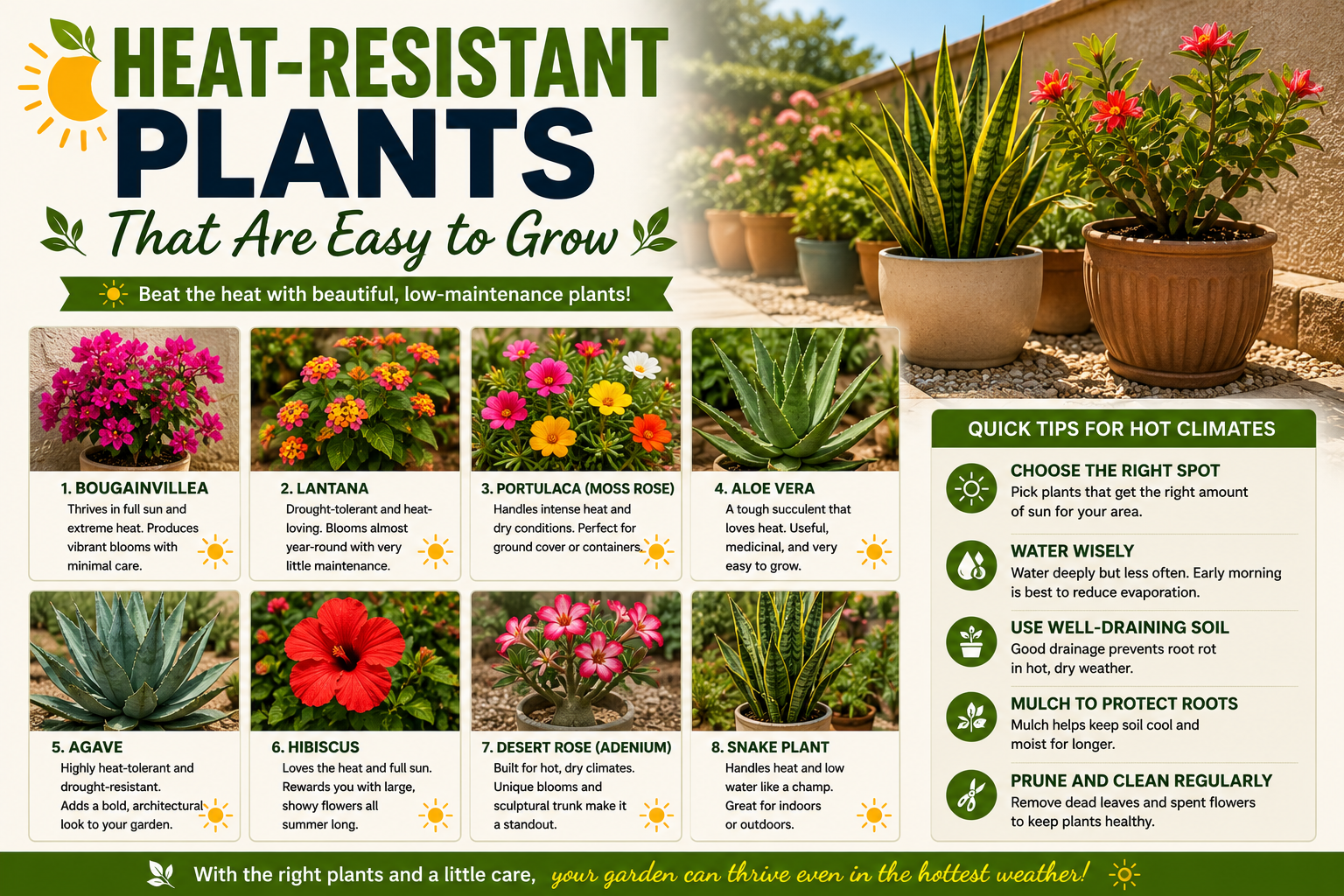
Growing plants in a hot climate or during an intense summer can feel like a constant battle against the elements. Many popular garden plants wilt dramatically in heat, demand constant watering, and look progressively more exhausted as the temperature climbs. But nature has produced an extraordinary array of plants that not only tolerate intense heat but genuinely thrive in it — plants that look their best precisely when other varieties are struggling. Choosing heat-resistant plants is one of the smartest decisions a gardener in a warm climate can make, and many of these resilient beauties are also among the easiest plants to grow.
Why Heat Resistance Matters in Plant Selection
Heat-resistant plants have evolved remarkable physiological adaptations that allow them to function efficiently even when temperatures would stress or damage less-adapted species. Many have developed thick, waxy leaf coatings that slow moisture loss through evaporation. Others store water in fleshy leaves, stems, or roots. Some have reduced their leaf surface area to minimize exposure to drying sun and wind. Understanding these adaptations helps you recognize heat-resistant plants and provide exactly the right level of care — which, in most cases, means doing very little at all.
Understanding these adaptations also helps you avoid the most common mistake with heat-tolerant plants: overwatering. Many of these plants actually perform worse when watered too frequently, because their systems are designed for periods of drought followed by thorough soaking. Providing them with the lean, well-drained conditions they evolved for is often all they need to thrive magnificently with minimal intervention.
Identifying heat-resistant plants before you buy
Several visual cues help identify heat-resistant plants at the point of purchase. Silver or grey-green foliage is a common adaptation — the lighter color reflects sunlight and reduces heat absorbed by the leaf. Fuzzy or woolly leaf surfaces trap a layer of still air that insulates the leaf from extreme heat. Needle-like or very narrow leaves reduce the surface area exposed to drying conditions. Thick, succulent-looking leaves indicate water storage capacity. Any plant displaying these characteristics is likely to handle heat significantly better than a plant with thin, dark green, broad leaves.
The Best Heat-Resistant Plants for Gardens and Containers
Lavender is one of the finest heat-resistant plants available. Native to the rocky, sun-drenched hillsides of the Mediterranean, it thrives on heat, poor soil, and occasional drought in a way that few other flowering plants can match. Its aromatic silver-green foliage and long-lasting purple flower spikes make it one of the most visually beautiful garden plants available, and it requires almost no care beyond an annual trim after flowering and the fast-draining soil it demands.
Agapanthus, with its dramatic spherical heads of blue or white flowers held on tall, elegant stems, is another outstanding choice for hot, sunny positions. Once established, it tolerates both heat and moderate drought with composure, and its bold, architectural form makes it a natural focal point in any garden scheme. Ornamental grasses such as Stipa tenuissima, Pennisetum, and Miscanthus are similarly heat and drought tolerant once established, offering months of graceful, wind-animated texture in conditions that challenge most flowering plants.
- Lavender — fragrant, heat-loving perennial, thrives in poor well-drained soil
- Agapanthus — dramatic blue or white flowers, tolerates heat and moderate drought
- Sedum — succulent perennial with late-season flowers, excellent heat and drought tolerance
- Echinacea — bold daisy-like flowers, deep-rooted and extremely heat tolerant
- Ornamental grasses — graceful and heat-resilient once established, low maintenance
- Bougainvillea — spectacular flowering climber that thrives in intense heat
- Portulaca — low-growing annual with jewel-bright flowers, loves heat and dry conditions
- Salvia — vast genus with heat-tolerant species in every size and flower color
Heat-Resistant Plants for Pots and Containers
Containers in full sun present one of the most challenging environments for plants — the soil heats up dramatically, dries out rapidly, and offers roots no escape from temperature extremes. Choosing the right plants for these conditions makes the difference between containers that look vibrant all summer and ones that collapse into misery by midsummer despite your best watering efforts.
Succulents are the obvious and outstanding choice for hot, sunny containers. Echeveria, Sempervivum, Aloe, Agave, and Crassula all thrive in the dry, hot conditions that containers create and require only occasional watering to remain perfectly healthy and visually striking. For containers where you want a more traditional flowering display, choose heat-tolerant varieties like Portulaca, Calibrachoa, Zinnia, and Lantana — all of which bloom prolifically in full sun and handle heat significantly better than commonly used bedding plants like petunias.
Caring for Heat-Resistant Plants Correctly
The most common mistake with heat-resistant plants is caring for them the same way as moisture-loving plants. Overwatering is the primary threat — their roots are adapted to periods of drought, and constantly wet soil leads directly to root rot. Water heat-resistant plants thoroughly but infrequently, allowing the soil to dry significantly between waterings. For established garden plants in the ground, many heat-tolerant perennials and shrubs need supplemental watering only during prolonged dry spells of two weeks or more once their root systems are fully established.
Soil preparation is equally important. Most heat-resistant plants prefer sharply draining soil that does not hold moisture around their roots. If your garden soil is heavy clay that drains slowly, incorporate generous quantities of coarse grit or horticultural sand before planting. In pots, always use a free-draining potting mix — a cactus and succulent mix for succulents, or a standard potting mix amended with thirty to forty percent perlite for other heat-tolerant varieties.
Common Mistakes to Avoid
- Overwatering heat-tolerant plants — More heat-resistant plants are killed by overwatering than by drought. Their root systems are designed for dry conditions and rot rapidly in consistently moist soil.
- Planting in heavy moisture-retaining soil without amendment — Most heat-tolerant plants demand fast-draining soil. Planting them in heavy clay without improving drainage dooms them regardless of the climate.
- Watering during the hottest part of the day — Water in the early morning or evening to avoid rapid evaporation and potential leaf scorch from water droplets in intense sun.
- Not mulching around plants in hot climates — A layer of gravel or organic mulch around the base dramatically reduces soil temperature and moisture loss, extending the time between necessary waterings.
- Assuming heat-tolerant means drought-tolerant — Some plants tolerate heat but still need regular watering. Always check the full care requirements before assuming a plant is low-maintenance in all respects.
Frequently Asked Questions
Q: How do I help established plants survive an unexpected heat wave?
A: Water deeply the evening before an expected heat wave, ensuring the entire root zone is thoroughly moistened. Apply a layer of mulch around the base of vulnerable plants to slow moisture loss from the soil surface. If possible, provide temporary shade with shade cloth during the peak heat hours of the afternoon. Avoid fertilizing during a heat wave, as this pushes plants to produce new growth at exactly the wrong time.
Q: Can I grow vegetables in a very hot climate?
A: Yes, but variety selection matters enormously. Choose heat-tolerant vegetable varieties specifically bred for warm climates. Sweet potatoes, okra, cowpeas, Armenian cucumber, and many Asian eggplant varieties are all excellent choices for hot conditions. Time cool-season crops like lettuce and spinach for the cooler months and focus on heat-loving crops during peak summer.
Q: Why do my succulents still struggle in summer even though they are supposed to be heat-tolerant?
A: Succulents tolerate heat and drought but can still be damaged by very intense direct afternoon sun, especially when previously grown in lower-light conditions. If your succulents are developing bleached or brown patches, they may be receiving more intense direct sun than they can handle. Move them to a spot with morning sun and afternoon shade, or gradually acclimatize them to more intense light over several weeks.