
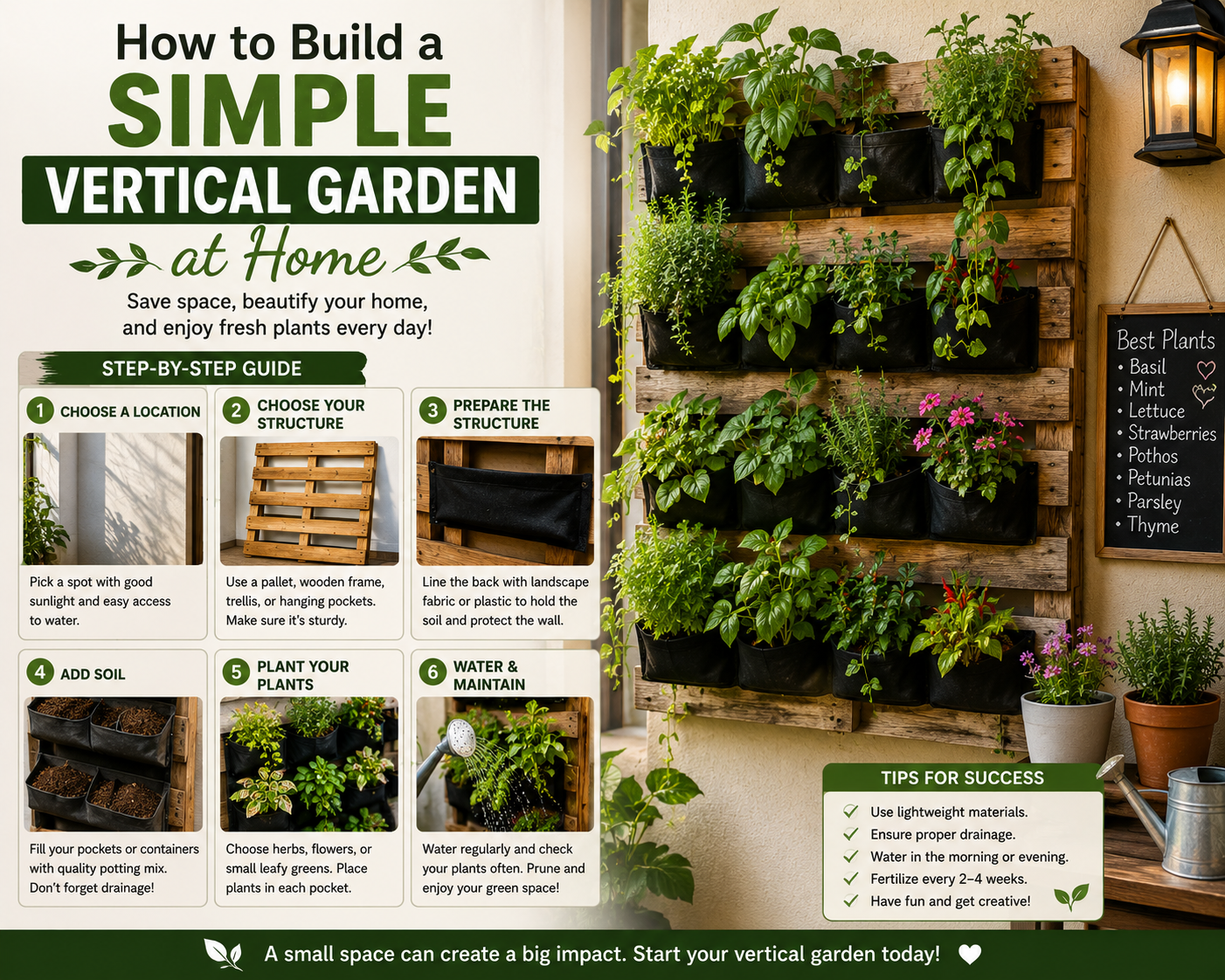
Vertical gardening is one of the most creative and practical solutions to the perennial problem of wanting more plants than you have horizontal space for. By training plants upward and making use of walls, fences, and vertical structures, you can multiply your growing area dramatically without expanding your footprint at all. A vertical garden can transform a bare fence into a lush green wall, turn a small balcony into a productive herb garden, or create a stunning living feature on an interior wall that becomes the focal point of an entire room.
Choosing the Right Location for Your Vertical Garden
The location of your vertical garden determines almost everything about which plants you can grow and how well they will perform. Before choosing a structure or selecting plants, assess the light available at your chosen wall or surface throughout the day. A south-facing wall that receives direct sun for six or more hours is ideal for Mediterranean herbs, succulents, and most flowering annuals. A north-facing wall in shade suits ferns, mosses, and shade-tolerant foliage plants. An east or west-facing location suits a wide middle range of plants that appreciate good light without the intensity of direct afternoon sun.
Consider the structural capacity of your chosen surface as well. A mature brick or stone wall can support a substantial vertical garden without concern. A lightweight fence or interior wall needs to be assessed for its load-bearing capacity before heavy planters filled with soil and plants are attached to it. Use appropriate weatherproof fixings and consider a waterproof membrane between the planting structure and the wall surface behind it to prevent moisture damage.
Indoor versus outdoor vertical gardens
Indoor vertical gardens present different challenges from outdoor ones. Indoors, light availability is the primary limiting factor, and a grow light may be necessary. Watering must be managed carefully to prevent water from damaging walls and floors — self-contained pocket planters with integrated drip trays are essential for indoor installations. The benefit of indoor vertical gardens is that they are not subject to weather extremes, making it possible to grow a wider range of tender, decorative plants than would survive outdoors in all but the warmest climates.
Simple Vertical Garden Structures You Can Build or Buy
The simplest and most accessible vertical garden structure is a series of wall-mounted shelves or brackets supporting conventional plant pots. This approach requires no specialist knowledge or materials, can be assembled in an afternoon with basic tools, and is entirely reversible if you decide to change the layout. Use adjustable-height brackets to create varied levels, position trailing plants on upper shelves where they can cascade downward, and place more upright plants on lower shelves where their form can be fully appreciated.
Pallet gardens are another enormously popular and cost-effective approach. A standard wooden shipping pallet, stood on its end and fixed securely to a wall or fence, provides a ready-made grid into which small plants can be nestled in pockets of potting mix held in place by landscape fabric stapled to the back. A single pallet can accommodate twenty to thirty small plants and creates a striking, rustic living wall feature at minimal cost. Line the back with sturdy landscape fabric before filling with potting mix, and allow the plants to establish fully before standing the pallet upright to prevent the soil from falling.
- Wall-mounted shelves — flexible, reversible, suits conventional pots of any size
- Pallet garden — inexpensive, rustic aesthetic, ideal for herbs and small plants
- Pocket planters — fabric or felt pockets mounted on a frame, excellent drainage and airflow
- Trellis with climbing plants — the simplest approach for outdoor spaces, supports vigorous growth
- Stacked pot towers — cascading pot systems that stack vertically, good for strawberries and herbs
- Modular panel systems — interlocking panels that create scalable, professional-looking green walls
Choosing the Best Plants for a Vertical Garden
Not all plants are equally suited to vertical growing. The ideal plants for a vertical garden are relatively lightweight, have contained rather than expansive root systems, tolerate the drier and more variable conditions that vertical growing creates, and look attractive from the front since this is the only angle from which they will typically be viewed. Avoid plants with very deep taproots, heavy root systems, or a tendency to grow very large.
For outdoor vertical gardens in good light, herbs are the perfect choice — thyme, oregano, basil, chives, parsley, and mint all perform beautifully in pocket planters and pallet gardens. Strawberries are another outstanding choice, growing happily in small pockets and producing fruit that hangs freely and is easy to harvest. For purely decorative vertical gardens, Sempervivum, Echeveria, and other succulent rosettes create stunning, almost maintenance-free living walls when planted densely in a sunny position.
Watering and Maintaining a Vertical Garden
Watering is the greatest practical challenge of vertical gardening. Plants in vertical structures dry out significantly faster than those in conventional containers because they are exposed to airflow on multiple sides, have limited soil volume, and cannot draw moisture from surrounding soil. During warm weather, a vertical garden may need watering daily, which makes a drip irrigation system a strongly worthwhile investment for any substantial vertical installation.
A simple drip irrigation system for a vertical garden can be assembled from widely available components for a modest outlay and run from a timer connected to a garden tap. Position drip emitters at the top of the structure and allow water to percolate downward through the planting pockets. Check regularly that lower pockets are actually receiving water — the uppermost plants often absorb most of the moisture before it reaches those further down, creating hidden drought stress in the lower sections of the garden.
Common Mistakes to Avoid
- Underestimating how quickly vertical gardens dry out — Exposed to airflow on multiple sides and limited in soil volume, vertical gardens dry out much faster than conventional containers. Check moisture levels daily in warm weather.
- Overloading a wall or fence with too much weight — Wet soil is heavy. Always calculate the weight your structure will support when fully planted and watered before fixing it to any surface.
- Choosing plants that grow too large for vertical culture — Deep-rooted or large plants quickly become root-bound and distressed in small vertical pockets. Choose compact varieties specifically suited to container growing.
- Planting too densely at installation — Overcrowding reduces airflow and encourages disease. Allow some space for plants to grow into rather than filling every pocket immediately.
- Neglecting fertilizing — The limited soil volume in vertical garden pockets depletes nutrients quickly. Regular liquid feeding throughout the growing season is essential to maintain healthy, productive plants.
Frequently Asked Questions
Q: Can I build a vertical garden on a rented property without making permanent changes?
A: Yes. Freestanding vertical garden structures — such as a trellis on feet, a pallet leaned against a wall rather than fixed to it, or a series of shelving units positioned in front of a wall — require no permanent fixings and can be moved or removed without leaving a trace. These approaches are ideal for renters who want flexibility in how they arrange their growing space.
Q: How long does a pallet vertical garden last?
A: Untreated wooden pallets exposed to outdoor conditions typically last two to four years before the wood begins to deteriorate. Applying an outdoor wood preservative before planting extends the life significantly. For a longer-lasting structure, use pallets made from hardwood or invest in a purpose-made metal or recycled plastic vertical garden frame that will last indefinitely.
Q: What is the easiest vertical garden to start with for a complete beginner?
A: A simple trellis fixed to a sunny fence or wall, planted with a fast-growing climber such as clematis, jasmine, or annual sweet peas, is the easiest and most forgiving introduction to vertical gardening. The plants do the work of filling the space naturally, requiring only basic care and occasional tying in, and the result transforms a bare surface into a lush, beautiful vertical feature within a single growing season.